How Long Does Siding Last in Warren, MI?
Siding does not fail on a schedule. It fails at the joints, the bottom edge, and the flashing — and how long it lasts in Warren depends more on those details than on the material on the label.
Call Now
Describe what your siding is doing and where you are — a local siding professional is connected from there.
Call NowMon–Fri 7:00 AM–10:00 PM ET · Sat 8:00 AM–10:00 PM ET · Sun 7:00 AM–9:00 PM ET
At a glance
Siding does not fail on a schedule. It fails at the joints, the bottom edge, and the flashing — and how long it lasts in Warren depends more on those details than on the material on the label.
Homeowners ask how long siding lasts as if the answer were a number on a box. It is not. Siding does not fail on a schedule — it fails at the joints, the bottom edge, and the flashing, and how long it lasts in Warren depends more on those details than on the material on the label. A vinyl wall hung loose and locked fully will outlast a fiber cement wall whose joints were never flashed, and a wood wall on a wall that can dry will outlast a vinyl wall on a wall that cannot.
The material does set a range, and it is worth knowing. Vinyl is made to last decades, and the first generation of vinyl on Warren homes — installed in the 1980s and 1990s — is now reaching the end of its service life across whole streets at once. Fiber cement is made to last decades longer, and the boards themselves do not rot, do not feed insects, and hold paint far longer than wood. Wood lasts as long as its finish is maintained, and metal lasts as long as its finish is sound. But each of those ranges assumes the detailing was done right, and the detailing is where Michigan winters do their work.
The honest answer to the question is therefore a different question: how long will the wall last, not how long will the siding last? The wall is the sheathing, the housewrap, the flashing, and the drainage path — and the siding is the finish over that wall. A wall that drains and dries will carry any of these materials through a Michigan winter. A wall that traps water will fail any of them, and the failure will show up in the same places every spring.
Vinyl: the generation now ending
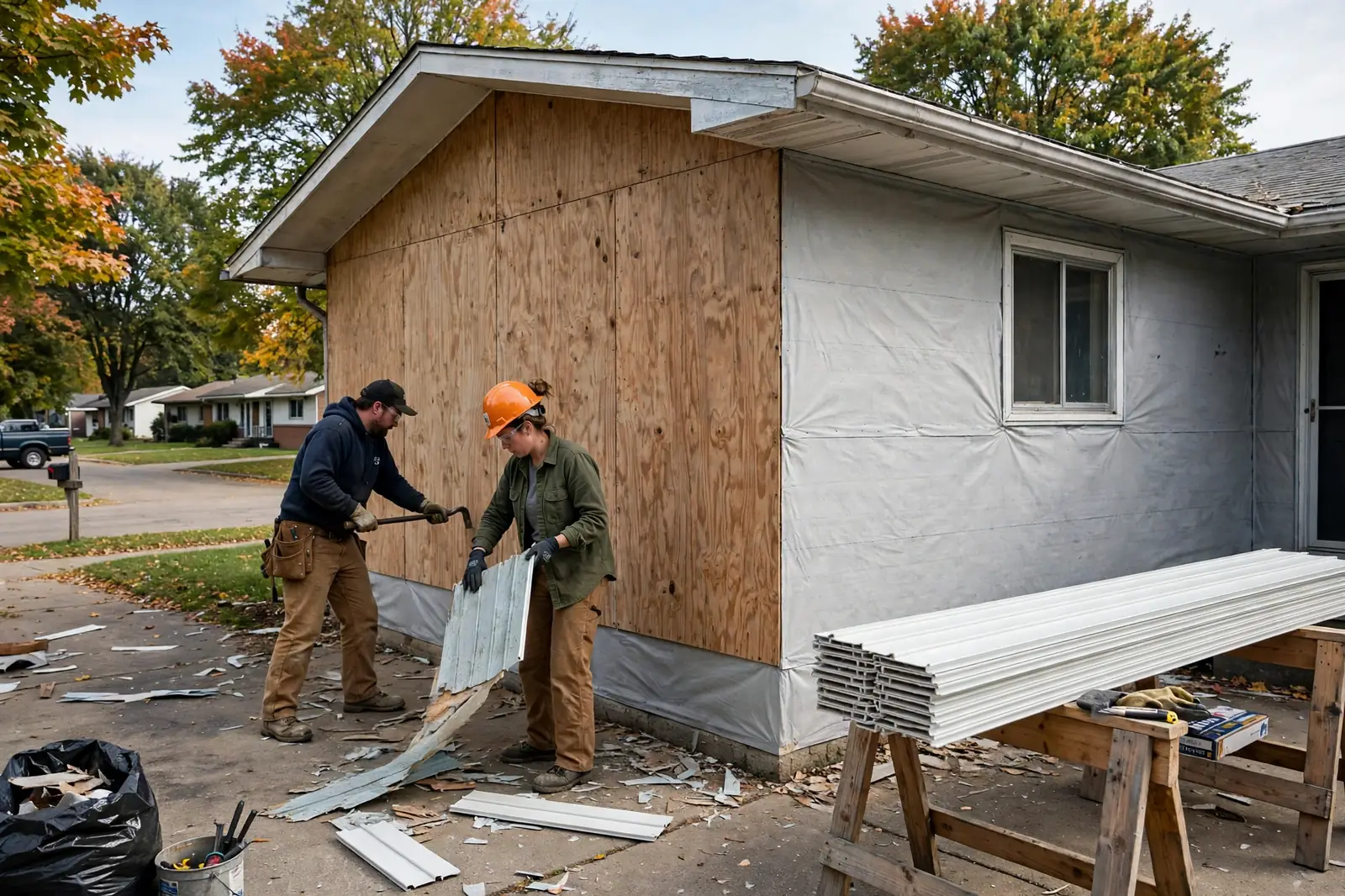
The vinyl on Warren homes today is mostly the first generation — installed in the 1980s and 1990s, when the city's 1960s homes were re-sided as their wood siding aged out. That first generation has now lived through thirty or more Michigan winters, and it shows: chalked south walls, cracked panels at the corners, locks that no longer hold in a wind off Lake St. Clair. The material has reached the end of its service life, and the replacement cycle is set by the city's building boom — whole streets at once, because they were built in the same year and sided in the same decade.
The vinyl that replaces it will last longer, because the material has improved — thicker profiles, deeper embossing, better cold-weather formulation — and because the installation discipline has improved with it. A vinyl wall hung loose, locked fully, and detailed for freeze and thaw will last decades, and the wall inspection that comes with the replacement is the reason it will last: the sheathing is checked, the flashing is corrected, and the wall is detailed to drain before the new panels go on.
Fiber cement: the long-life material
Fiber cement is made to last decades — the boards do not rot, do not feed insects, and hold paint far longer than wood. The material's service life is set by the details, not by the boards: the flashing, the clearances, the cut-edge sealing, and the paint system. A wall that is installed to the manufacturer's instructions and kept clear at the bottom edge will outlast a wall where those details were skipped, and the difference is measured in decades, not years.
The finish is the part of a fiber cement wall that ages first. Factory colour holds up well in this climate, and primed boards painted after installation hold up well too — but the finish is a layer over a board that does not itself rot, and it needs to be maintained when it eventually ages. The repaint cycle is far longer than wood, but it is not zero, and the visit says so, because a homeowner who expects a fiber cement wall to never need attention will be disappointed by the caulk joints before they are disappointed by the boards.
Wood and metal: the maintenance bargain
Wood lasts as long as its finish is maintained. A painted wood wall needs attention every several years, with the sunniest elevations needing it first, and a wall that is washed and inspected each year, with peeling areas dealt with as they appear, holds its finish far longer than a wall that is left until the paint is failing everywhere at once. Cedar can be left to weather to a silver-grey, and it can live like that for a long time on a wall that can dry — but a painted pine board cannot, because once the finish is gone the board absorbs water with every rain.
Metal lasts as long as its finish is sound. Steel and aluminum do not rot, do not feed insects, and do not absorb water, and the panels themselves are made to last decades. The finish is the part that ages — the factory colour chalks and fades under ultraviolet light, with the south and west elevations going first — and the fasteners are the part that fails first when they do not match the panel. A metal wall whose finish is sound and whose fasteners match the panels will outlast a wall where those details were skipped.
What shortens a wall's life
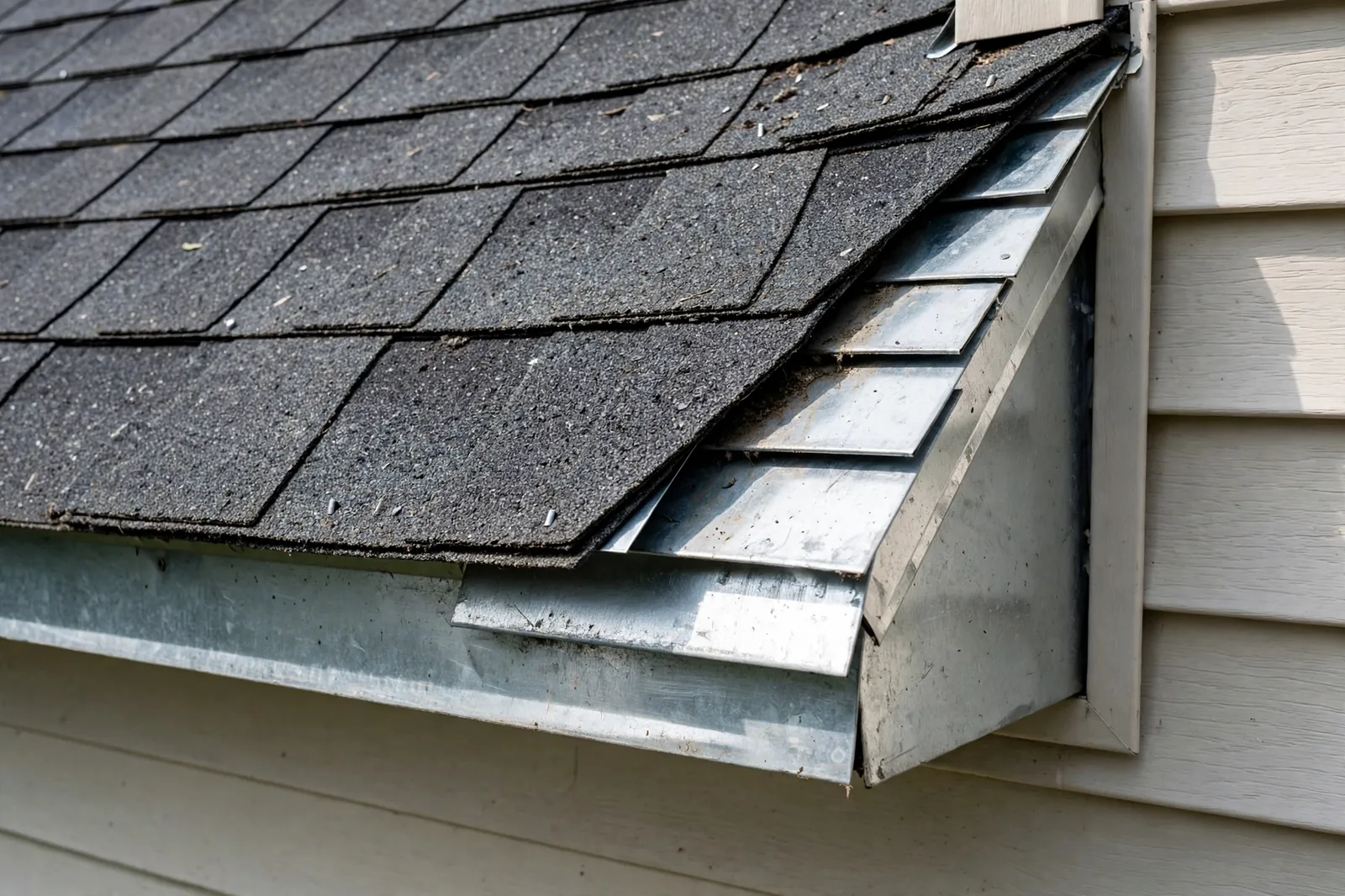
The details shorten a wall's life, and they are the same details on every material. Ground clearance ignored — a bottom edge sitting in splash-back or snowpack, wicking water up behind the cladding all winter. A butt joint left unflashed — water sitting against the cut edge, freezing, and working the finish off from behind. A cut edge left unsealed — an open end that absorbs water. A bottom edge sealed shut — water trapped behind the cladding instead of draining out. A nail driven too tight — a panel that cannot move, buckling in summer and pulling at its locks in winter.
Each of those details is an installation detail, not a material defect, and each one shows up the same way — paint peeling at a joint, a swollen bottom edge, a stain below a roofline, a panel that rattles in wind. The wall inspection is the step that finds them, and the repair is the detail, not the panel. A wall whose details are right will last; a wall whose details are wrong will fail, whatever the material on the label.
Reading your own wall
The homeowner can read the wall's age the same way the crew does, by looking at the signs in order. The south wall fades first, the west wall chalks next, and the wall under the eaves stays dark — and when the fading is uneven across the house, the material has aged. The bottom course softens first, the corners crack first, and the locks work loose first — and when the failure is spread across the house, the material has reached the end of its service life.
The visit reads the wall the same way, and it draws the line with you, on your wall, before any work starts. Repair makes sense when the damage is local — a few cracked panels, one loose lock, a single stained area with a clear source. Replacement makes sense when the failure is spread across the house, and when the wall underneath has never been inspected. At that point the replacement is also the only way to see the wall underneath, and what is found there decides the work.
Frequently asked questions
Straight answers to the questions Warren homeowners ask most.
Vinyl is made to last decades, and the first generation on Warren homes — installed in the 1980s and 1990s — is now reaching the end of its service life after thirty or more Michigan winters. How long a particular vinyl wall lasts depends on the installation: panels hung loose and locked fully, with the wall detailed to drain, will last far longer than panels nailed tight on a wall that traps water.
The boards are made to last decades — they do not rot, do not feed insects, and hold paint far longer than wood. How long a particular installation lasts depends on the details: the flashing, the clearances, the cut-edge sealing, and the paint system. A wall installed to the manufacturer's instructions and kept clear at the bottom edge will outlast a wall where those details were skipped.
Wood lasts as long as its finish is maintained. A painted wood wall needs attention every several years, and a wall that is washed and inspected each year holds its finish far longer than a wall left until the paint is failing everywhere. Cedar can be left to weather to silver-grey on a wall that can dry. The maintenance is the bargain: wood asks for paint, and it gives back a wall that looks like a real board.
The detailing, not the material. Ground clearance ignored, a butt joint left unflashed, a cut edge left unsealed, a bottom edge sealed shut, a nail driven too tight — each one is an installation detail, and each one shows up the same way: paint peeling at a joint, a swollen bottom edge, a stain below a roofline, a panel that rattles in wind. The wall inspection is the step that finds them.
When the failure is spread across the house — chalking on every sun-facing wall, cracks at many corners, panels that will not lock in several places, or stains that keep returning. When the wall underneath has never been inspected and the siding is thirty or more years old, replacement is also the only way to see that wall, and what is found there decides the work.
Yes, in a Michigan climate. Dark colours absorb more sun and move more with temperature, so they demand the same loose-hung discipline with extra attention to expansion gaps. Light colours move less and fade more slowly. The visit talks through the colour against the sunniest elevation of your home before it is ordered, because the colour is a climate choice as much as a style choice.
Talk about your wall?
One call connects you with a local siding professional for Warren and the towns around it.
Call NowTalk to a local siding professional
One call connects you with a local professional for Warren and nearby towns. Describe what your siding is doing — what cracks, what rattles, what stains — and the visit is arranged from there.
Mon–Fri 7:00 AM–10:00 PM ET · Sat 8:00 AM–10:00 PM ET · Sun 7:00 AM–9:00 PM ET
Service area
Sterling Heights, MI · Troy, MI · Madison Heights, MI · Roseville, MI · Eastpointe, MI · Clinton Township, MI · Shelby Township, MI · Fraser, MI · Center Line, MI · Detroit, MI
Warren Siding Pros is a referral service connecting customers with local siding professionals; it is not itself the service company.