Vinyl Siding Replacement in Warren, MI
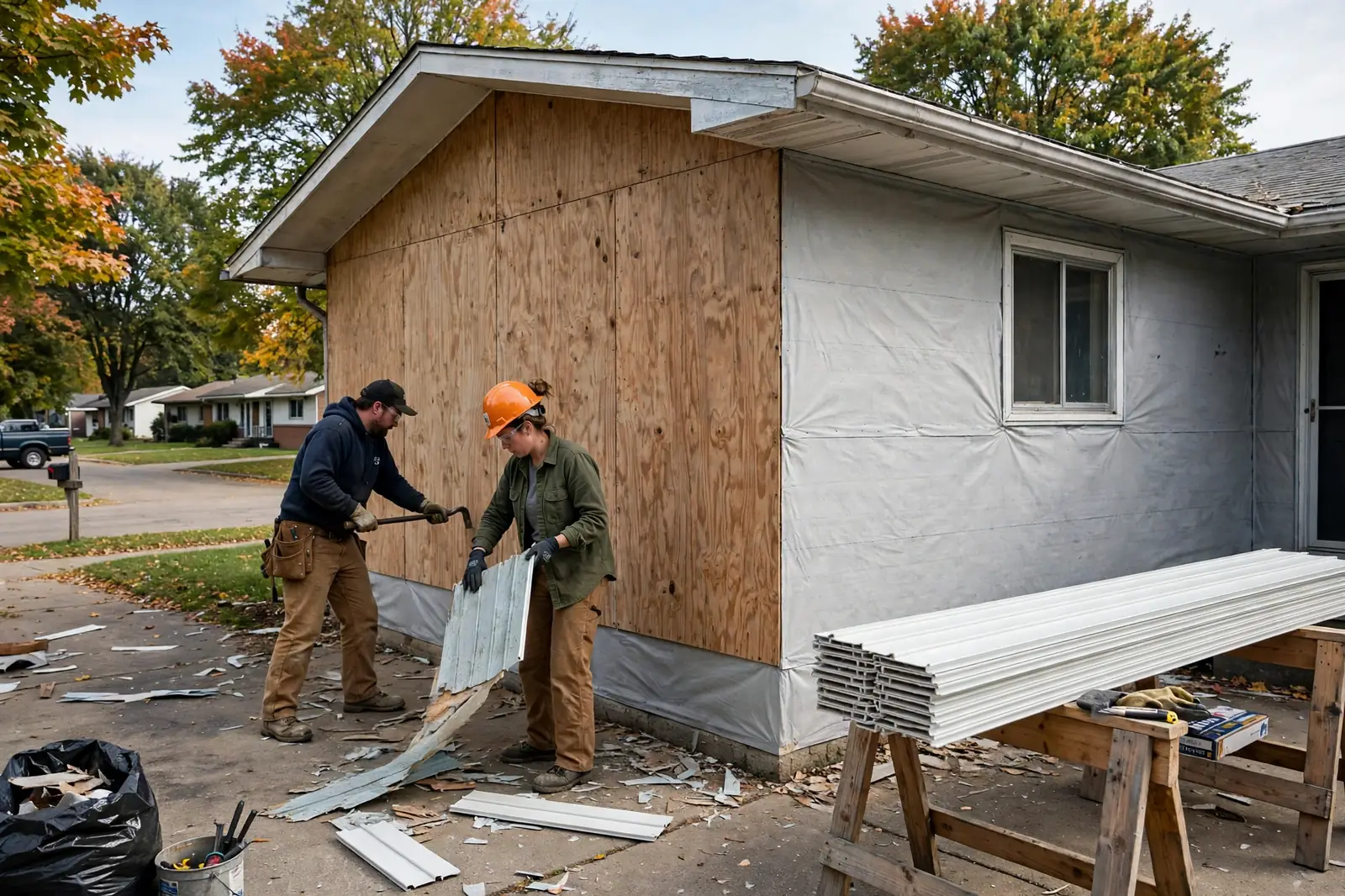
Vinyl siding replacement in Warren is a wall job disguised as a siding job. The old panels come off, the sheathing and flashing underneath get their first honest look in decades, and only then does the new siding go on — hung loose, locked fully, and detailed for freeze and thaw.
Call Now
Describe what your siding is doing and where you are — a local siding professional is connected from there.
Call NowMon–Fri 7:00 AM–10:00 PM ET · Sat 8:00 AM–10:00 PM ET · Sun 7:00 AM–9:00 PM ET
What is vinyl siding replacement?
Most Warren homes wearing vinyl today are on their second or third set of panels. The first set went on in the 1980s or 1990s, when vinyl was the quick answer to peeling wood siding. That first set has now lived through thirty or more Michigan winters, and it shows: chalked south walls, cracked panels at the corners, locks that no longer hold in a wind off Lake St. Clair. Replacement is not a cosmetic refresh — it is the moment the wall underneath finally gets inspected.
The inspection is the whole point of a replacement. Vinyl hides wall trouble better than any other cladding, because it does not rot itself and it does not show the rot behind it. A wall can look straight from the street while the sheathing behind the bottom course is soft, the window flashing has been leaking for a decade, and the housewrap is torn at every penetration. Removing the old panels is the first time anyone has seen that wall in a generation, and what is found there decides what the replacement actually costs in work, not in panels.
Homeowners often ask whether the old vinyl can stay and the new vinyl go over it. The honest answer is that it can, in some cases, and that it is rarely the right call in Warren. A second layer hides the wall inspection entirely, adds weight and thickness that the trim and windows were not detailed for, and locks in whatever moisture problem the first layer was already hiding. Replacement, done properly, means removal first.
How vinyl siding replacement works
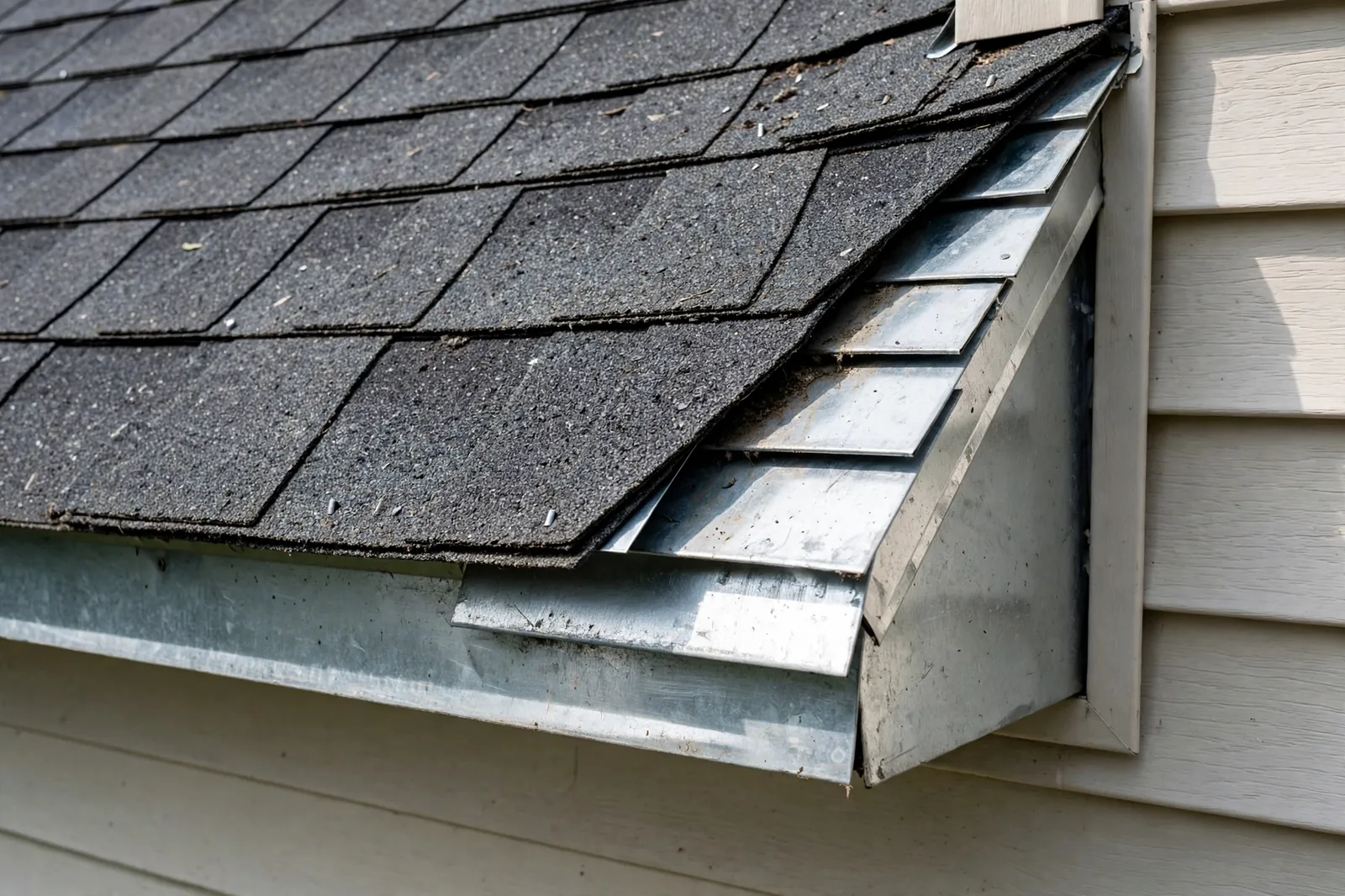
Vinyl siding replacement means the old panels are removed, the wall is inspected and repaired, and new panels are installed in their place. The removal is done elevation by elevation, so no wall stands open longer than it needs to. As each elevation comes off, the sheathing is checked for soft spots, the housewrap is checked for tears, and the flashing at windows, doors, and the roofline is checked for gaps.
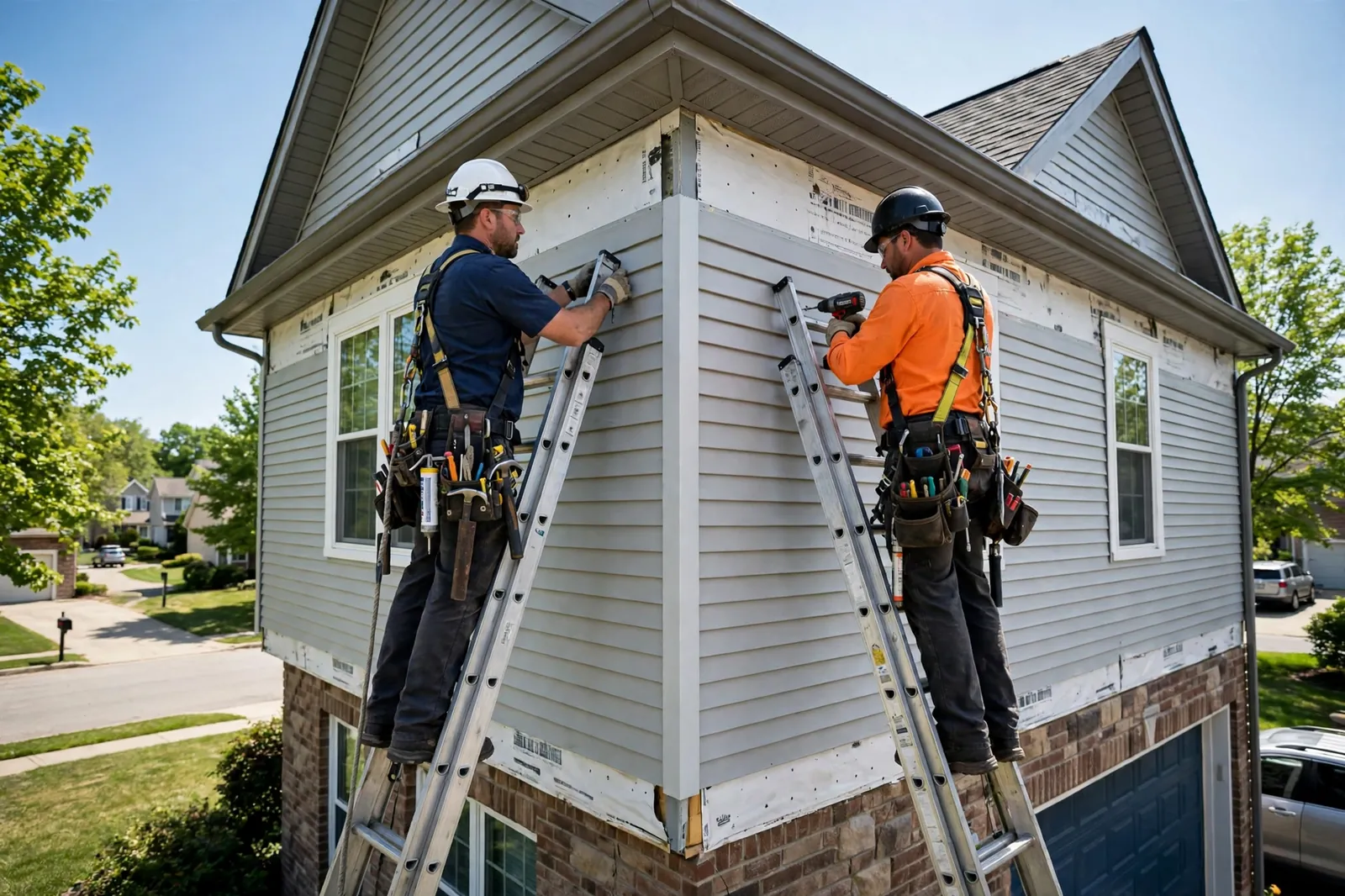
The new installation follows the same rules as a first installation — panels hung loose on their nails, locked fully along their length, trim set plumb — with one extra discipline: the new panels must line up with the existing window and door openings, the existing soffit, and the existing foundation line. A replacement that ignores those lines looks new for a week and wrong for a decade.
Signs you may need vinyl siding replacement
Chalking on the south and west walls
Run a hand along the sunniest wall. If it comes away with a white, chalky film, the surface of the vinyl has broken down under ultraviolet light. The panel is still hanging, but its surface has aged past the point where it sheds water and holds colour the way it should.
Cracked panels at corners and laps
Corners take the worst of wind and ice, and laps are where a panel ends and the next begins. Cracks at either place let wind-driven rain behind the cladding, and in a freeze-thaw climate that water works on the sheathing all winter long.
Panels that no longer lock
A panel whose bottom edge will not stay engaged with the panel below it has usually been pulled out of shape by years of expansion and contraction, or by a nail that was driven too tight. A panel that will not lock is a panel that will rattle, gap, and leak.
Fading that is uneven across the house
When the south wall is visibly lighter than the north wall, or the wall under the eaves is a different shade from the wall in full sun, the vinyl has aged unevenly. The house is telling you the material has reached the end of its service life, not that one wall needs cleaning.
Stains that return after washing
A stain that comes back after the wall is washed is not dirt — it is water finding its way out from behind the siding. The source is usually a flashing gap above the stain, and washing the wall only hides it until the next rain.
A wall that sounds hollow and feels soft
Press the wall near the bottom course and around windows. A hollow sound is normal for vinyl; a soft spot is not. Softness means the sheathing behind the panel has lost its structure, and no new panel will fix that until the sheathing is replaced.
What the service includes
Elevation-by-elevation removal
Old panels come off one wall at a time, so the house is never left open on all sides and the wall inspection happens while the crew is already there.
Sheathing repair
Soft or rotted sheathing is cut out and replaced, and the new sheathing is tied into the sound material around it before housewrap goes back on.
Housewrap and flashing renewal
Torn housewrap is replaced and window, door, and roofline flashing is corrected, so the new siding sits on a wall that actually drains.
New panels, hung loose
Replacement panels are nailed in the centre of their slots with room to slide, locked fully, and lapped so rain runs outward and down.
Trim and corner renewal
Corner posts, J-channel, and window trim are replaced with the panels, because old trim that is out of plumb will pull every new panel out of line.
Disposal and walk-through
Old panels and cut-offs are removed from the property, and the finished elevations are walked with the homeowner, lock by lock.
Options and choices
The first choice in a replacement is the profile: the same horizontal lap the house already wears, or a change. A ranch that has always worn narrow lap can take a wider Dutch lap for a deeper shadow line, and a colonial can take a vertical board-and-batten accent on the gable ends. The profile changes the look of the house more than any other single decision, and it costs nothing extra in material discipline to get it right.
The second choice is insulated backing. A replacement is the natural moment to add it, because the wall is already open and the foam backing adds stiffness and a layer of continuous insulation that a 1960s Warren wall usually lacks. Homeowners who add it notice it first in winter, on the inside of exterior walls that used to feel cold to the touch.
The third choice is colour, and in Michigan it is a climate choice as much as a style choice. Dark colours move more with temperature and demand the same loose-hung discipline with extra attention to expansion gaps. Light colours move less and fade more slowly. The visit walks the sunniest elevation with you and talks through how each colour will behave there over the next decade.
What happens when you call
Call and visit
One call arranges a visit. The crew walks every elevation, notes where the old vinyl is failing, and listens for the problems you have already spotted.
Test removal and wall inspection
A section of old vinyl is removed so the sheathing, housewrap, and flashing can be seen. What is found there sets the real scope of the replacement.
Plan and material choice
The plan covers the profile, the colour, the trim, and the sequence of elevations, with the material ordered to measurements taken on the visit.
Removal and wall repair
Old panels come off elevation by elevation. Damaged sheathing is replaced, housewrap is repaired, and flashing is corrected while the wall is open.
Installation and walk-through
New panels go on hung loose and locked fully. The finished wall is walked with you before the crew leaves, and the old panels are hauled away.
Mistakes to avoid
Laying new vinyl over old vinyl
A second layer hides the wall inspection, adds thickness the trim was not detailed for, and locks in whatever moisture problem the first layer was hiding.
Reusing old trim
Old corner posts and J-channel are rarely plumb after decades of movement. New panels hung against old trim follow the old trim's line, not a straight one.
Skipping the sheathing repair
New panels over soft sheathing look fine for a season, then the same soft spot shows through as a wave or a sag — this time under panels that have to come off again to fix it.
Nailing tight to stop rattling
A rattling panel is a loose lock, not a loose nail. Driving the nail tight stops the rattle and starts the buckling, because the panel can no longer move with temperature.
Siding in Warren
Warren's replacement cycle is set by the city's building boom. With 41 percent of homes built in the 1960s and another 33 percent in the 1940s and 1950s, the first generation of vinyl — installed in the 1980s and 1990s as those homes' wood siding aged out — is now reaching the end of its service life across whole streets at once. It is common for three houses on the same block to need replacement in the same season, because they were built in the same year, sided in the same decade, and weathered the same winters.
The Macomb County pattern matters too. Homes in Sterling Heights, Clinton Township, and Shelby Township were built later and often carry newer vinyl, while Warren, Eastpointe, and Roseville carry the older stock. A Warren replacement crew therefore sees more wall damage per job than a crew working the newer suburbs — more soft sheathing, more original flashing that was never quite right, and more bottom courses that have spent decades in splash-back.
Other siding services in Warren
Vinyl Siding InstallationFiber Cement SidingJames Hardie SidingWood SidingEngineered Wood SidingMetal SidingSiding RepairEmergency Siding RepairSoffit, Fascia & Siding Trim
Frequently asked questions
Straight answers to the questions Warren homeowners ask most.
Repair makes sense when the damage is local — a few cracked panels, one loose lock, a single stained area with a clear source. Replacement makes sense when the failure is spread across the house: chalking on every sun-facing wall, cracks at many corners, panels that will not lock in several places, or stains that keep returning. When the wall underneath has never been inspected and the vinyl is thirty or more years old, replacement is also the only way to see that wall.
It can be done, and it is rarely the right call in Warren. A second layer hides the wall inspection entirely, adds thickness that the window trim and corners were not detailed for, and locks in any moisture problem the first layer was hiding. The work that matters in a replacement — the sheathing check, the housewrap repair, the flashing correction — cannot happen with the old panels still on the wall.
A single-story ranch usually takes several working days, and a two-story colonial takes longer. The pace is set by the wall inspection: each elevation is opened, inspected, repaired, and closed in turn, so a wall with more sheathing damage takes more time. Winter weather slows the work, because no wall is left open overnight in a freeze.
It can help, in two ways. First, insulated vinyl adds a layer of continuous insulation behind the cladding, which reduces cold spots on the inside of exterior walls. Second, the wall inspection finds the air leaks and missing insulation that a 1960s wall often hides — gaps around windows, a missing housewrap section, a rim joist that was never sealed. The siding job is the moment those are found and fixed.
Old panels are removed from the property as part of the job. Vinyl is a bulky material, and a full house generates a large volume of panels and cut-offs. The crew hauls it away, and the yard is cleared of nails and cut-offs before the walk-through.
You need to be there for the first visit and for the final walk-through. During the work itself, the crew works outside the house and the wall inspection findings are photographed so they can be shown to you at the end of the day. The walk-through is when every elevation is checked together, lock by lock.
Yes, and replacement is the most practical moment to do it. The profile, the colour, and the trim detail are all chosen during replacement, and a change from narrow lap to Dutch lap, or the addition of a board-and-batten gable accent, changes the street presence of the house without changing the structure. The visit talks through the options against the style of your home and the street.
Ultraviolet light breaks down the surface of vinyl, and the south and west elevations get far more of it than the north. The wall under the eaves stays darker because it is shaded. Uneven fading is a normal sign of age, and it is also a useful map: the most faded wall is the wall that has taken the most weather, and it is usually the first wall the inspection opens.
Talk about vinyl siding replacement for your home?
One call connects you with a local siding professional for Warren and the towns around it.
Call NowTalk to a local siding professional
One call connects you with a local professional for Warren and nearby towns. Describe what your siding is doing — what cracks, what rattles, what stains — and the visit is arranged from there.
Mon–Fri 7:00 AM–10:00 PM ET · Sat 8:00 AM–10:00 PM ET · Sun 7:00 AM–9:00 PM ET
Service area
Sterling Heights, MI · Troy, MI · Madison Heights, MI · Roseville, MI · Eastpointe, MI · Clinton Township, MI · Shelby Township, MI · Fraser, MI · Center Line, MI · Detroit, MI
Warren Siding Pros is a referral service connecting customers with local siding professionals; it is not itself the service company.