Insulated Vinyl Siding in Warren, MI
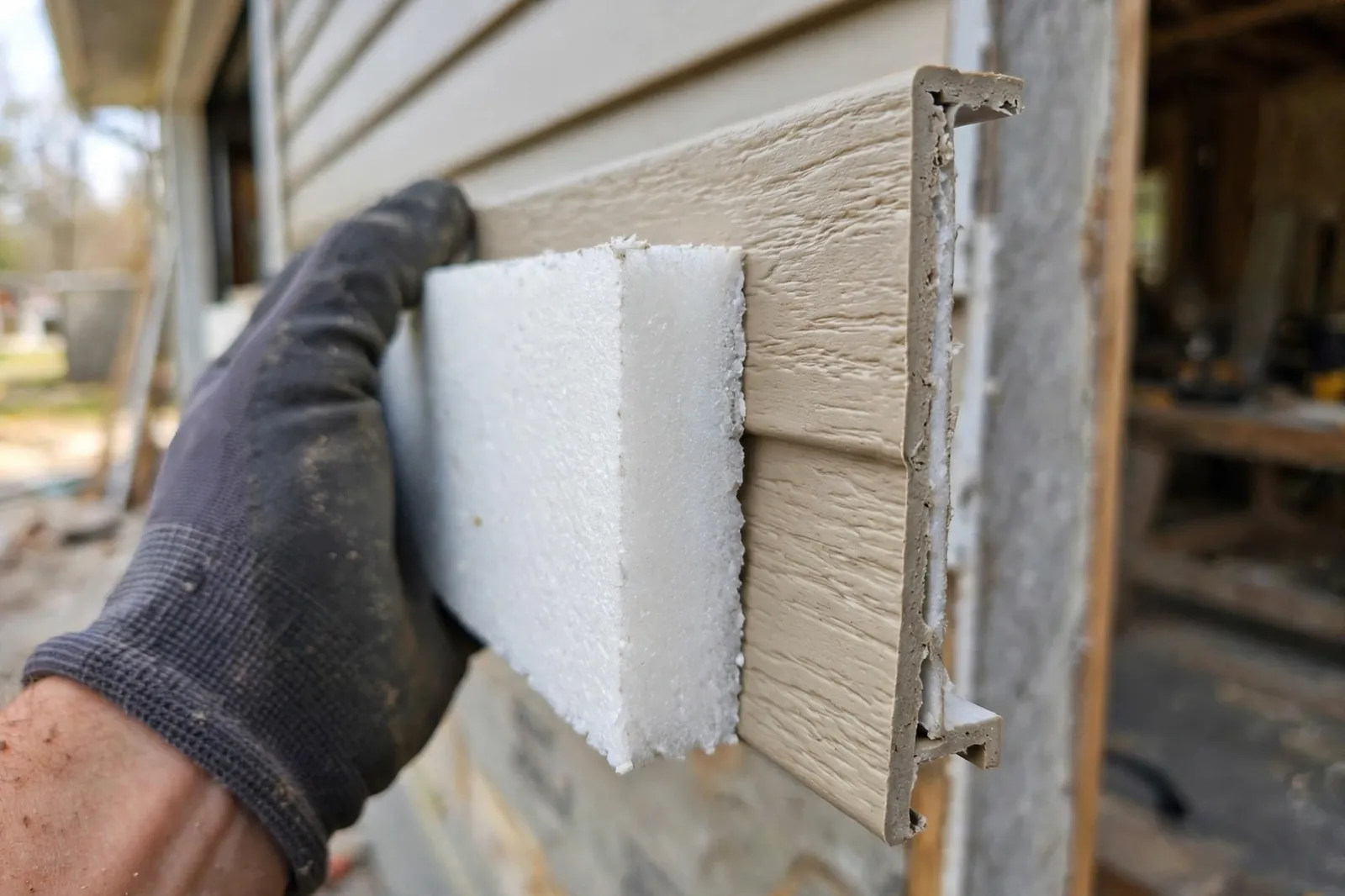
Insulated vinyl siding is a standard vinyl panel with a contoured foam backing bonded to it. The backing stiffens the panel, quiets the hollow sound, and adds a layer of continuous insulation behind the cladding — the change Warren homeowners notice first on the inside of a cold exterior wall.
Call Now
Describe what your siding is doing and where you are — a local siding professional is connected from there.
Call NowMon–Fri 7:00 AM–10:00 PM ET · Sat 8:00 AM–10:00 PM ET · Sun 7:00 AM–9:00 PM ET
What is insulated vinyl siding?
Insulated vinyl is the answer to the two complaints homeowners have about standard vinyl: that it sounds hollow, and that the wall behind it feels cold in winter. The foam backing solves both at once. It fills the space behind the panel, so the panel does not flex and drum in wind, and it adds a layer of insulation that covers the studs as well as the cavities — the continuous layer that a 1960s Warren wall usually lacks.
The backing also changes how the panel behaves in cold weather. A backed panel is stiffer, so it holds its line in a January wind and resists the oil-canning that a thin panel shows on a sunny wall. It is still vinyl underneath, so it still moves with temperature and still needs to be hung loose on its nails — the backing does not change the expansion, it changes the stiffness. A crew that installs insulated vinyl the way it installs standard vinyl will get the same buckling; a crew that respects the movement will get a wall that stays straight.
Warren is a natural market for this product, because the city's 1960s housing stock was built with thin wall insulation by modern standards. The wall cavities hold what they hold, and the studs themselves are thermal bridges — cold lines through the wall wherever a stud sits. A continuous foam layer behind the cladding covers those bridges, and the homeowner feels it as fewer cold spots on the inside of exterior walls, not as a number on a specification sheet.
What the foam backing does
The backing is a contoured foam layer bonded to the back of the vinyl panel, shaped to follow the panel's profile. It stiffens the panel, so the wall reads as solid rather than hollow, and it adds a layer of continuous insulation that covers the studs and the cavities alike. On a 1960s Warren ranch, where the wall insulation is thin and the studs are cold lines through the wall, that continuous layer is the most noticeable change in the job.
The backing also quiets the wall. Standard vinyl drums in wind and rattles when a panel works loose; a backed panel is damped by the foam, and the wall sounds solid when it is tapped. The difference is audible on the first walk-through, and it is the change homeowners mention first when they describe the finished job.
How it is installed
Insulated vinyl is installed the same way as standard vinyl, with one extra discipline: the panels are heavier and stiffer, so they are handled and cut with more care, and the wall behind them is levelled where it needs it, because a stiff panel shows a wavy wall more clearly than a flexible one. The panels are still hung loose on their nails, still locked fully along their length, and still lapped so rain runs outward.
The wall inspection is the same as any vinyl job — the sheathing, the housewrap, and the flashing are checked before the panels go on. The backing does not hide a wall problem; it covers it, and a wall problem covered by foam is a wall problem that will show up later, under panels that have to come off again to fix it.
Where it makes the most difference
The product makes the most difference on the walls that face the weather — the west wall that takes the wind off the lake, the north wall that never sees sun in winter, the wall behind the room that is always cold. Those are the walls where the continuous insulation is felt, and where the stiffened panel holds its line in wind.
It makes the least difference on a wall that is already well insulated and already straight — a newer home, or a wall that was rebuilt with modern insulation. The visit says so, because the product is worth its place on a 1960s Warren wall and a poor use of material on a wall that does not need it.
What it does not do
Insulated vinyl does not replace wall insulation, and it does not fix a wall that leaks air. The foam backing is a thin layer, and it covers the studs — it does not fill the cavities or seal the gaps around windows. A wall with missing insulation or open air leaks needs those fixed during the wall inspection, when the cladding is off and the wall is open. The backing is the finishing layer, not the fix.
It also does not change the expansion of vinyl. The panel still grows and shrinks with temperature, and it still needs to be hung loose. A backed panel nailed tight will buckle the same way a standard panel will — it will just buckle more stiffly, and the damage will be harder to hide.
Other siding services in Warren
Board and Batten SidingShake and Shingle SidingSiding for Garages & OutbuildingsVinyl Siding InstallationVinyl Siding ReplacementFiber Cement SidingJames Hardie Siding
Frequently asked questions
Straight answers to the questions Warren homeowners ask most.
It is a standard vinyl panel with a contoured foam backing bonded to it. The backing stiffens the panel, quiets the hollow sound, and adds a layer of continuous insulation behind the cladding. It is installed the same way as standard vinyl — hung loose, locked fully — with extra care for the wall behind it, because a stiff panel shows a wavy wall.
It helps, in a specific way. The foam backing adds a layer of continuous insulation that covers the studs as well as the cavities, so the cold lines through the wall — the studs themselves — are covered. Homeowners notice it as fewer cold spots on the inside of exterior walls. It does not replace wall insulation or fix air leaks; those are fixed during the wall inspection, when the cladding is off.
It is often the most noticeable change in a vinyl job on a home of that age, because the wall insulation is thin and the studs are cold lines through the wall. The backing covers those lines, and the stiffened panel holds its line in wind. On a newer home with modern wall insulation, the difference is smaller, and the visit says so.
The panels are heavier and stiffer, so they are handled and cut with more care, and the wall is levelled where it needs it, because a stiff panel shows a wavy wall. The nailing is the same — hung loose, with room to slide — because the panel still expands and contracts with temperature. The backing changes the stiffness, not the movement.
It can, with cold-weather handling. The panels are cut with a wider expansion gap in cold weather, handled gently because the material is more brittle below freezing, and the crew works one elevation at a time so no wall stands open to snow. The wall inspection matters even more in winter, because frozen sheathing hides soft spots that a summer inspection would find by touch.
It needs the same care as standard vinyl — a wash when the wall is dirty, and a look at the locks and laps every few years. The backing does not change the maintenance; it changes the feel of the wall. A backed panel that rattles has the same cause as a standard panel that rattles — a loose lock or a tight nail — and the repair is the same.
Talk about insulated vinyl siding for your home?
One call connects you with a local siding professional for Warren and the towns around it.
Call NowTalk to a local siding professional
One call connects you with a local professional for Warren and nearby towns. Describe what your siding is doing — what cracks, what rattles, what stains — and the visit is arranged from there.
Mon–Fri 7:00 AM–10:00 PM ET · Sat 8:00 AM–10:00 PM ET · Sun 7:00 AM–9:00 PM ET
Service area
Sterling Heights, MI · Troy, MI · Madison Heights, MI · Roseville, MI · Eastpointe, MI · Clinton Township, MI · Shelby Township, MI · Fraser, MI · Center Line, MI · Detroit, MI
Warren Siding Pros is a referral service connecting customers with local siding professionals; it is not itself the service company.