Siding for Single-Family Homes in Warren, MI
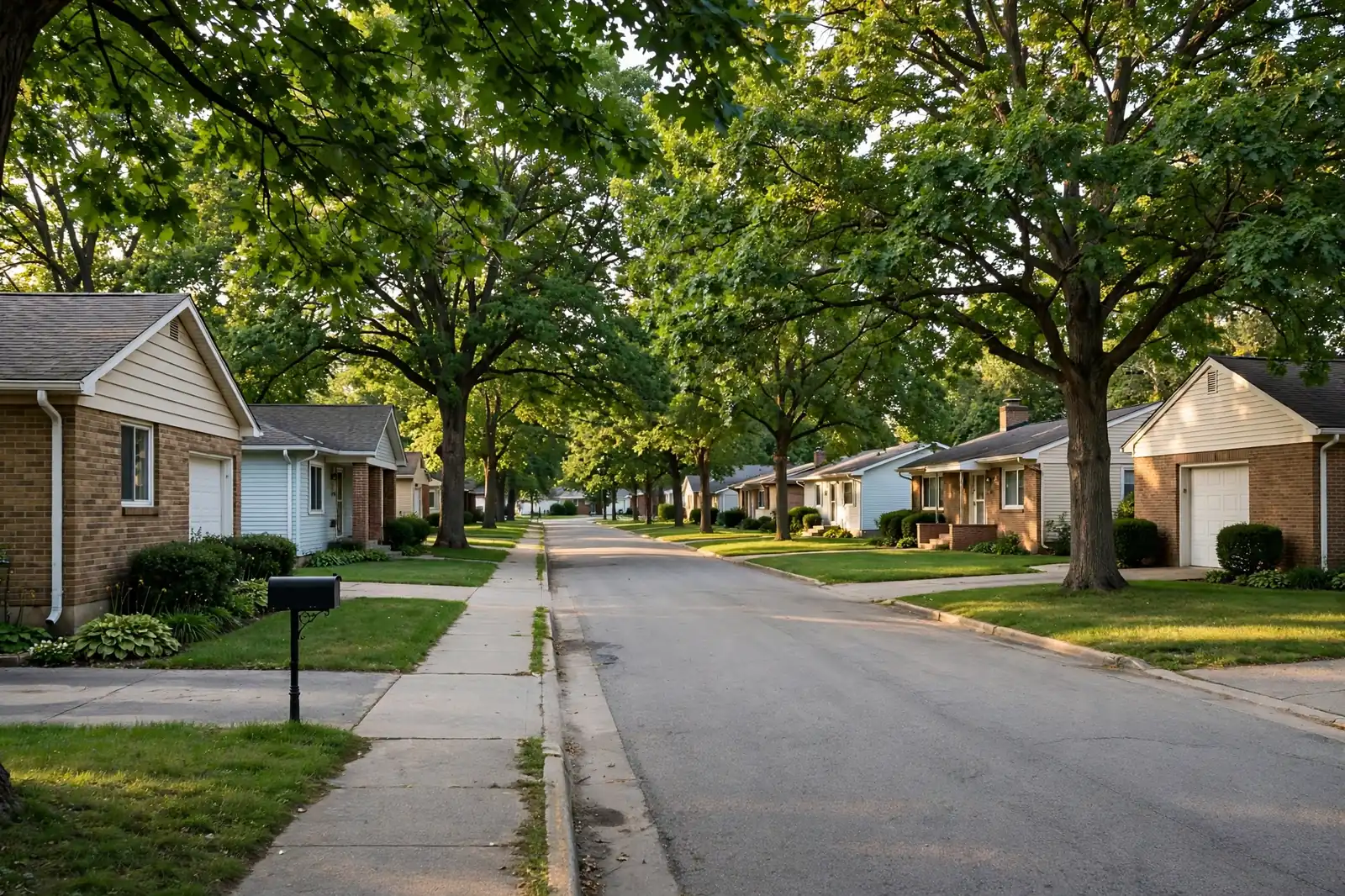
Single-family homes are the siding market in Warren. The city's ranch, colonial, and bungalow homes — most of them built before 1970 — are at the age where the cladding that went on in the 1980s and 1990s is reaching the end of its service life, and the wall underneath is ready for its first honest inspection in a generation.
Call Now
Describe what your siding is doing and where you are — a local siding professional is connected from there.
Call NowMon–Fri 7:00 AM–10:00 PM ET · Sat 8:00 AM–10:00 PM ET · Sun 7:00 AM–9:00 PM ET
Siding for single-family homes in Warren
Warren is a city of single-family homes. About three in four of them were built before 1970 — 41 percent in the 1960s and 33 percent in the 1940s and 1950s — and most of them are the same three shapes: the ranch, the colonial, and the bungalow. The ranch is a single story, spread across the lot, with a low-pitched roof and a wide eave. The colonial is two stories, with a steeper roof and a taller wall. The bungalow is a story and a half, with a dormer and a porch. Each shape asks something different of its siding, and the visit reads the shape before it reads the wall.
The ranch is the most common Warren home, and the most forgiving wall to side. It is a single story, so every elevation is reached from the ground, and the wall is short enough that a wave or a buckle shows immediately. The colonial is the harder wall — two stories, with a taller field that needs staging, and a top course that meets the roofline at a flashing detail that has to be right. The bungalow is the oldest wall, and the one most likely to be hiding original wood under a layer of vinyl.
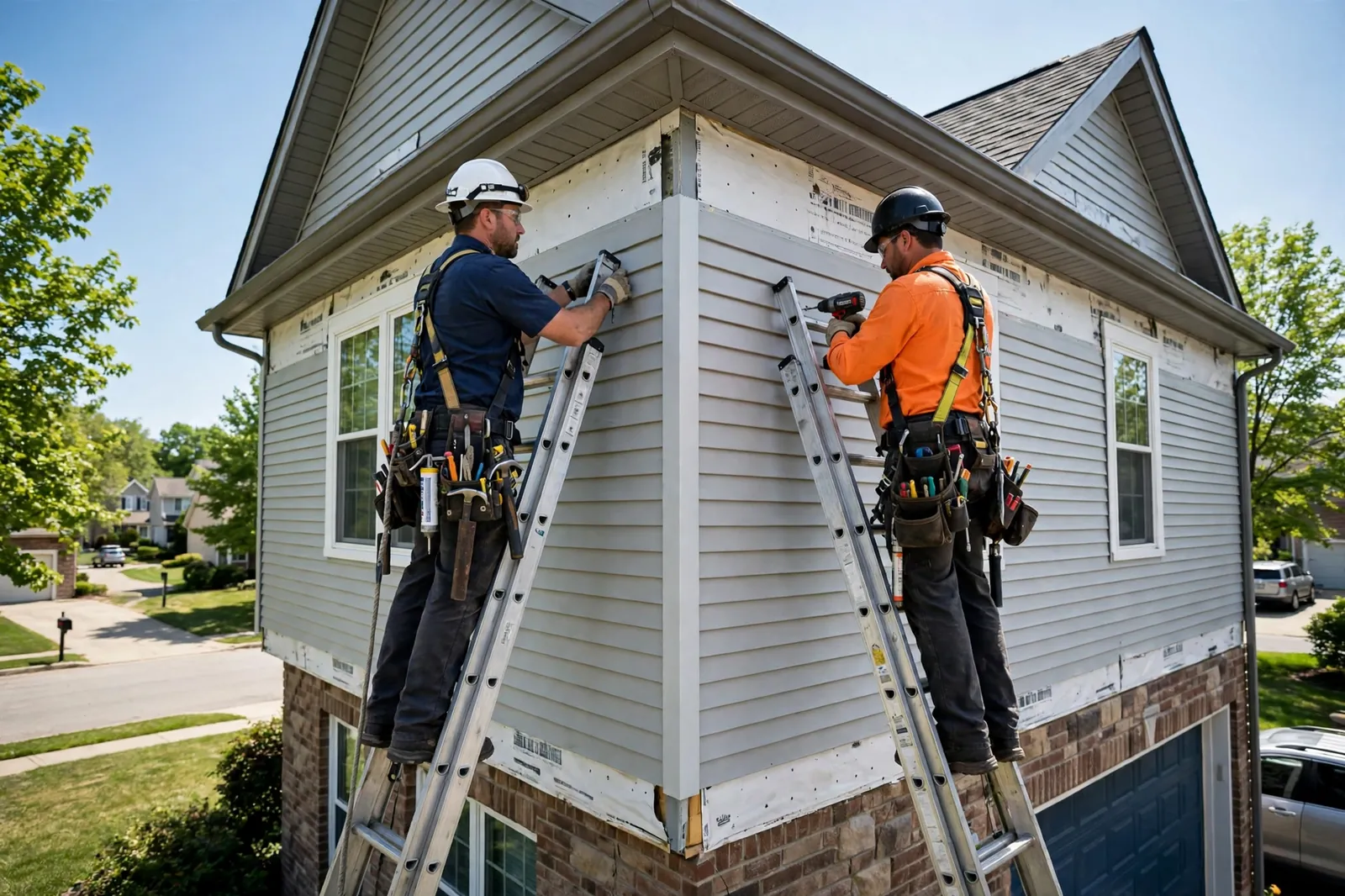
The work on a single-family home is the work this site describes everywhere else: the wall inspection, the sheathing check, the flashing correction, and the panels hung loose and locked fully. What changes with the home is the sequence — the ranch is sided elevation by elevation from the ground, the colonial is staged, the bungalow is opened carefully, because the wood underneath may be worth keeping.
Ranch homes
The ranch is Warren's default home, and the default siding job. A single story, a low-pitched roof, a wide eave, and a wall that is short enough to read at a glance. The ranch is sided from the ground, elevation by elevation, and the wall inspection happens as each elevation comes off. The most common ranch wall is brick on the front and vinyl on the sides and back, and the most common ranch problem is the bottom course — the course that has spent decades in splash-back from the lawn.
The ranch is also the home where insulated vinyl makes the most difference, because the wall insulation is thin and the studs are cold lines through the wall. The foam backing covers those lines, and the homeowner feels it as fewer cold spots on the inside of exterior walls. The visit talks through the backing against the ranch's wall, because the ranch is the home where the product earns its place.
Colonial homes
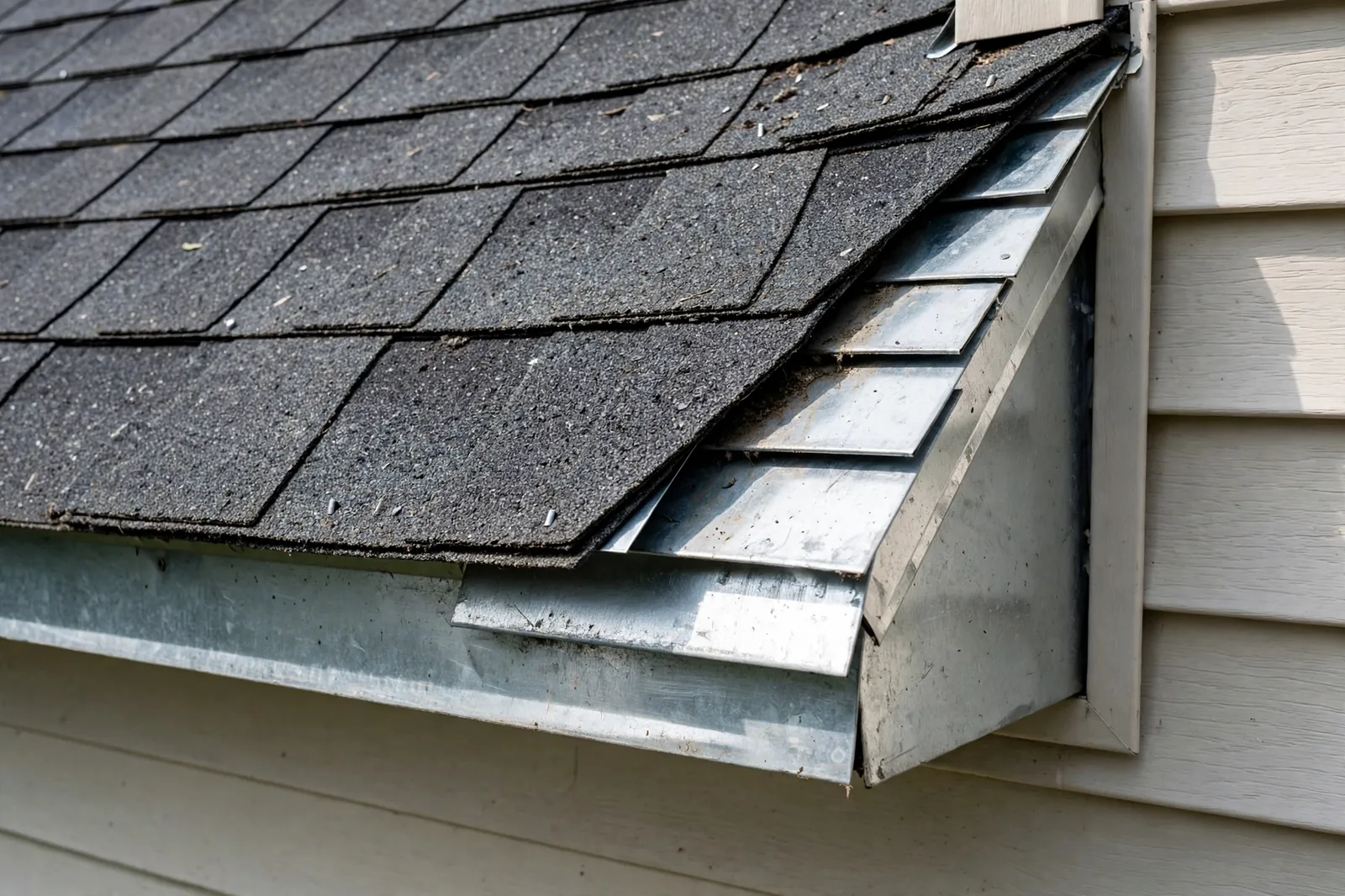
The colonial is the taller wall, and the harder job. Two stories, a steeper roof, and a top course that meets the roofline at a flashing detail that has to be right — the step flashing where the roof meets the wall is the detail that keeps roof water out of the wall, and when it fails the stain appears on the siding below it. The colonial is staged, and the upper panels are set from scaffolding, which is why the job takes longer than a ranch.
The colonial is also the home where fiber cement makes the most sense, because the taller wall shows a wave or a buckle more clearly than a short wall does, and fiber cement holds its line where vinyl waves. The visit talks through the material against the height of the wall, because a tall wall in vinyl needs a straighter wall behind it than a tall wall in fiber cement.
Bungalows and older homes
The bungalow is the oldest home in Warren, and the one most likely to be hiding original wood under a layer of vinyl. When the vinyl comes off a 1940s or 1950s bungalow, the crew often finds the original clapboard underneath — sometimes sound, sometimes soft at the bottom course, always a record of how the wall has handled seventy Michigan winters. The inspection decides whether the wood is kept, with the bottom course renewed, or replaced.
The bungalow is also the home where the street expects wood, and where a fiber cement or engineered wood wall that reads as painted wood suits the house better than a vinyl wall that reads as vinyl. The visit talks through the material against the style of the home and the street, because a bungalow in the wrong cladding looks wrong in a way a ranch in the wrong cladding does not.
Other properties we serve
Rental PropertiesMulti-Family BuildingsCommercial Properties
Frequently asked questions
Straight answers to the questions Warren homeowners ask most.
Vinyl is the most common, because it became the default when the city's 1960s homes were re-sided in the 1980s and 1990s. Fiber cement is the growing choice among homeowners who have already replaced vinyl once and do not want to do it again. Wood is the original cladding on the city's oldest homes, and it is still there under a layer of vinyl on many of them.
Repair makes sense when the damage is local — a few cracked panels, one loose lock, a single stained area with a clear source. Replacement makes sense when the failure is spread across the house: chalking on every sun-facing wall, cracks at many corners, panels that will not lock in several places, or stains that keep returning. When the wall underneath has never been inspected and the siding is thirty or more years old, replacement is also the only way to see that wall.
Yes. A single-story ranch is sided from the ground, elevation by elevation, and the wall is short enough to read at a glance. A two-story colonial needs staging, and the upper panels are set from scaffolding, which is why the job takes longer. The pace in both cases is set by the wall inspection — each elevation is opened, inspected, repaired, and closed in turn.
The site does not advise on selling. What the visit provides is a wall inspection and a record of the wall condition — the sheathing, the housewrap, and the flashing — which is the record a homeowner takes to any decision about the house. A wall that has been inspected and repaired is a wall whose condition is known, and that knowledge is useful whatever the homeowner decides next.
Talk about siding for single-family homes?
One call connects you with a local siding professional for Warren and the towns around it.
Call NowTalk to a local siding professional
One call connects you with a local professional for Warren and nearby towns. Describe what your siding is doing — what cracks, what rattles, what stains — and the visit is arranged from there.
Mon–Fri 7:00 AM–10:00 PM ET · Sat 8:00 AM–10:00 PM ET · Sun 7:00 AM–9:00 PM ET
Service area
Sterling Heights, MI · Troy, MI · Madison Heights, MI · Roseville, MI · Eastpointe, MI · Clinton Township, MI · Shelby Township, MI · Fraser, MI · Center Line, MI · Detroit, MI
Warren Siding Pros is a referral service connecting customers with local siding professionals; it is not itself the service company.