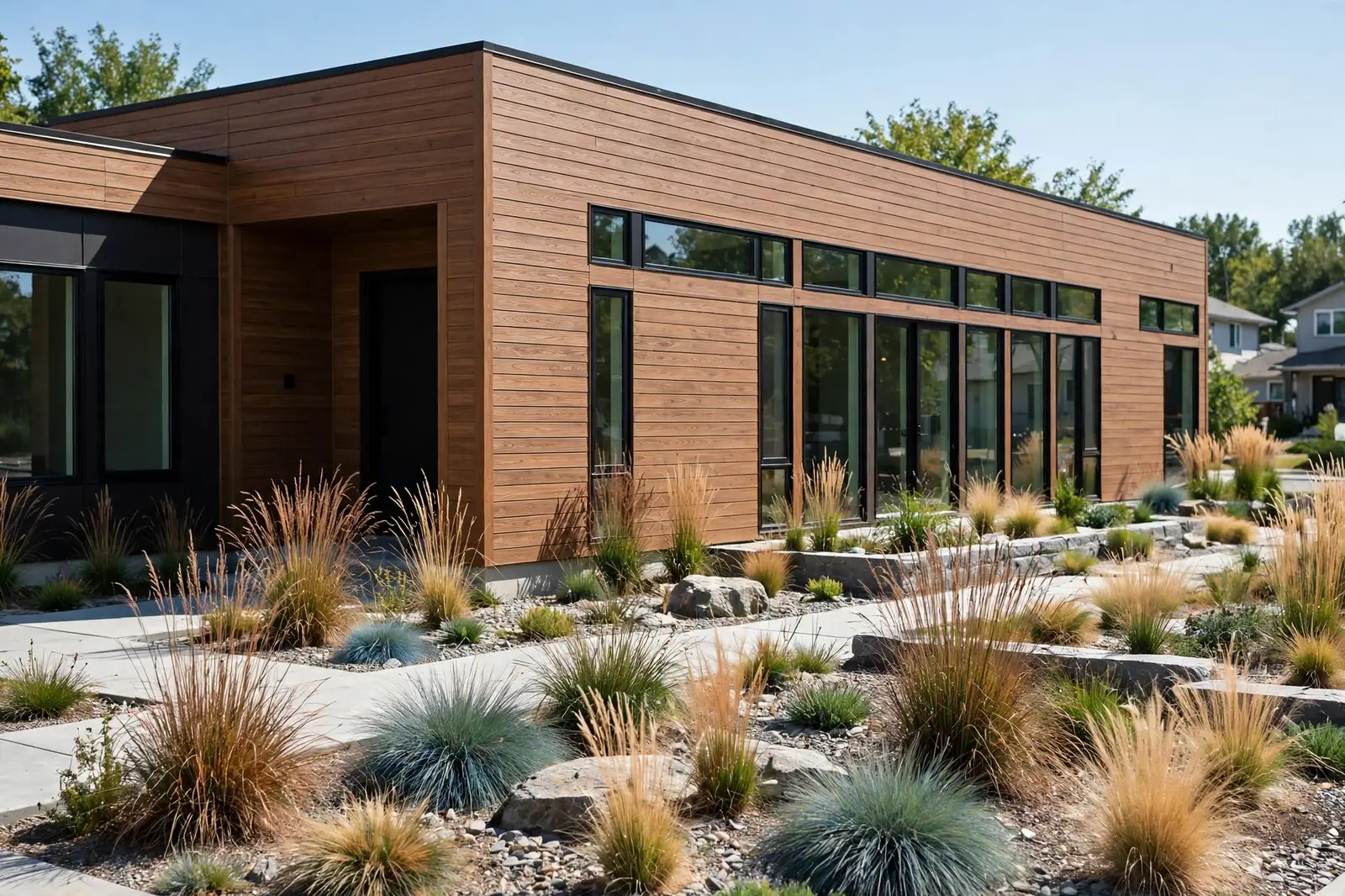
Engineered Wood Siding in Warren, MI
Engineered wood siding is the middle ground Warren homeowners ask for when they want the look of wood without the maintenance of wood. It is real wood fiber, treated and pressed into boards with a factory finish — and it holds its line in a Michigan winter when the wall behind it can drain and dry.
Call Now
Describe what your siding is doing and where you are — a local siding professional is connected from there.
Call NowMon–Fri 7:00 AM–10:00 PM ET · Sat 8:00 AM–10:00 PM ET · Sun 7:00 AM–9:00 PM ET
What is engineered wood siding?
Engineered wood siding is made from wood fiber and resin, pressed into boards and panels, treated against rot and insects, and finished in the factory with a baked-on colour. It looks like wood because it is wood — wood fiber, re-formed — and it reads as painted wood from the street in a way that vinyl and fiber cement can imitate but never quite match. The factory finish is the other half of the product: applied in controlled conditions, it holds colour and resists peeling far longer than a field-applied paint.
The material sits between solid wood and fiber cement. It is lighter than fiber cement and easier to cut and handle, it holds a nail without the brittleness of a cement board, and it carries a deeper shadow line than vinyl. Its weakness is the same as any wood product: it absorbs water if the finish fails or the cut edges are left open, and in a freeze-thaw climate that water works on the board. The installation therefore treats the cut edges and the clearances with the same care as a solid wood job.
Warren homeowners usually find engineered wood after ruling out the two extremes. Vinyl feels too light and too hollow for the front of the house. Solid wood asks for more maintenance than they want to give. Fiber cement feels too heavy and too flat for the style of their home. Engineered wood answers all three objections at once — the look of wood, the handling of a light board, and a factory finish that holds — provided the wall behind it is detailed to drain and dry.
How engineered wood siding works
Engineered wood siding is manufactured as lap boards, panels, and trim, in wood-grain and smooth faces. The boards are made from wood strands or fibers bound with resin and treated with a borate-based preservative, then primed and finished in the factory. The lap boards overlap the board below and shed water outward; the panels give a clean face for a modern wall; the trim boards finish the corners and windows in the same material, so the trim and the field age together.
The factory finish is applied in controlled conditions and cured before the boards leave the factory, which is why it holds longer than a field-applied paint. The boards arrive ready to install, with the cut edges sealed as they are cut on site. The finish is a layer over a wood-fiber board, and the repaint cycle is far longer than solid wood — but the finish is still the board's weather layer, and it needs to be maintained when it eventually ages.
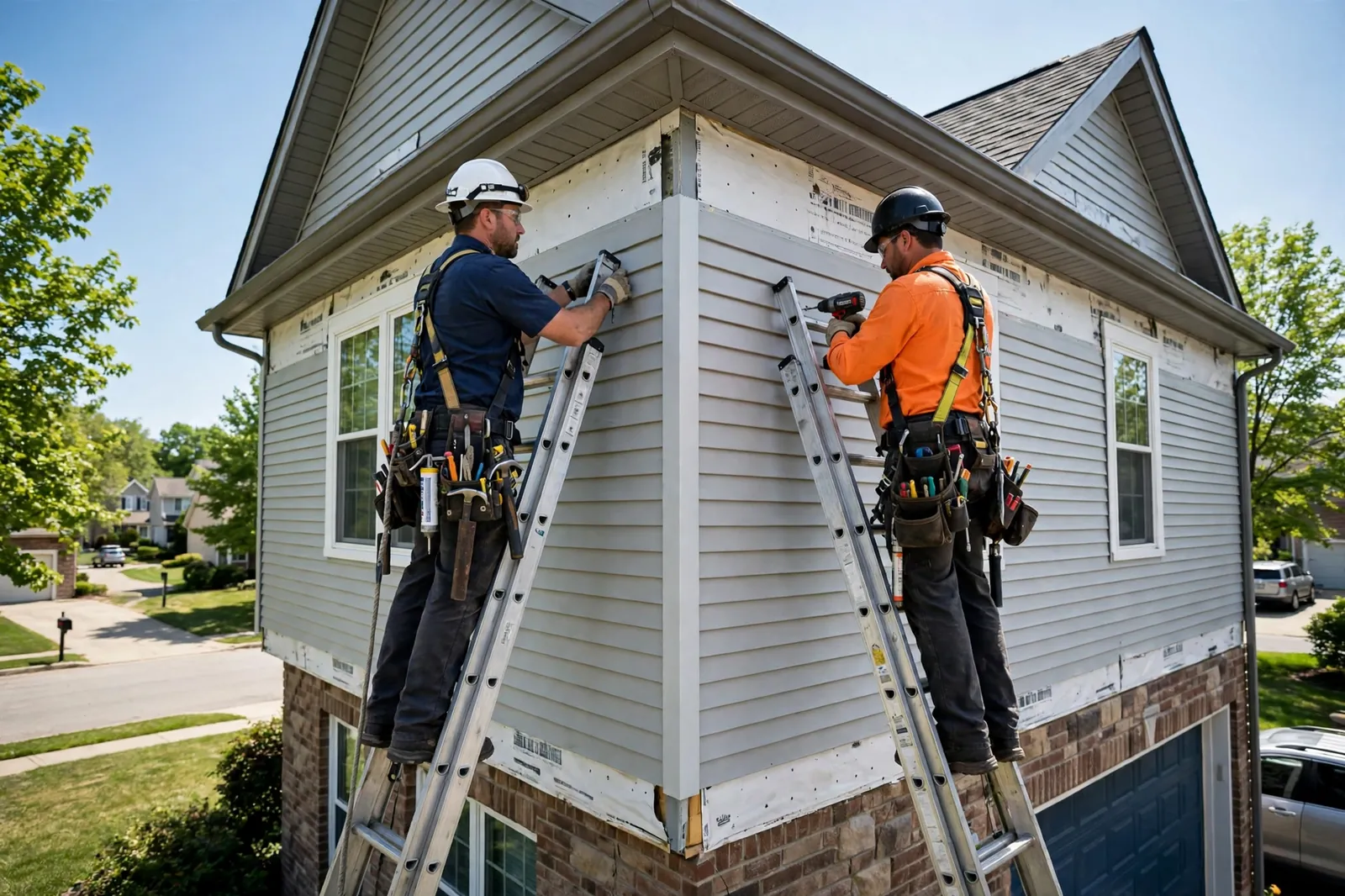
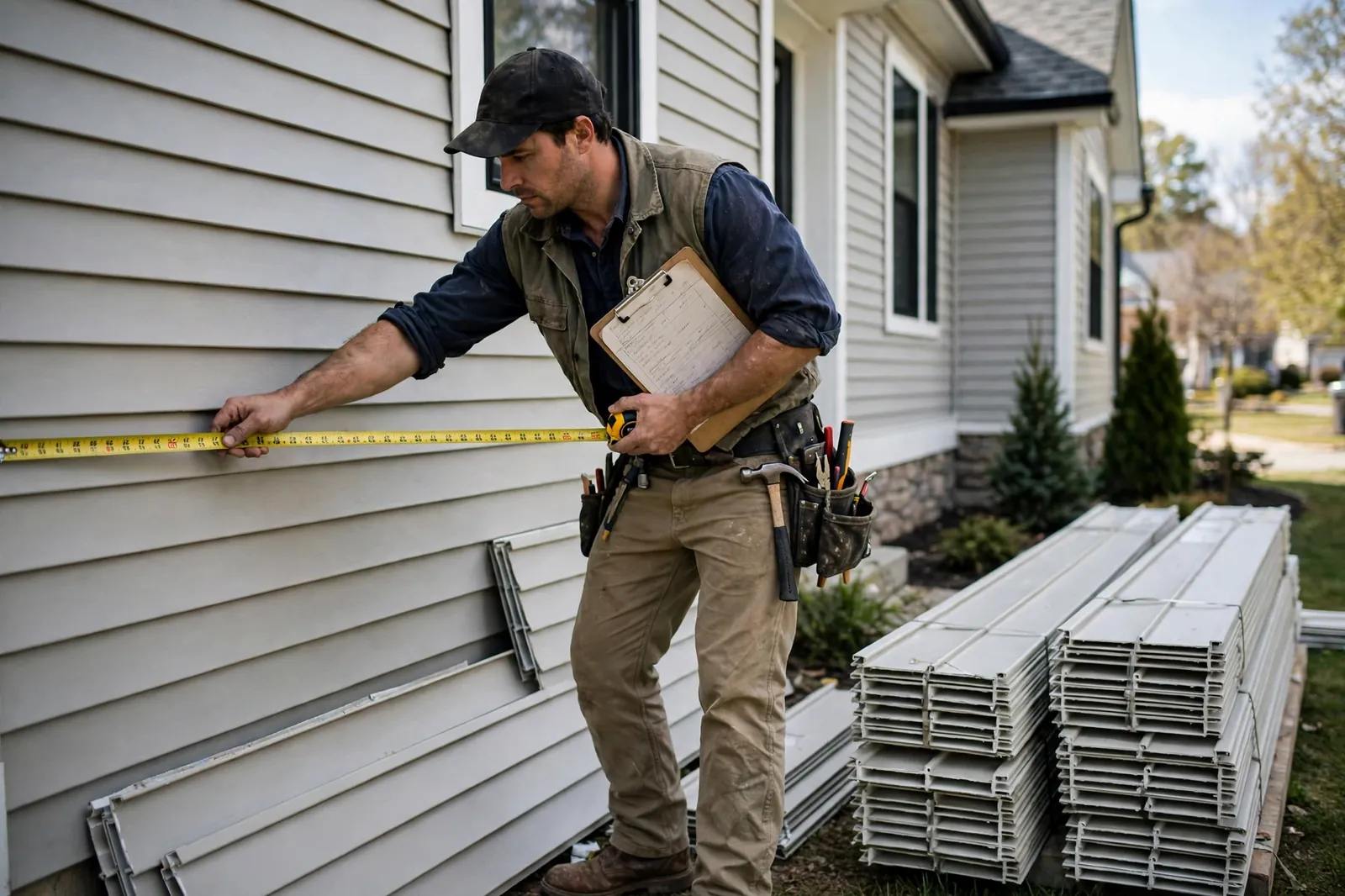
Signs you may need engineered wood siding
Swelling at cut edges
A board whose cut edge has swollen is absorbing water through an unsealed edge. The edge is the open end of the board, and it needs to be sealed as it is cut — a board installed with open edges will swell from the edge inward.
Finish peeling at joints
When the factory finish peels first at the joints, the joint is holding water. A butt joint that was not flashed, or a caulk joint that has opened, lets water sit against the cut edge, and the freeze-thaw cycle works the finish off from behind.
Soft spots at the bottom course
The bottom course is where any wood product shows trouble first, because it sits closest to splash-back and snowpack. A soft spot there means the board has been absorbing water, and the wall behind it needs to be checked.
Boards that have gone wavy
A board that waves or buckles is usually a nailing problem or a moisture problem — the board was nailed tight and cannot move, or it has absorbed water unevenly and is swelling on one face. Either way, the wall behind the board needs to be looked at, not just the board.
Staining below windows and doors
Dark streaks below a window or a door mark a flashing gap, not a board failure. The flashing at that opening is the detail that keeps water out of the wall, and when it fails the stain appears on the boards below it.
A wall that stays damp on the shaded side
A north elevation that stays damp for days after rain is not drying. The cause is usually a missing drainage path — a sealed bottom edge, or housewrap that traps water against the boards instead of letting it drain.
What the service includes
Wall inspection and sheathing check
The existing cladding is opened in a test area so the sheathing, housewrap, and flashing can be inspected before the engineered wood plan is written.
Cut-edge sealing
Every cut edge is sealed as it is cut on site, because an open cut edge is an open end that absorbs water.
Flashing and drainage detailing
Joints are flashed, penetrations are flashed, and the wall is detailed so water has a predictable path out and the boards can dry.
Clearance at grade and rooflines
Bottom edges are set clear of grade, decks, and roof surfaces, so boards never sit in splash-back, snowpack, or roof runoff.
Factory-finish boards, installed to spec
Boards are installed with the fastener placement and spacing the manufacturer calls for, with joints staggered and the bottom edge set clear.
Walk-through and finish check
Every board, joint, and clearance is walked with the homeowner at the end, and the factory finish is checked elevation by elevation.
Options and choices
Lap boards are the default profile, and the one that suits a Warren ranch or colonial. They overlap the board below, shed water outward, and carry a shadow line that reads as painted wood from the street. The exposure changes the look more than any other choice, and the visit sets it against the scale of your home and the style of your street.
Panels give a clean, flat face for a modern home or a commercial wall, with expressed joints that read as a deliberate design choice rather than a cladding default. They demand the same drainage discipline as the lap boards, with extra attention to the joints, where water collects.
Trim boards finish the corners, windows, and fascia in the same material as the field, so the trim and the field age together and the house reads as one wall rather than a field with afterthought trim. The trim is where a cheap job shows first, and it is where this material's factory finish makes the most visible difference.
What happens when you call
Call and visit
One call arranges a visit. The crew walks every elevation, notes the existing cladding, and listens for what you want the wall to look like.
Wall inspection
A test area is opened so the sheathing, housewrap, and flashing can be inspected. The wall an engineered board sits on needs to last as long as the board.
Plan and product choice
The plan covers the profile, the factory colour, the drainage detailing, and the sequence of elevations, with the boards ordered to measurements taken on the visit.
Preparation and flashing
Old cladding comes off, damaged sheathing is replaced, and the flashing and drainage path are built before any board goes on the wall.
Installation and walk-through
Boards are installed to the manufacturer's instructions, cut edges are sealed as they are cut, and the finished wall is walked with you, board by board.
Mistakes to avoid
Leaving cut edges open
Every cut edge is an open end of the board. An unsealed cut edge absorbs water, and the board swells from the edge inward.
Sealing the bottom edge shut
The boards need to drain and dry. Sealing the bottom edge traps water behind the cladding instead of letting it out.
Nailing too tight
A board nailed tight cannot move with temperature and moisture, so it buckles or pulls at its fasteners. The boards are hung with room to move.
Ignoring ground clearance
The bottom course is where any wood product fails first. A board that sits in splash-back or snowpack absorbs water all winter, and no factory finish will save it.
Siding in Warren
Engineered wood has found its Warren market among homeowners who want the front of the house to read as wood and the rest of the house to be practical. The pattern is common on the city's 1960s ranches: engineered wood on the front elevation, where the street sees it, and vinyl or fiber cement on the sides and back, where the weather hits hardest. The visit talks through that split honestly, because a mixed-cladding house needs the transitions detailed right — the corner where wood meets vinyl is a joint that has to shed water, not trap it.
The Macomb County climate is the reason the detailing matters here. The freeze-thaw cycle works on any water it finds, and an engineered board that absorbs water through an open cut edge will show it the following spring. A crew that has installed this material through a few Warren winters knows to seal the edges, keep the clearances, and leave the wall able to drain — because the failures show up in the same places every year, and they are all detailing failures.
Other siding services in Warren
Vinyl Siding InstallationVinyl Siding ReplacementFiber Cement SidingJames Hardie SidingWood SidingMetal SidingSiding RepairEmergency Siding RepairSoffit, Fascia & Siding Trim
Frequently asked questions
Straight answers to the questions Warren homeowners ask most.
It is siding made from wood fiber and resin, pressed into boards and panels, treated against rot and insects, and finished in the factory with a baked-on colour. It looks like wood because it is wood fiber, re-formed, and it reads as painted wood from the street. It is lighter than fiber cement, easier to handle, and carries a deeper shadow line than vinyl.
It performs well when the installation is right. The boards are treated against rot and insects, and the factory finish holds up in this climate. Their weakness is the same as any wood product: they absorb water if the finish fails or the cut edges are left open, and in a freeze-thaw climate that water works on the board. Sealed cut edges, correct clearances, and a wall that drains are what make the material perform here.
Solid wood is a single board, cut from a tree, that needs a field-applied finish and regular repainting. Engineered wood is wood fiber pressed into a board with a factory finish, treated against rot and insects, and made to hold its line better than a solid board. Solid wood is the more repairable material — a single board can be replaced — while engineered wood is the lower-maintenance one.
The boards arrive factory-finished, and the finish holds far longer than a field-applied paint. When the finish eventually ages, the boards are repainted the same way solid wood is — after the joints are checked and the cut edges are sealed. The repaint cycle is far longer than solid wood, but it is not zero.
The wall inspection is the reason to remove the old cladding first. This is a long-life product, and it should sit on a wall that has been inspected — sheathing, housewrap, and flashing all checked and corrected. Installing over old siding hides that inspection and adds thickness the trim was not detailed for.
Swelling at a cut edge almost always means the edge was left unsealed and is absorbing water. The edge is the open end of the board, and it needs to be sealed as it is cut. The fix is the edge detail — seal the edge, restore the clearance, and let the wall drain — not a new coat of paint over a wet edge.
It is heavier than vinyl and lighter than fiber cement. The weight does not change the structure of a typical Warren home, but it does change the handling: the boards are carried and cut by a crew that is used to the material, and the fastener placement follows the manufacturer's instructions rather than a vinyl habit.
The most common pattern is the front elevation, where the street sees the wood look, with vinyl or fiber cement on the sides and back, where the weather hits hardest. It is also used as a full-house cladding on homes where the owner wants the wood look everywhere and is willing to maintain the finish. The visit talks through the split against your home and your street.
Talk about engineered wood siding for your home?
One call connects you with a local siding professional for Warren and the towns around it.
Call NowTalk to a local siding professional
One call connects you with a local professional for Warren and nearby towns. Describe what your siding is doing — what cracks, what rattles, what stains — and the visit is arranged from there.
Mon–Fri 7:00 AM–10:00 PM ET · Sat 8:00 AM–10:00 PM ET · Sun 7:00 AM–9:00 PM ET
Service area
Sterling Heights, MI · Troy, MI · Madison Heights, MI · Roseville, MI · Eastpointe, MI · Clinton Township, MI · Shelby Township, MI · Fraser, MI · Center Line, MI · Detroit, MI
Warren Siding Pros is a referral service connecting customers with local siding professionals; it is not itself the service company.