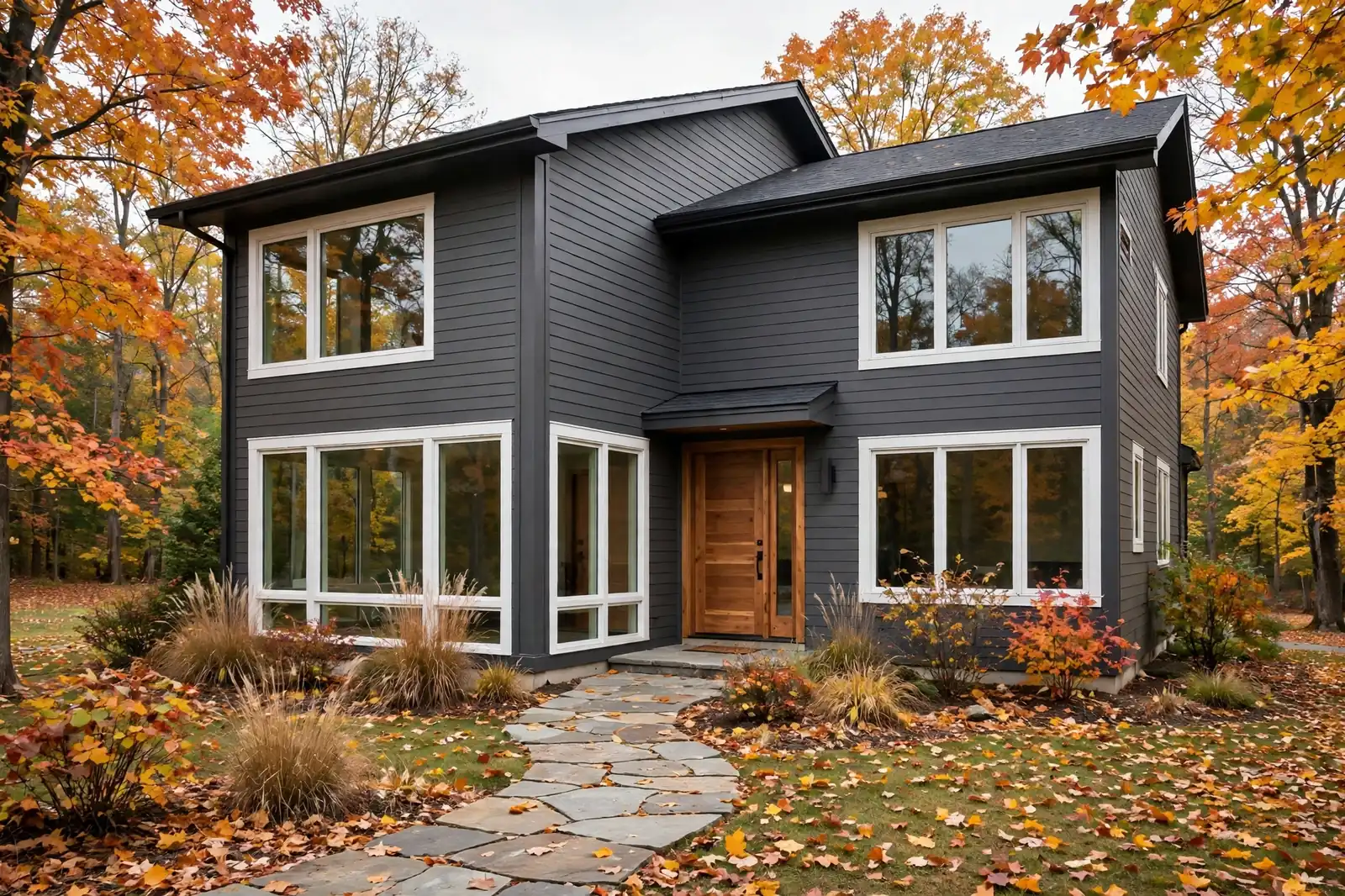
James Hardie Siding in Warren, MI
James Hardie siding is fiber cement made for a northern climate on purpose. The boards are engineered for the freeze-thaw zone Michigan sits in, and they carry a factory colour that holds — but the engineering only pays off when the installation respects the clearances, the flashing, and the cut edges.
Call Now
Describe what your siding is doing and where you are — a local siding professional is connected from there.
Call NowMon–Fri 7:00 AM–10:00 PM ET · Sat 8:00 AM–10:00 PM ET · Sun 7:00 AM–9:00 PM ET
What is james hardie siding?
James Hardie is the name most Warren homeowners already know when they start looking past vinyl. It is a fiber cement product — cement, sand, and cellulose fiber pressed into planks, panels, and shingles — and it is the product that put fiber cement on the map in the Detroit metro. The reason it comes up in so many Warren conversations is simple: it is made in climate-specific formulas, and Michigan sits in the northern zone the product is engineered for.
The northern formula matters because of what it is engineered against. A Warren winter is not just cold — it is cold, then warm, then cold again, more than 100 times a season, with water expanding about 9 percent as it freezes in any gap it finds. The HZ5 northern product line is formulated for that cycle: for seasonal temperature swings, freezing temperatures, and snow loads that sit against the wall for weeks. The boards barely move with temperature, they hold a fastener, and they take an impact that would crack cold vinyl.
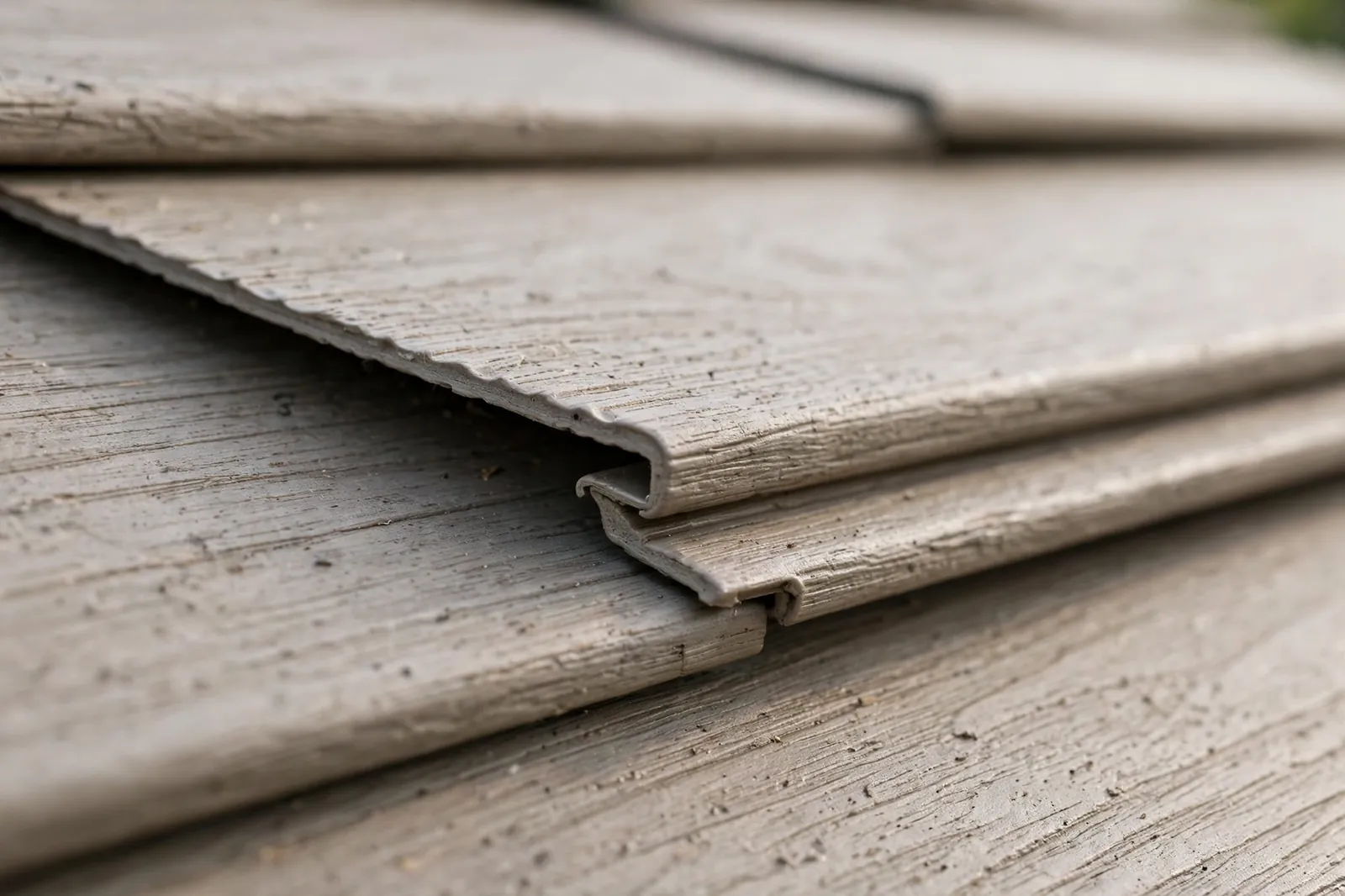
None of that engineering survives a careless installation. The failures in this market are remarkably consistent: a bottom edge sitting too close to grade, a butt joint left unflashed, a cut edge left unsealed, or a roof-to-wall joint where the step flashing was never quite right. Every one of those is an installation detail, not a product defect, and every one of them shows up the same way — paint peeling at a joint, a swollen bottom edge, a stain below a roofline. A James Hardie installation in Warren is therefore planned as a detailing job first and a board job second.
How james hardie siding works
James Hardie siding covers a family of fiber cement products. HardiePlank lap siding is the workhorse — horizontal planks with a wood-grain or smooth face, in a range of widths. HardiePanel vertical siding gives a clean panel face for modern homes and commercial walls. HardieShingle siding gives individual shingles in a staggered pattern for gables and cottage accents. HardieTrim boards finish the corners, windows, and fascia with the same material, so the trim and the field age together.
The finish is the other half of the product. ColorPlus Technology is a factory-applied colour, baked on in controlled conditions, which is why it holds its colour longer than a field-applied paint. Primed boards are painted after installation. Either way, the board underneath is the same cement composite — it does not rot, it does not feed insects, and it holds a finish far longer than wood in a wet climate.
Signs you may need james hardie siding
Paint peeling at butt joints
When the finish fails first at the joints between boards, the joint is holding water. A butt joint that was not flashed, or a caulk joint that has opened, lets water sit against the cut edge of the board, and the freeze-thaw cycle works the finish off from behind.
A bottom edge that has swollen
A board whose bottom edge has swollen or softened is sitting too close to grade, a deck, or a roof surface, and it is wicking water upward. Paint over a wet edge only hides the swelling for a season — the fix is clearance and drainage.
Cracks starting at a fastener
A crack that radiates from a nail or screw usually means the fastener was driven too deep, too close to the edge, or into a board that was not supported. The board holds a fastener well when the fastener is placed to the manufacturer's instructions; it cracks when the placement is wrong.
Stains below roof-to-wall joints
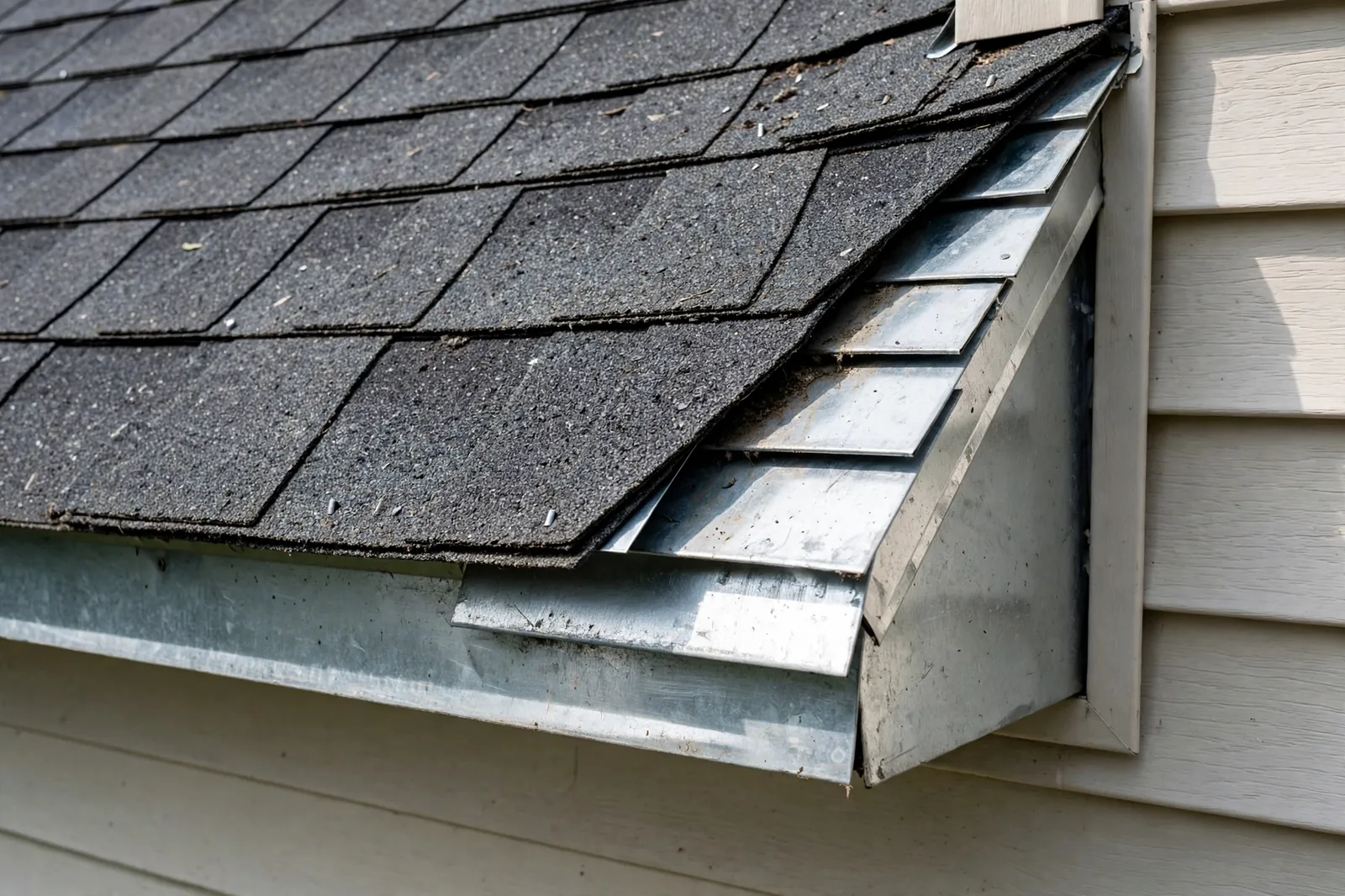
Dark streaks where a roof meets a wall mark a flashing failure, not a siding failure. The step flashing at that joint keeps roof water out of the wall, and when it fails the stain appears on the boards below it.
Caulk joints opening every spring
Caulk that opens every year is a sign the joint is moving more than the caulk can take, or that water is getting behind the caulk and freezing. A joint that needs attention every spring is a joint that needs to be rebuilt, not re-sealed.
A shaded wall that stays damp
A north elevation that stays damp for days after rain is not drying. The cause is usually a missing drainage path — no rainscreen gap, a sealed bottom edge, or housewrap that traps water against the board instead of letting it drain.
What the service includes
Wall inspection before boards
The existing cladding is opened in a test area so the sheathing, housewrap, and flashing can be inspected. A long-life board should sit on a wall that has been checked.
Climate-zone product selection
The board and the factory colour are matched to the northern climate zone, so the material and the finish are both formulated for freeze-thaw.
Cut-edge sealing
Every cut edge is sealed before the board goes on the wall, because an open cut edge is an open end that absorbs water.
Flashing and drainage detailing
Joints are flashed, penetrations are flashed, and the wall is detailed so water has a predictable path out and the boards can dry.
Clearance at grade and rooflines
Bottom edges are set clear of grade, decks, and roof surfaces, so boards never sit in splash-back, snowpack, or roof runoff.
Finish and walk-through
The factory colour or field paint is checked elevation by elevation, every joint and clearance is walked with the homeowner, and the details are checked by hand.
Options and choices
HardiePlank lap siding is the default for a Warren ranch or colonial, and the profile most of the metro's fiber cement homes already wear. It reads as painted wood from the street, carries a deep shadow line, and sheds water outward. The width of the plank changes the look more than any other choice — a narrow exposure reads as traditional, a wide exposure reads as modern — and the visit talks through the exposure against the scale of your home.
HardiePanel vertical siding suits a modern home, a commercial wall, or a gable accent where a horizontal lap would look wrong. It is a clean, flat face with expressed joints, and it demands the same drainage discipline as the lap boards, with extra attention to the bottom edge, where vertical panels carry water straight down.
HardieShingle siding gives a staggered shingle pattern for gables, dormers, and cottage-style homes. It reads as cedar from the street without the maintenance cedar demands in a wet climate, and it is often used as an accent — a gable in shingles over a field in lap — rather than as the whole house.
What happens when you call
Call and visit
One call arranges a visit. The crew walks every elevation, notes the existing cladding, and listens for the problems you have already spotted — the peeling joint, the swollen edge, the stain.
Wall inspection
A test area is opened so the sheathing, housewrap, and flashing can be inspected. The wall a long-life board sits on needs to last as long as the board.
Plan and product choice
The plan covers the product, the profile, the factory colour or field paint, the drainage detailing, and the sequence of elevations.
Preparation and flashing
Old cladding comes off, damaged sheathing is replaced, and the flashing and drainage path are built before any board goes on the wall.
Installation, finish, and walk-through
Boards are installed to the manufacturer's instructions, joints are sealed, the finish is checked, and the finished wall is walked with you, joint by joint.
Mistakes to avoid
Skipping the climate-zone match
A board formulated for a warm, dry climate does not have the same freeze-thaw formulation as the northern product. The product and the zone need to match.
Leaving cut edges open
Every cut edge is an open end of the board. An unsealed cut edge absorbs water, and the board swells and cracks from the edge inward.
Sealing the bottom edge shut
The boards need to drain and dry. Sealing the bottom edge traps water behind the cladding instead of letting it out.
Nailing too deep
A fastener driven too deep crushes the board; a fastener too close to the edge cracks it. Both failures show up as cracks radiating from the fastener.
Siding in Warren
James Hardie has a visible presence in the Detroit metro, and Warren homeowners usually arrive at the product after a neighbour has had it installed. The metro's large multi-service brands and the specialist exterior contractors both install it, and the product's reputation here was built on the homes that have carried it through a decade of winters without the chalking and cracking that the same winters inflict on vinyl. The honest version of that reputation is that the good installations are the ones where the detailing was done right — and the bad ones are the ones where it was not.
Warren's housing stock is the reason the product fits here. The 1960s ranch and colonial homes that make up most of the city are at the age where a second vinyl replacement and a first fiber cement installation involve the same wall work — the wall is opened either way, the sheathing is inspected either way, and the flashing is corrected either way. The difference is what goes back on the wall, and the homeowners who choose this product are choosing the wall that stays straight and holds its colour through the next decade of freeze and thaw.
Other siding services in Warren
Vinyl Siding InstallationVinyl Siding ReplacementFiber Cement SidingWood SidingEngineered Wood SidingMetal SidingSiding RepairEmergency Siding RepairSoffit, Fascia & Siding Trim
Frequently asked questions
Straight answers to the questions Warren homeowners ask most.
It is fiber cement — a composite of cement, sand, and cellulose fiber, pressed into planks, panels, and shingles. The boards do not rot, do not feed insects, and hold a painted finish far longer than wood. The product is made in climate-specific formulas, and Michigan sits in the northern zone the boards are engineered for.
It is made for them, provided the installation is right. The boards barely move with temperature, they hold a fastener, and they do not become brittle in cold the way vinyl does. Their weakness is trapped water: where a board absorbs water and cannot dry, freeze-thaw works on it. Clearance at grade, flashed joints, sealed cut edges, and a wall that drains are what make the boards perform in a Michigan winter.
Boards arrive either factory-finished in colour or primed for field paint. The factory colour is applied in controlled conditions and holds up well in this climate. Primed boards are painted after installation, once the joints are sealed. Either way, the repaint cycle is far longer than wood, but it is not zero — the finish is a layer over a board that does not itself rot.
The material family is the same — cement, sand, and cellulose fiber — and the differences are in the formulation, the factory finish, and the installation instructions that come with the product. What matters on a Warren wall is not the label on the board but whether the installation follows the manufacturer's instructions for the northern climate zone: clearances, flashing, cut-edge sealing, and fastener placement.
The wall inspection is the reason to remove the old cladding first. This is a long-life product, and it should sit on a wall that has been inspected — sheathing, housewrap, and flashing all checked and corrected. Installing over old siding hides that inspection and adds thickness the trim was not detailed for.
Peeling at the joints almost always means water is getting into the joint — a butt joint that was not flashed, or a caulk joint that has opened. The water sits against the cut edge of the board, freezes, and works the finish off from behind. The fix is the joint detail, not a new coat of paint over the same joint.
A single-story ranch usually takes several working days, and a two-story colonial takes longer, because the wall is opened, inspected, and detailed elevation by elevation. Fiber cement is heavier than vinyl and the boards are cut and sealed as they go, so the pace is set by the detailing rather than by the panel count.
The boards themselves need little: a wash when the wall is dirty, and a look at the caulk joints and the finish every few years. The details need attention — caulk that has opened, a bottom edge that has collected soil against it, a flashing that has lifted. The maintenance is in the joints and clearances, not in the boards.
Talk about james hardie siding for your home?
One call connects you with a local siding professional for Warren and the towns around it.
Call NowTalk to a local siding professional
One call connects you with a local professional for Warren and nearby towns. Describe what your siding is doing — what cracks, what rattles, what stains — and the visit is arranged from there.
Mon–Fri 7:00 AM–10:00 PM ET · Sat 8:00 AM–10:00 PM ET · Sun 7:00 AM–9:00 PM ET
Service area
Sterling Heights, MI · Troy, MI · Madison Heights, MI · Roseville, MI · Eastpointe, MI · Clinton Township, MI · Shelby Township, MI · Fraser, MI · Center Line, MI · Detroit, MI
Warren Siding Pros is a referral service connecting customers with local siding professionals; it is not itself the service company.