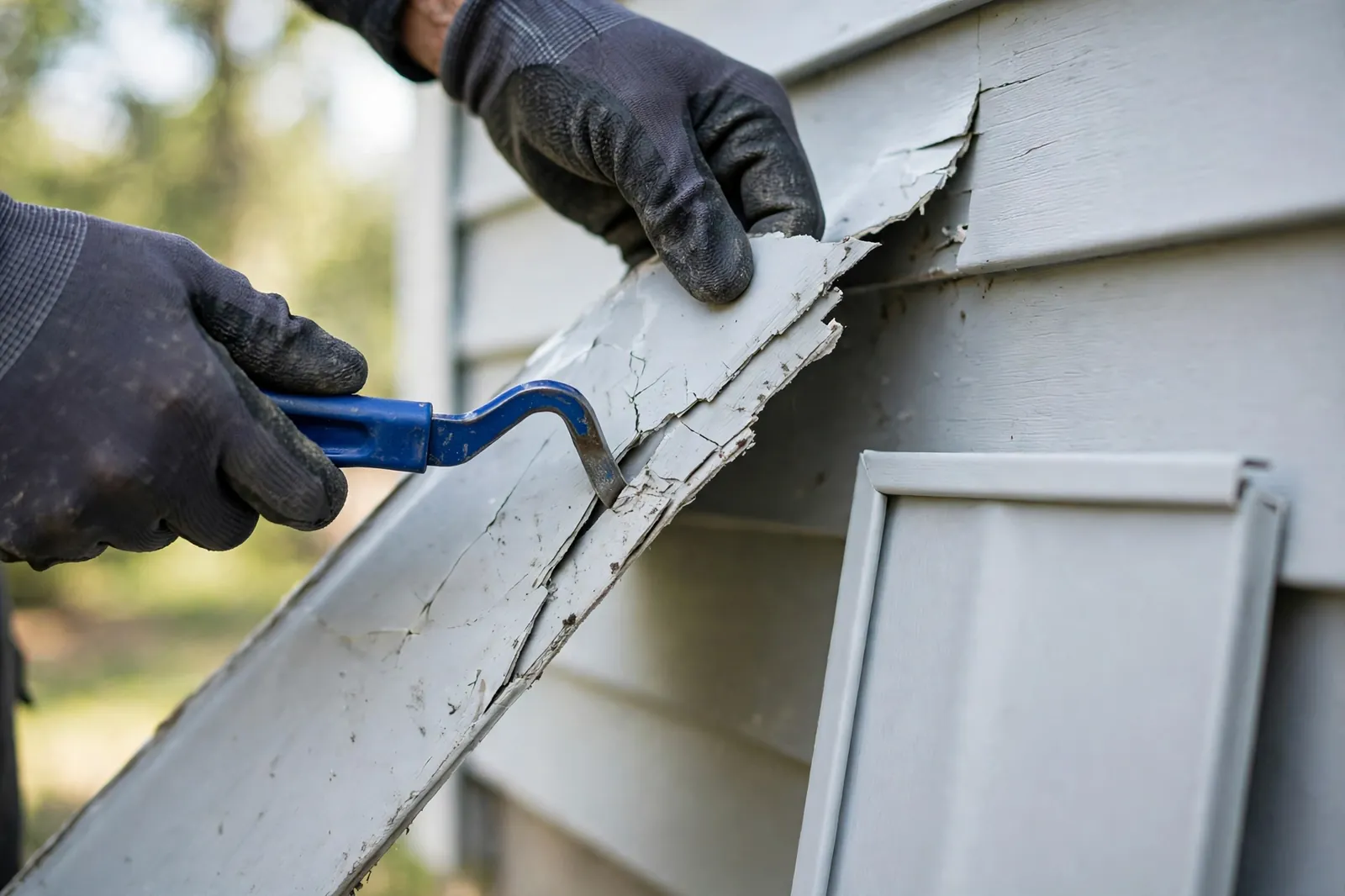
Siding Repair in Warren, MI
Siding repair in Warren is a diagnosis job, not a patch job. A cracked panel, a loose lock, or a stain below a window each has a cause, and the repair that lasts is the one that fixes the cause — the nail, the flashing, or the water path — not just the panel you can see.
Call Now
Describe what your siding is doing and where you are — a local siding professional is connected from there.
Call NowMon–Fri 7:00 AM–10:00 PM ET · Sat 8:00 AM–10:00 PM ET · Sun 7:00 AM–9:00 PM ET
What is siding repair?
Most siding calls in Warren are repair calls, not replacement calls. A panel cracked by a ladder in January, a lock that came loose in a wind off the lake, a corner post that took a hit from a snowblower, a stain below a window that keeps coming back after washing. The damage is local, the house is otherwise sound, and the homeowner wants the one thing fixed properly — not a sales call for a whole house.
The repair visit starts with the same question a replacement visit starts with: what caused this? A cracked vinyl panel in January is usually a cold-weather impact, and the repair is a panel. A stain below a window is usually a flashing gap, and the repair is the flashing — the panel is just where the water shows. A loose lock is usually a nail driven too tight or a panel that has worked loose over seasons of expansion, and the repair is the nailing, not the panel. Fixing the panel without fixing the cause is the most common repair mistake in this market, and it is the one that brings the crew back to the same wall the following spring.
Repair also has a limit, and an honest repair visit says where it is. When the damage is spread across the house — chalking on every sun-facing wall, cracks at many corners, panels that will not lock in several places — the wall is telling you the material has reached the end of its service life, and repairing one panel at a time costs more in visits than a replacement costs in work. The visit draws that line with you, on your wall, before any work starts.
How siding repair works
Siding repair means the damaged area is opened, the cause is found and fixed, and the cladding is restored to match the wall around it. The repair starts with an inspection of the damaged area and the wall behind it — the sheathing, the housewrap, and the flashing at the nearest opening. The damaged panels or boards are removed, the wall underneath is repaired if it needs it, and new material is installed to match the existing profile, colour, and exposure.
Matching is the hard part of a repair, and it is where a good repair crew earns its keep. Vinyl fades, and a new panel rarely matches a twenty-year-old wall exactly. Fiber cement and wood can be painted to match. Metal can be matched by profile and colour, though a dented aluminum panel is usually replaced rather than repaired. The visit is honest about how close the match will be, and where the repair will read as a repair from the street.
Signs you may need siding repair
A cracked panel after a cold snap
Vinyl turns brittle in deep cold, and a ladder foot, a thrown chunk of ice, or a branch in a January wind can crack a panel that would have flexed in July. The crack lets wind-driven rain behind the cladding, and the repair is the panel — and a check of the panels around it, because the same cold made them brittle too.
A panel that rattles in wind
A rattling panel has lost its lock or worked loose at a fastener. The repair is the lock and the nailing, not the panel itself — unless the lock has been damaged by years of rattling, in which case the panel is replaced.
A stain that returns after washing
A stain that comes back after the wall is washed is not dirt — it is water finding its way out from behind the siding. The source is usually a flashing gap above the stain, and the repair is the flashing.
A corner post that has taken a hit
Corners take the worst of wind, ice, and the occasional snowblower. A cracked or dented corner post leaves the ends of every panel on that corner exposed, and the repair is the post — set plumb, so the panels that meet it sit straight.
A soft spot at the bottom course
A soft spot near the foundation means the sheathing behind the panel has lost its structure. The repair opens the wall, replaces the sheathing, and restores the drainage at the bottom edge — a panel alone will not fix it.
Caulk joints opening every spring
Caulk that opens every year is a sign the joint is moving more than the caulk can take, or that water is getting behind the caulk and freezing. A joint that needs attention every spring is a joint that needs to be rebuilt, not re-sealed.
What the service includes
Inspection of the damaged area
The damaged panels are removed and the wall behind them is inspected — sheathing, housewrap, and flashing — before the repair is planned.
Cause fixed, not just the panel
The flashing gap, the tight nail, or the failed lock that caused the damage is corrected, so the repair does not fail the same way.
Matched material
New panels or boards are matched to the existing profile, colour, and exposure as closely as the material allows, and the match is discussed with you before the work starts.
Flashing and seal renewal
Flashing at the nearest opening is corrected, joints are sealed, and the water path out of the wall is restored.
Lock and lap check
Every panel around the repair is checked by hand — locks engaged, laps running outward, fasteners with room to move.
Walk-through and clean-up
The repaired elevation is walked with you, the match is checked from the street, and the yard is cleared of cut-offs and nails.
Options and choices
A single-panel repair is the most common job in Warren — one cracked vinyl panel, one dented metal panel, one swollen fiber cement board. The panel comes out, the wall behind it is checked, and a new panel goes in. It is a half-day job, and it is the right answer when the damage is local and the wall behind it is sound.
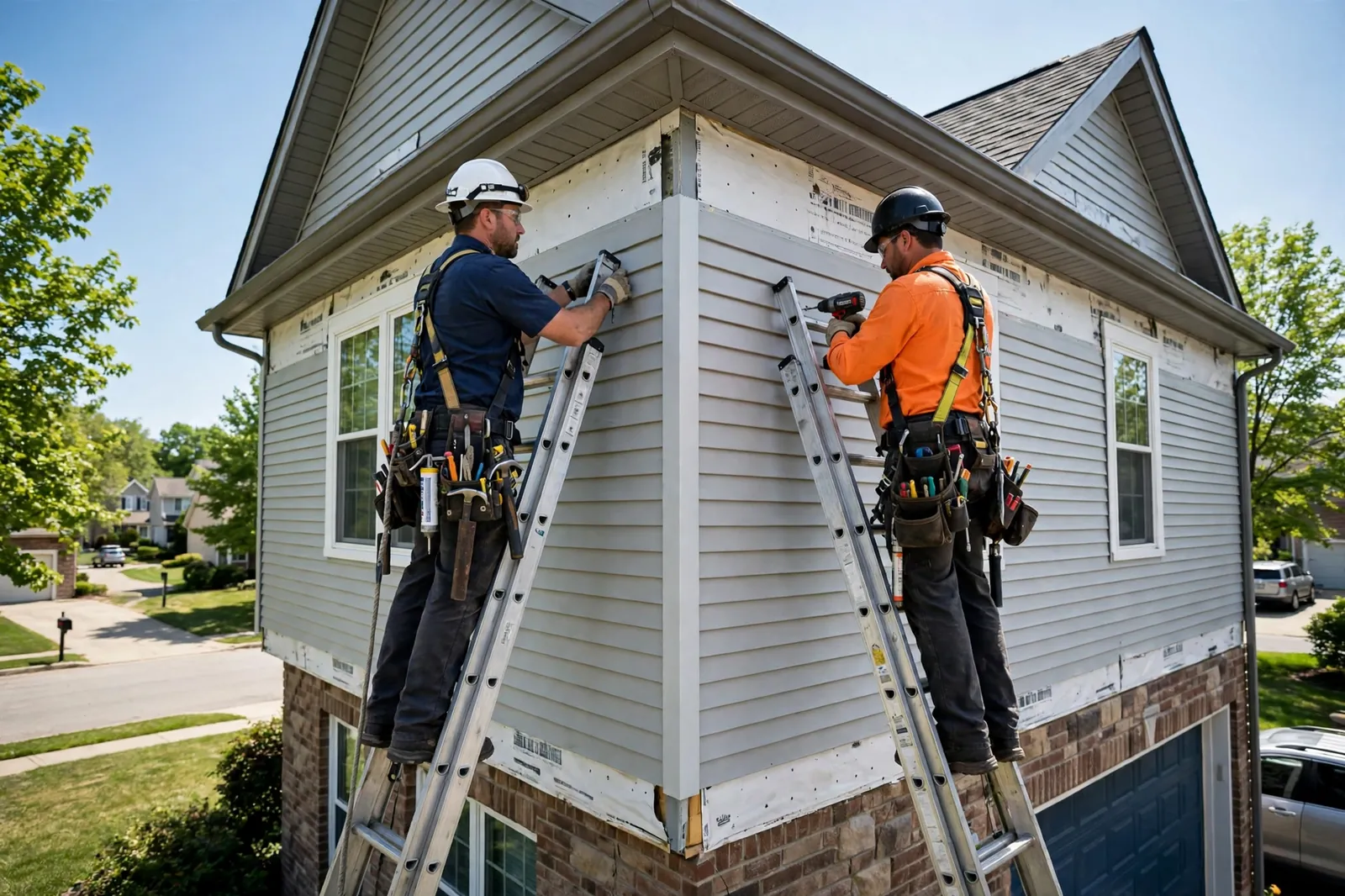
An elevation repair covers a whole wall — the south wall that took a hailstorm, the west wall where the locks have failed in several places, the bottom course that has been sitting in splash-back for years. The elevation is opened, the wall is inspected and repaired, and the panels go back on with the cause fixed. It is the right answer when the damage is spread across one wall but the rest of the house is sound.
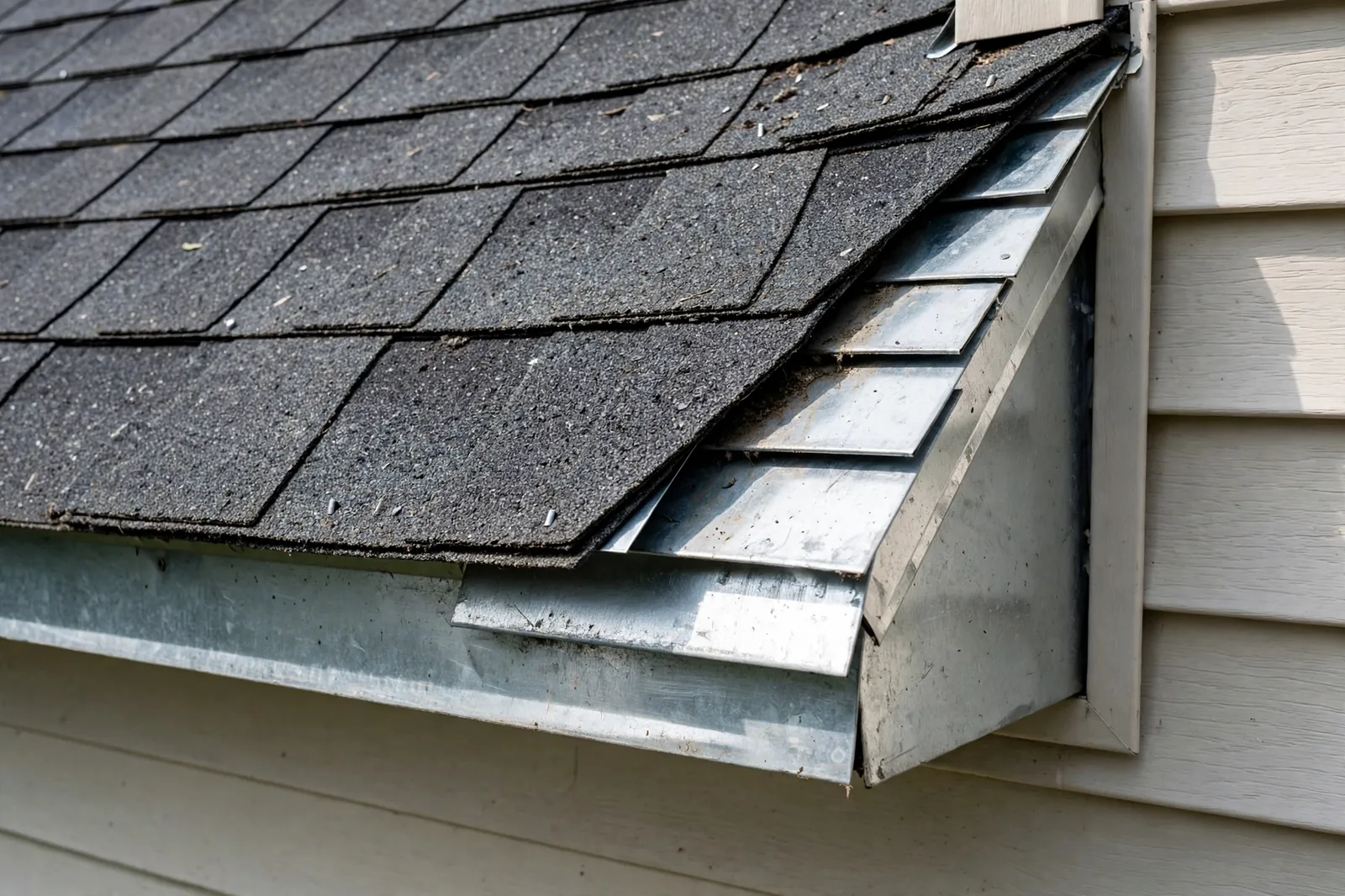
A flashing repair is a different job entirely, and it is the one most often missed. The stain below a window, the soft spot at a roof-to-wall joint, the damp wall on the shaded side — these are flashing and drainage problems, and the siding is just where they show. The repair opens the wall at the flashing, rebuilds the detail, and closes the wall with the water path restored.
What happens when you call
Call and visit
One call arranges a visit. The crew looks at the damage with you, and listens for when it appeared and what was happening at the time — the storm, the ladder, the winter.
Inspection and cause
The damaged area is opened so the wall behind it can be inspected. The cause is found before the repair is planned, not after.
Plan and material match
The plan covers the repair, the material match, and the cause fix, with the material ordered to match the existing profile and colour.
Repair
The damaged material comes out, the wall underneath is repaired, the cause is fixed, and the new material goes in — matched, locked, and sealed.
Walk-through
The repaired elevation is walked with you and checked from the street, so the match and the fix are both seen before the crew leaves.
Mistakes to avoid
Patching the panel without fixing the cause
A new panel over a flashing gap will stain the same way, and a new panel nailed tight will buckle the same way. The cause is the repair; the panel is the finish.
Caulking the bottom edge
A drained cladding system needs to drain. Caulking the bottom edge of a repair traps water behind the new panel instead of letting it out.
Forcing a match that does not exist
A twenty-year-old vinyl panel has faded, and a new panel will not match it exactly. The visit says so, and the repair is placed where the difference reads least — not hidden behind a promise it cannot keep.
Repairing one panel at a time, forever
When the damage is spread across the house, repairing one panel at a time costs more in visits than a replacement costs in work. The visit draws that line honestly.
Siding in Warren
Warren's repair calls follow the seasons, and the pattern is the same every year. January brings the cold-weather cracks — a ladder, a branch, a chunk of ice, and a vinyl panel that would have flexed in July. Spring brings the stains — the winter's water finding its way out from behind the siding at every flashing gap it found. Summer brings the wind calls — locks that worked loose over a winter of expansion and contraction, rattling in a July thunderstorm. A repair crew that has worked Warren through a few cycles knows which call is coming in which month, and which cause sits behind it.
The city's housing stock sets the repair mix. The 1960s ranches and colonials that make up most of Warren carry vinyl that is now thirty or more years old, and the repair calls are the early warnings of a replacement — a cracked panel here, a loose lock there, a stain that keeps coming back. The repair visit is often the first time the wall underneath has been looked at in a generation, and what is found there decides whether the next call is another repair or a replacement.
Other siding services in Warren
Vinyl Siding InstallationVinyl Siding ReplacementFiber Cement SidingJames Hardie SidingWood SidingEngineered Wood SidingMetal SidingEmergency Siding RepairSoffit, Fascia & Siding Trim
Frequently asked questions
Straight answers to the questions Warren homeowners ask most.
Yes. A single panel can be unlocked from the panels above and below it, removed, and replaced with a new panel matched to the profile and colour. The wall behind the panel is checked at the same time, because the crack may have let water in. The match is the honest question — a new panel rarely matches a twenty-year-old wall exactly, and the visit says how close the match will be.
A panel that keeps coming loose has usually lost its lock, or it was nailed too tight and the expansion and contraction of the seasons has worked it out of shape. The repair is the lock and the nailing, not just pushing the panel back into place. A panel that is pushed back without fixing the nailing will come loose again in the next wind.
It can be washed, and it will come back, because the stain is not dirt — it is water finding its way out from behind the siding. The source is usually a flashing gap above the stain. The repair is the flashing, and the stain is the map that shows where the flashing has failed.
A single-panel repair is usually a half-day job, including the wall inspection behind the panel. An elevation repair takes longer, because the whole wall is opened, inspected, and closed in turn. A flashing repair takes the time the flashing detail takes — the wall is opened at the flashing, the detail is rebuilt, and the wall is closed with the water path restored.
It depends on the material and the age of the wall. Vinyl fades, and a new panel will be a slightly different shade from a twenty-year-old wall — the difference is most visible on the sunniest elevations. Fiber cement and wood can be painted to match. Metal can be matched by profile and colour. The visit shows you the match before the work starts, and places the repair where the difference reads least.
It is worth repairing when the damage is local and the wall behind it is sound — one cracked panel, one loose lock, one failed flashing. It stops being worth repairing when the damage is spread across the house and the wall underneath has never been inspected. At that point the repair visits cost more than a replacement, and the visit says so.
Buckling is almost always a nailing problem. Vinyl expands in heat, and if a panel is nailed tight it cannot slide in its slot, so it bows outward between fasteners. A correctly hung panel floats on its nails and moves with the temperature. Buckled panels are usually re-hung rather than replaced, unless the lock has been damaged.
Yes, when the damage lets water in. A cracked panel, an open joint, or a failed flashing lets wind-driven rain behind the cladding, and in a freeze-thaw climate that water works on the sheathing all winter. A repair made in autumn closes the wall before the freeze-thaw cycle starts; a repair left until spring opens a wall that has spent a winter wet.
Talk about siding repair for your home?
One call connects you with a local siding professional for Warren and the towns around it.
Call NowTalk to a local siding professional
One call connects you with a local professional for Warren and nearby towns. Describe what your siding is doing — what cracks, what rattles, what stains — and the visit is arranged from there.
Mon–Fri 7:00 AM–10:00 PM ET · Sat 8:00 AM–10:00 PM ET · Sun 7:00 AM–9:00 PM ET
Service area
Sterling Heights, MI · Troy, MI · Madison Heights, MI · Roseville, MI · Eastpointe, MI · Clinton Township, MI · Shelby Township, MI · Fraser, MI · Center Line, MI · Detroit, MI
Warren Siding Pros is a referral service connecting customers with local siding professionals; it is not itself the service company.