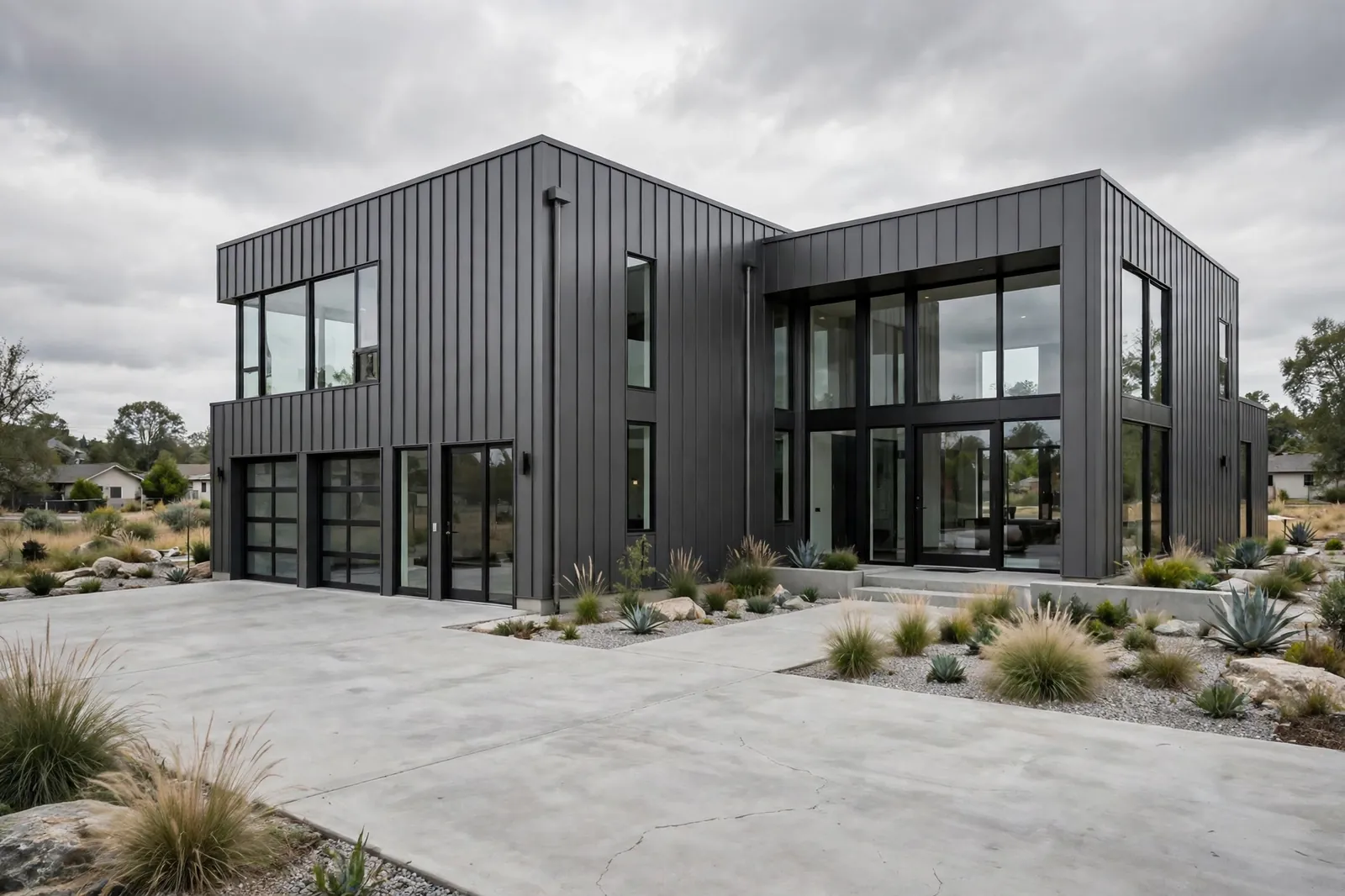
Metal Siding in Warren, MI
Metal siding is the wall for a Warren home that has had enough of replacing cladding. Steel and aluminum panels do not rot, do not feed insects, and do not become brittle in cold — and they hold their line in a wind that rattles vinyl and lifts shingles.
Call Now
Describe what your siding is doing and where you are — a local siding professional is connected from there.
Call NowMon–Fri 7:00 AM–10:00 PM ET · Sat 8:00 AM–10:00 PM ET · Sun 7:00 AM–9:00 PM ET
What is metal siding?
Metal siding is the oldest modern cladding in Warren, and the newest one at the same time. The aluminum siding of the 1960s and 1970s is still on some of the city's homes, dented and faded but still hanging. The steel siding going on today is a different product — thicker, better finished, and detailed like a modern wall system — but it answers the same question the old aluminum answered: what do you put on a wall when you want to stop thinking about the wall?
Steel is the usual choice in this market. It is strong, it holds a fastener, it does not become brittle in cold, and it takes a hailstone that would crack vinyl and dent aluminum. Aluminum is the lighter choice, and the one that never rusts — it suits a home near the lake, a garage, or a wall where weight matters. Both materials carry a factory finish that holds colour far longer than a field-applied paint, and both are installed as a drained, ventilated system, not as a sealed skin.
The homeowners who choose metal usually have a specific history with the alternatives. They have replaced vinyl twice, or they have watched a fiber cement job fail at the joints, or they own a property where the siding takes abuse — a rental, a home on a busy street, a garage that gets hit by a snowblower every winter. Metal answers that history with a wall that is hard to damage and easy to wash, and the visit starts by finding out which part of that history matters most to you.
How metal siding works
Metal siding is manufactured as horizontal lap panels, vertical panels, and board-and-batten profiles, in steel and aluminum. The panels interlock along their length, hang on the wall with room to move, and are finished in the factory with a baked-on colour. Steel panels are usually thicker and stronger; aluminum panels are lighter and will not rust. Both materials are installed over housewrap with flashing at every penetration, and both are detailed so water has a path out and the wall can dry.
The profiles matter more with metal than with other materials, because metal shows every wave in the wall behind it. A horizontal lap panel follows the line of the wall, and a wall that is not flat will show in the panels. The preparation — the sheathing check, the furring or levelling where the wall needs it — is what makes a metal wall look straight, and it is the step a cheap metal job skips first.
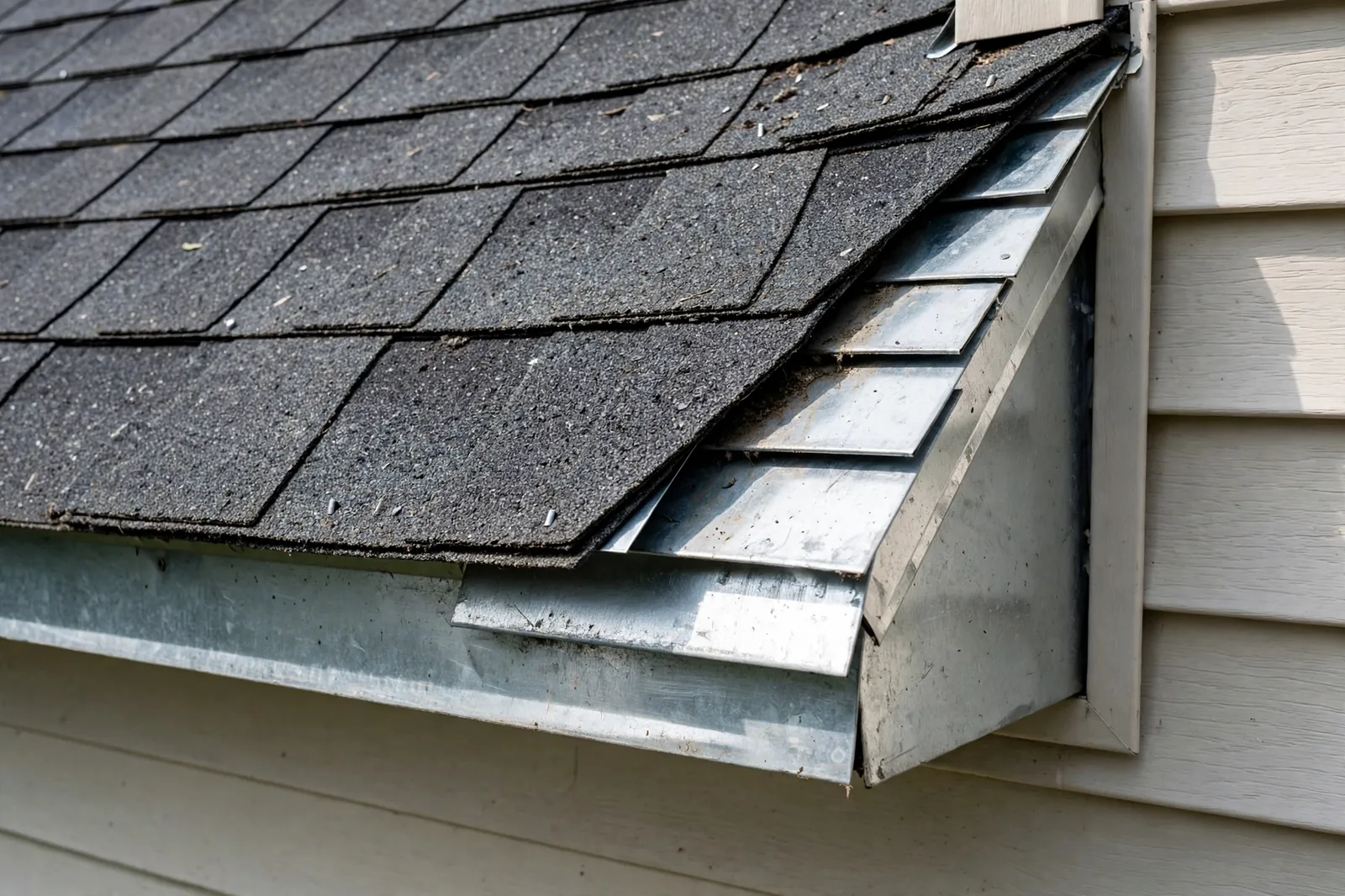
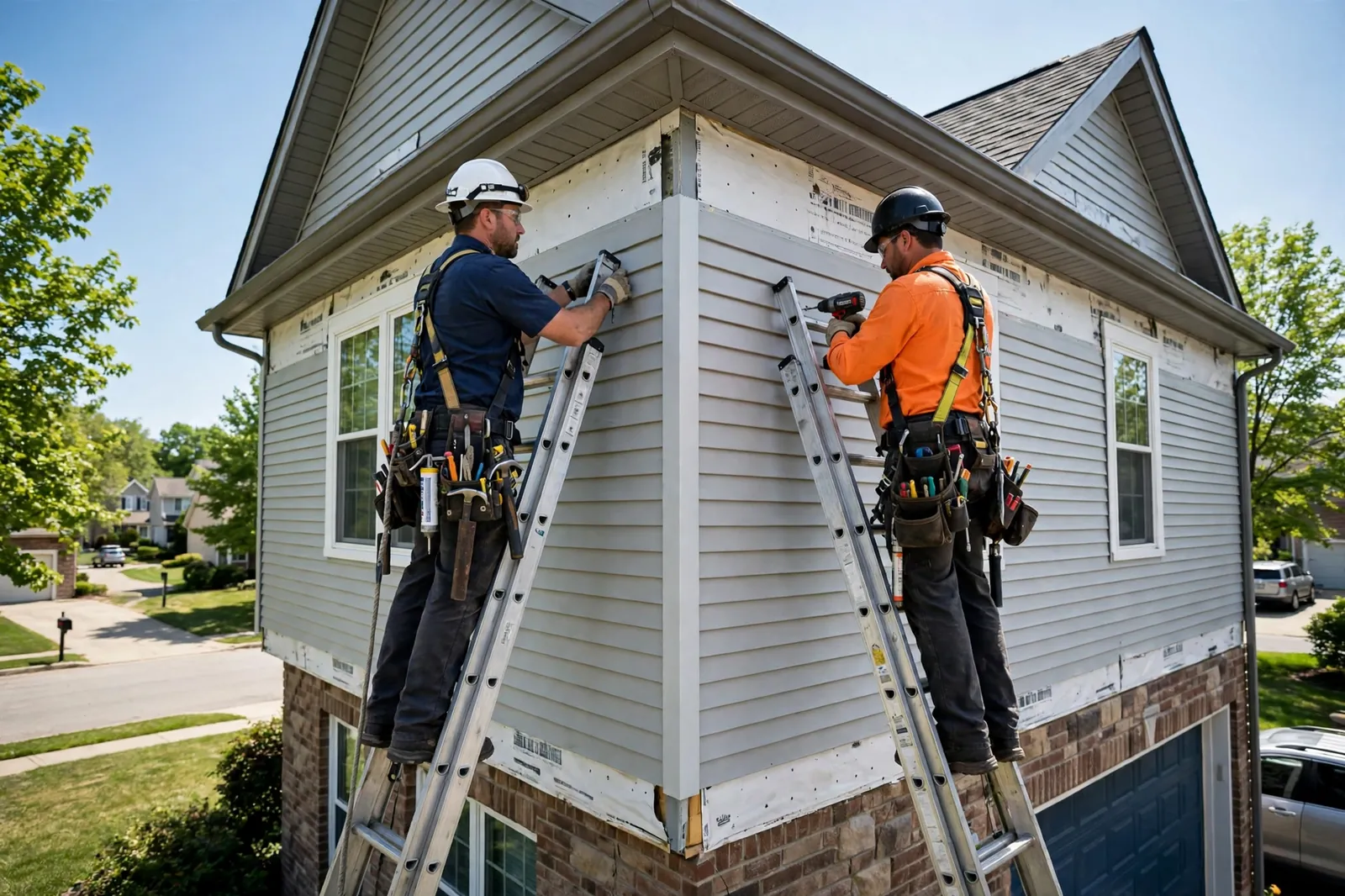
Signs you may need metal siding
Dents that will not come out
Aluminum dents easily — a ladder, a thrown ball, a hailstone — and a dented panel stays dented. Steel resists dents far better, but a hard enough impact will mark it too. A wall with dents across several elevations is a wall whose panels have reached the end of their useful life, even if the wall behind them is sound.
Fading and chalking on the sunny side
The factory finish on older metal siding chalks and fades under ultraviolet light, with the south and west elevations going first. A chalky film on your hand after touching the wall, or a panel visibly lighter than the same panel under the eaves, means the finish has aged past its useful life.
Rust at fasteners and cut edges
Steel rusts where the finish has been broken — at a fastener, a cut edge, or a scratch. Rust at a fastener usually means the fastener was the wrong type for the panel, or the panel was cut with a tool that left a hot edge. Rust is a finish failure first and a panel failure second, and it is found early by looking at the fasteners.
Panels that rattle in wind
A metal panel that rattles has usually lost its lock or worked loose at a fastener. Metal is stiff, so a loose panel does not wave the way vinyl does — it rattles, and the rattle is the sound of a lock that is no longer engaged.
Stains below windows and doors
Dark streaks below an opening mark a flashing gap, not a panel failure. The flashing at that opening is the detail that keeps water out of the wall, and when it fails the stain appears on the panels below it.
A wall that oil-cans in the sun
Oil-canning is the wavy, rippling look a flat metal panel gets when it expands in heat and has nowhere to go. It is usually a fastening problem — panels nailed tight, or a wall behind them that is not flat — and it shows most on a sunny south wall.
What the service includes
Wall inspection and sheathing check
The existing cladding is opened in a test area so the sheathing, housewrap, and flashing can be inspected before the metal plan is written.
Wall levelling where needed
The wall is checked for flatness, and furring or levelling is added where the wall needs it, because metal shows every wave in the wall behind it.
Housewrap and flashing renewal
Torn housewrap is replaced and window, door, and roofline flashing is corrected, so the new panels sit on a wall that drains.
Panel installation, hung to move
Panels are installed with room to expand and contract, locked fully along their length, and fastened with the fastener type the panel calls for.
Trim and corner detailing
Corner posts, J-channel, and window trim are set plumb and level in the same material, because every panel on the wall follows the line the trim sets.
Walk-through and finish check
Every panel, joint, and fastener is walked with the homeowner at the end, and the factory finish is checked elevation by elevation.
Options and choices
Horizontal lap steel is the default for a Warren home, and the profile that suits the city's ranch and colonial stock. It reads as painted wood from the street, carries a shadow line, and sheds water outward. Steel lap is the strongest residential cladding in this market, and it is the profile chosen when the wall takes abuse — a rental, a home on a busy street, a house with a driveway that throws slush against the wall all winter.
Vertical metal panels suit a modern home, a garage, or a commercial wall. They run from the eave to the foundation in long, clean lines, and they shed water straight down to a bottom edge that can drain. They demand the most care at the bottom edge and at the roofline, where the long panels meet the flashing.
Board and batten in metal gives a strong vertical line for a modern farmhouse or an accent wall. It is a bold look, and it suits a home that wants to read as deliberate rather than default. The battens cover the joints, which is both the look and the water detail — the joint is protected by the batten that covers it.
What happens when you call
Call and visit
One call arranges a visit. The crew walks every elevation, notes the existing cladding and the wall condition, and listens for the abuse the wall has taken.
Wall inspection
A test area is opened so the sheathing, housewrap, and flashing can be inspected, and the wall is checked for flatness — metal shows every wave behind it.
Plan and material choice
The plan covers the material, the profile, the factory colour, and the sequence of elevations, with the panels ordered to measurements taken on the visit.
Preparation and levelling
Old cladding comes off, damaged sheathing is replaced, and the wall is levelled where it needs it, before any panel goes on.
Installation and walk-through
Panels go on hung to move and locked fully. The finished wall is walked with you, panel by panel, before the crew leaves.
Mistakes to avoid
Skipping the wall levelling
Metal shows every wave in the wall behind it. A panel hung on a wavy wall looks wavy, and no amount of careful fastening will straighten it.
Using the wrong fastener
A fastener that does not match the panel will rust, or will react with the panel, and the rust will show at every fastener on the wall. The fastener type is part of the system, not an afterthought.
Nailing panels tight
Metal expands with heat, and a panel nailed tight cannot move, so it oil-cans in the sun. Panels are hung with room to expand and contract.
Cutting with the wrong tool
A cut made with a tool that leaves a hot, rough edge damages the finish at the cut and invites rust on steel. Cut edges are made clean and touched up where the material calls for it.
Siding in Warren
Metal siding has a long history in Warren, and the evidence is still on the streets. The aluminum siding installed on the city's 1960s homes in the 1970s is still hanging on some of them — dented, faded, and chalked, but still keeping the rain out fifty years later. That longevity is the reason metal keeps coming back in Warren conversations: the homeowners who have watched vinyl replaced twice and fiber cement re-caulked every spring want a wall they will not have to think about again.
The modern steel product is a different wall from the old aluminum, and the visit says so. It is thicker, better finished, and detailed like a modern system — housewrap, flashing, drainage, and a factory finish that holds. It is also heavier and harder to handle, and it shows every wave in the wall behind it, which is why the preparation matters more with metal than with any other cladding. A Warren metal job is a wall-preparation job first and a panel job second.
Other siding services in Warren
Vinyl Siding InstallationVinyl Siding ReplacementFiber Cement SidingJames Hardie SidingWood SidingEngineered Wood SidingSiding RepairEmergency Siding RepairSoffit, Fascia & Siding Trim
Frequently asked questions
Straight answers to the questions Warren homeowners ask most.
It is one of the materials built for them. Steel and aluminum do not become brittle in cold, do not rot, do not feed insects, and do not absorb water. Steel takes a hailstone that would crack vinyl, and aluminum never rusts. The details that matter are the same as any cladding — flashing, clearances, and a wall that drains — and metal is forgiving of the cold itself.
Aluminum dents easily — a ladder, a thrown ball, a hailstone will mark it. Steel resists dents far better, and it is the usual choice when the wall takes abuse. A dented aluminum panel stays dented, which is why steel is recommended for a rental, a home on a busy street, or a wall that faces a driveway.
Aluminum will not rust. Steel will rust where the finish has been broken — at a fastener, a cut edge, or a scratch — which is why the fastener type and the cut-edge treatment matter. A steel wall whose finish is sound does not rust, and the walk-through checks every fastener and cut edge for that reason.
A metal wall with insulation and housewrap behind it is not noticeably noisier than any other cladding. The hollow sound people associate with metal comes from a panel hung over an empty cavity with no backing. A properly installed metal wall, with the wall insulated and the panels hung tight to the sheathing, sounds like a wall, not a drum.
The wall inspection is the reason to remove the old cladding first, and with metal there is a second reason: metal shows every wave in the wall behind it, and a wall that has not been levelled will show in the panels. Removing the old cladding lets the crew inspect the sheathing and level the wall before the panels go on.
Oil-canning is the wavy, rippling look a flat metal panel gets when it expands in heat and has nowhere to go. It is usually a fastening problem — panels nailed tight — or a wall behind them that is not flat. It shows most on a sunny south wall, and it is prevented by hanging the panels with room to move and levelling the wall first.
The panels themselves are made to last decades — steel and aluminum do not rot, do not feed insects, and do not absorb water. How long a particular installation lasts depends on the finish, the fasteners, and the detailing. A wall whose finish is sound and whose fasteners match the panels will outlast a wall where those details were skipped.
Both. Steel and aluminum lap siding is used on homes across Warren, and vertical metal panels are used on garages, outbuildings, and commercial walls. The profile changes with the building, but the material is the same — and the detailing discipline is the same on a house as it is on a warehouse.
Talk about metal siding for your home?
One call connects you with a local siding professional for Warren and the towns around it.
Call NowTalk to a local siding professional
One call connects you with a local professional for Warren and nearby towns. Describe what your siding is doing — what cracks, what rattles, what stains — and the visit is arranged from there.
Mon–Fri 7:00 AM–10:00 PM ET · Sat 8:00 AM–10:00 PM ET · Sun 7:00 AM–9:00 PM ET
Service area
Sterling Heights, MI · Troy, MI · Madison Heights, MI · Roseville, MI · Eastpointe, MI · Clinton Township, MI · Shelby Township, MI · Fraser, MI · Center Line, MI · Detroit, MI
Warren Siding Pros is a referral service connecting customers with local siding professionals; it is not itself the service company.