James Hardie vs Vinyl Siding in Warren, MI
The James Hardie vs vinyl choice in Warren is usually made by the homeowner's history, not by the brochure — and the right answer depends on which failure you have already lived through.
Call Now
Describe what your siding is doing and where you are — a local siding professional is connected from there.
Call NowMon–Fri 7:00 AM–10:00 PM ET · Sat 8:00 AM–10:00 PM ET · Sun 7:00 AM–9:00 PM ET
At a glance
The James Hardie vs vinyl choice in Warren is usually made by the homeowner's history, not by the brochure — and the right answer depends on which failure you have already lived through.
The James Hardie vs vinyl choice in Warren is usually made by the homeowner's history, not by the brochure. A homeowner who has replaced vinyl once and does not want to do it again chooses fiber cement, for the line it holds and the finish it carries. A homeowner who wants a sound, low-maintenance wall at the lowest material cost chooses vinyl, and the visit says so honestly — vinyl is the right answer when the goal is a sound wall, and fiber cement is the right answer when the goal is a wall that holds its finish and its line for decades.
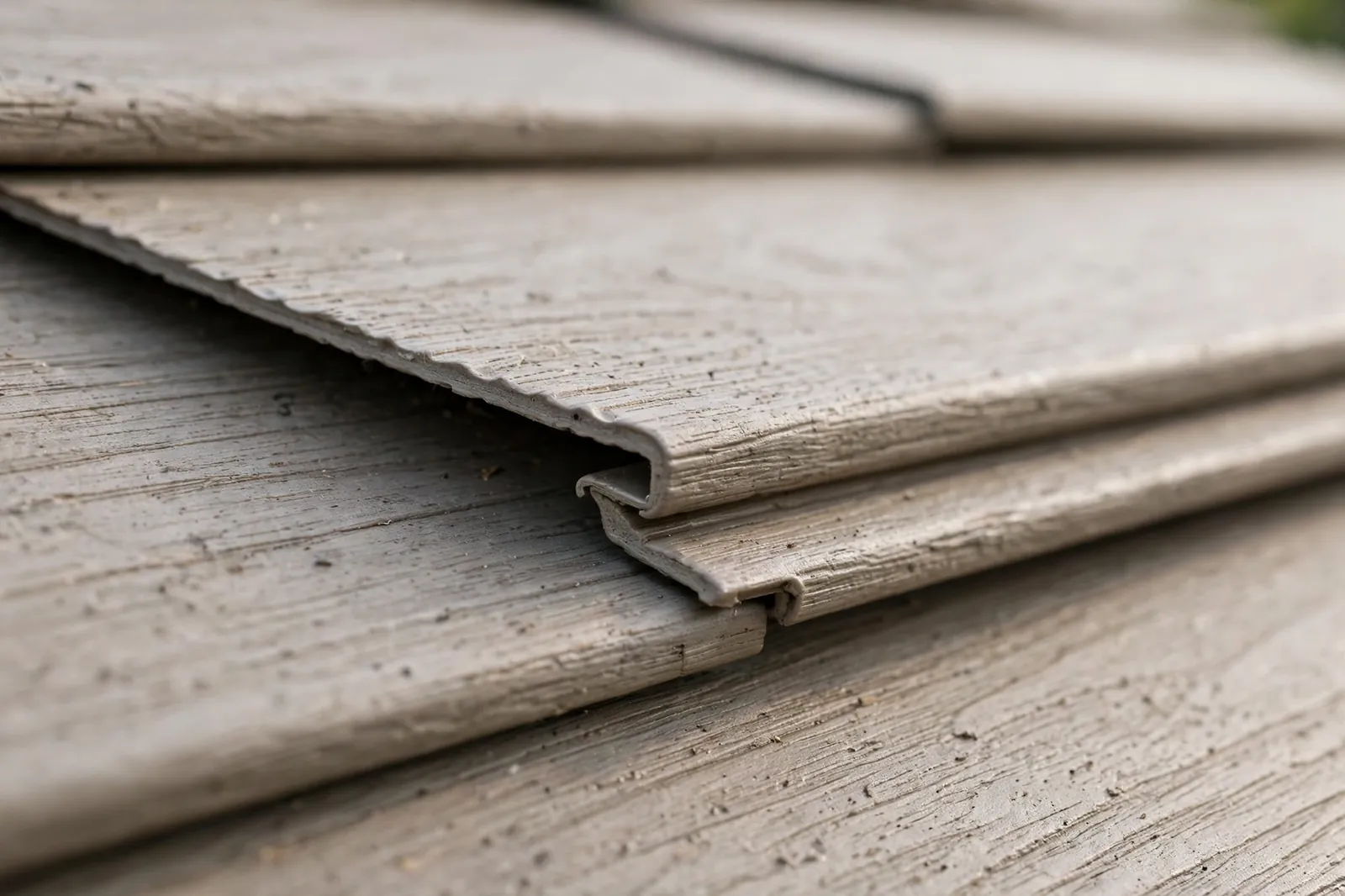
The two materials answer the Michigan winter in opposite ways. Vinyl handles the freeze-thaw cycle by moving — the panels hang loose and slide with temperature, expanding about half an inch over a 12-foot panel across a 100-degree swing. Fiber cement handles the cycle by barely moving — its thermal expansion is about one-eighth that of vinyl, so the boards hold their line, hold a fastener, and take an impact that would crack cold vinyl. The choice is about which set of behaviours you want to live with, and which set of details you want to maintain.
What vinyl does well in Warren
Vinyl does three things well in Warren. It never needs paint, because the colour runs through the panel. It never absorbs water, because it is plastic, and it sheds rain without soaking. And it is the most forgiving material to install on a wall that is not perfectly straight, because the panels flex and follow the wall. Those three things are why vinyl became the default on Warren's 1960s homes, and why it is still the most common siding in the city.
Vinyl's weaknesses are the cold and the movement. Below freezing, the material turns brittle, and an impact that would have flexed a panel in July cracks it in January. The panels move a lot with temperature, and a panel nailed tight cannot move, so it buckles in summer and pulls at its locks in winter. The chalking and fading on the sunniest elevations are the surface breaking down under ultraviolet light, and the wall that has chalked unevenly is a wall whose material has aged.
What James Hardie does well in Warren
James Hardie does three things well in Warren. It barely moves with temperature, so the boards hold their line and carry a crisp corner and a deep shadow line. It holds a fastener, so the boards stay put in a wind that rattles vinyl. And it carries a factory colour that holds far longer than a field-applied paint, in a formula engineered for the northern freeze-thaw zone Michigan sits in. Those three things are why the product has found its market among Warren homeowners who have already replaced vinyl once.
The product's weaknesses are the detailing. It is a cement product, and where it absorbs water and cannot dry, freeze-thaw works on it — the board swells, the paint peels at the joints, the bottom edge softens. The failures are almost never the board itself; they are ground clearance ignored, a butt joint left unflashed, a cut edge left unsealed, or a bottom edge sitting too close to a roof surface. The product is only as good as the installation, and the installation is a detailing job first and a board job second.
The wall behind the choice
Both materials fail the same way when the wall behind them is wrong — through the drainage path, not through the panel. Vinyl is a drained system by design, and fiber cement needs the same drainage path built deliberately, with flashing at every penetration and a bottom edge that can drain and dry. The wall inspection is therefore the same for both materials, and it is the step that decides whether the job lasts, whatever the material on the label.
The inspection finds the same things on both walls: the sheathing, the housewrap, and the flashing. Soft sheathing means the wall needs repair before new cladding goes on. Torn housewrap means the drainage path needs repair. A flashing gap means the water path needs correction. Each finding changes the job, and the job is planned from the findings, not from the panels — because a wall that drains and dries will carry either material through a Michigan winter, and a wall that traps water will fail either one.
The maintenance bargain
Vinyl asks little: a wash when the wall is dirty, and a look at the locks and laps every few years. The maintenance is in the locks — a panel that rattles has lost its lock, and the repair is the lock and the nailing, not the panel. Fiber cement asks a little more: a wash when the wall is dirty, and a look at the caulk joints and the finish every few years. The maintenance is in the joints and clearances — caulk that has opened, a bottom edge that has collected soil against it, a flashing that has lifted.
The difference in maintenance is the difference in the bargain. Vinyl is the lower-maintenance material in the short term, and the material that needs replacing sooner in the long term. Fiber cement is the higher-maintenance material in the short term — the joints and the finish need attention — and the material that lasts longer in the long term, because the boards themselves do not rot and do not become brittle. The visit talks through the bargain against the homeowner's willingness to maintain the wall, because a material chosen without understanding its maintenance is a material that will disappoint.
Choosing for your home
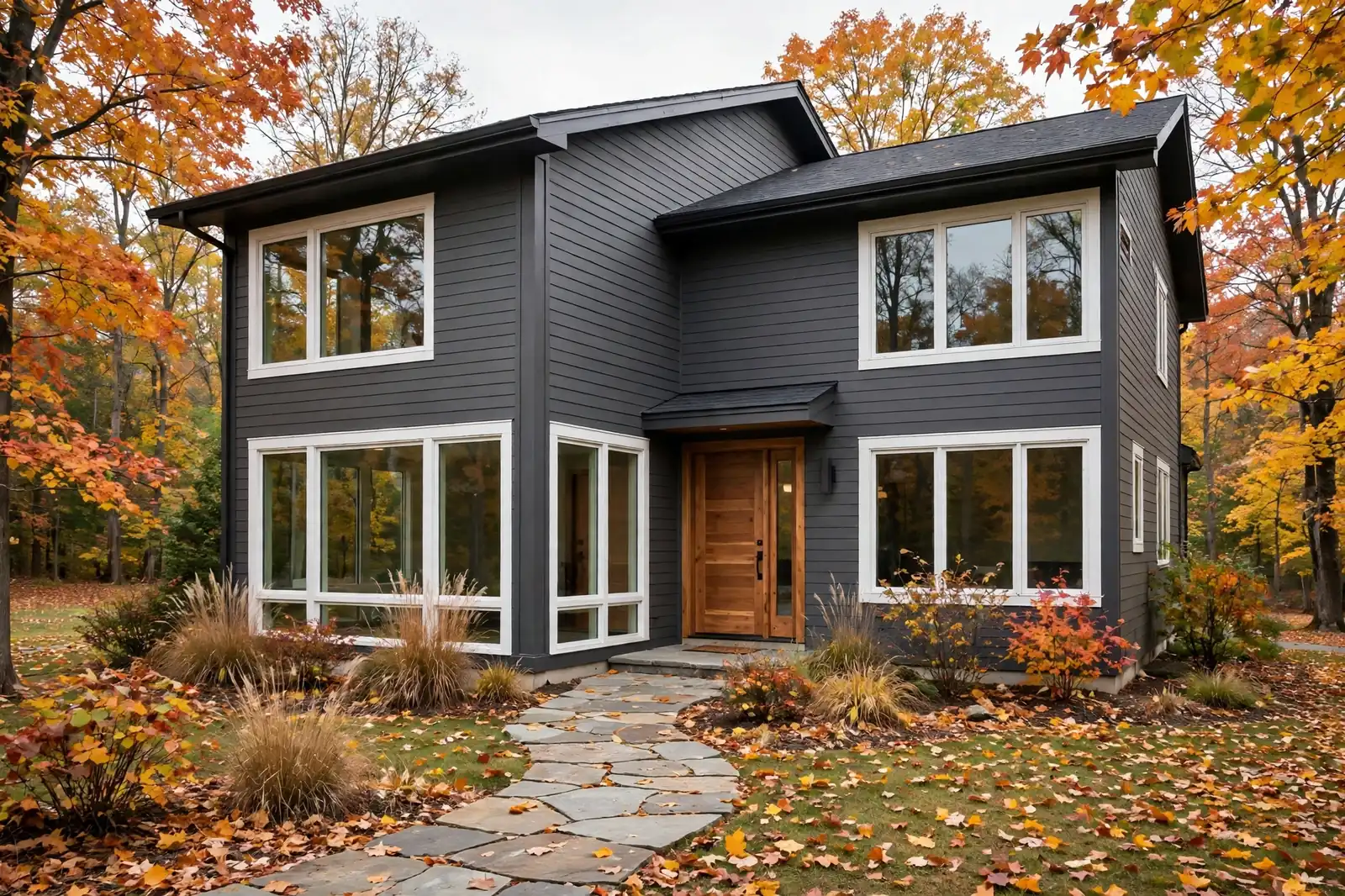
The choice is made against the home, the street, and the homeowner's history. A 1960s Warren ranch with thin wall insulation benefits from insulated vinyl, whose foam backing covers the studs and takes the edge off winter cold spots. A colonial with a tall wall benefits from fiber cement, whose boards hold their line where vinyl waves. A bungalow with original wood underneath benefits from a material that reads as painted wood, because the street expects wood and the house looks wrong in anything else.
The visit makes the choice with you, on your wall, not from a brochure. The wall is walked, the signs are read in order, a test area is opened, and the wall underneath is shown to you before the material is chosen. The right material is the one that fits the wall, the home, and the homeowner's history — and the visit says so, because a material chosen for the wrong wall will fail in the places this climate tests, whatever the label on the board.
The decision, made on your wall
The decision between James Hardie and vinyl is made on your wall, not in a showroom, and the visit makes it the same way this guide does — by walking the elevations, reading the signs in order, opening a test area, and showing you the wall underneath. The wall tells you which material it needs: a tall colonial wall that shows every wave tells you fiber cement, because the boards hold their line where vinyl waves. A 1960s ranch with thin wall insulation tells you insulated vinyl, because the foam backing covers the studs and takes the edge off the winter cold spots. A bungalow with original wood underneath tells you a material that reads as painted wood, because the street expects wood.
The homeowner's history tells you the rest. A homeowner who has replaced vinyl once and does not want to do it again has already made the decision, and the visit confirms it on the wall. A homeowner who wants a sound, low-maintenance wall and has never replaced siding before has also made the decision, and the visit confirms that one too. The material is the finish; the wall is the job. The visit starts with the wall, and the material follows — because a material chosen for the wrong wall will fail in the places this climate tests, whatever the label on the board.
Frequently asked questions
Straight answers to the questions Warren homeowners ask most.
The site does not rank materials. James Hardie holds its line and its finish longer, and it barely moves with temperature — but it needs correct clearances, sealed cut edges, and a wall that drains, because trapped water is its weakness. Vinyl never needs paint, never absorbs water, and is the most forgiving material on a wall that is not perfectly straight — but it becomes brittle in deep cold and moves a lot with temperature. The choice depends on the wall, the home, and what the homeowner wants the wall to do.
The site does not discuss amounts. What is different is the work, not just the material — fiber cement is heavier, the boards are cut and sealed as they are installed, and the detailing takes longer. The visit plans the work from the wall inspection, and the material is chosen against the wall, the home, and the homeowner's history, not from a price list.
The wall inspection is the reason to remove the old cladding first. This is a long-life product, and it should sit on a wall that has been inspected — sheathing, housewrap, and flashing all checked and corrected. Installing over old siding hides that inspection and adds thickness the trim was not detailed for.
Boards arrive either factory-finished in colour or primed for field paint. The factory colour is applied in controlled conditions and holds up well in this climate. Primed boards are painted after installation, once the joints are sealed. Either way, the repaint cycle is far longer than wood, but it is not zero.
Usually after replacing vinyl once and not wanting to do it again. The first generation of vinyl on Warren homes — installed in the 1980s and 1990s — is now reaching the end of its service life, and the homeowners who replace it choose fiber cement for the line it holds and the finish it carries. The visit talks through the choice against the home and the wall, because the right material is the one that fits the wall.
Talk about your wall?
One call connects you with a local siding professional for Warren and the towns around it.
Call NowTalk to a local siding professional
One call connects you with a local professional for Warren and nearby towns. Describe what your siding is doing — what cracks, what rattles, what stains — and the visit is arranged from there.
Mon–Fri 7:00 AM–10:00 PM ET · Sat 8:00 AM–10:00 PM ET · Sun 7:00 AM–9:00 PM ET
Service area
Sterling Heights, MI · Troy, MI · Madison Heights, MI · Roseville, MI · Eastpointe, MI · Clinton Township, MI · Shelby Township, MI · Fraser, MI · Center Line, MI · Detroit, MI
Warren Siding Pros is a referral service connecting customers with local siding professionals; it is not itself the service company.