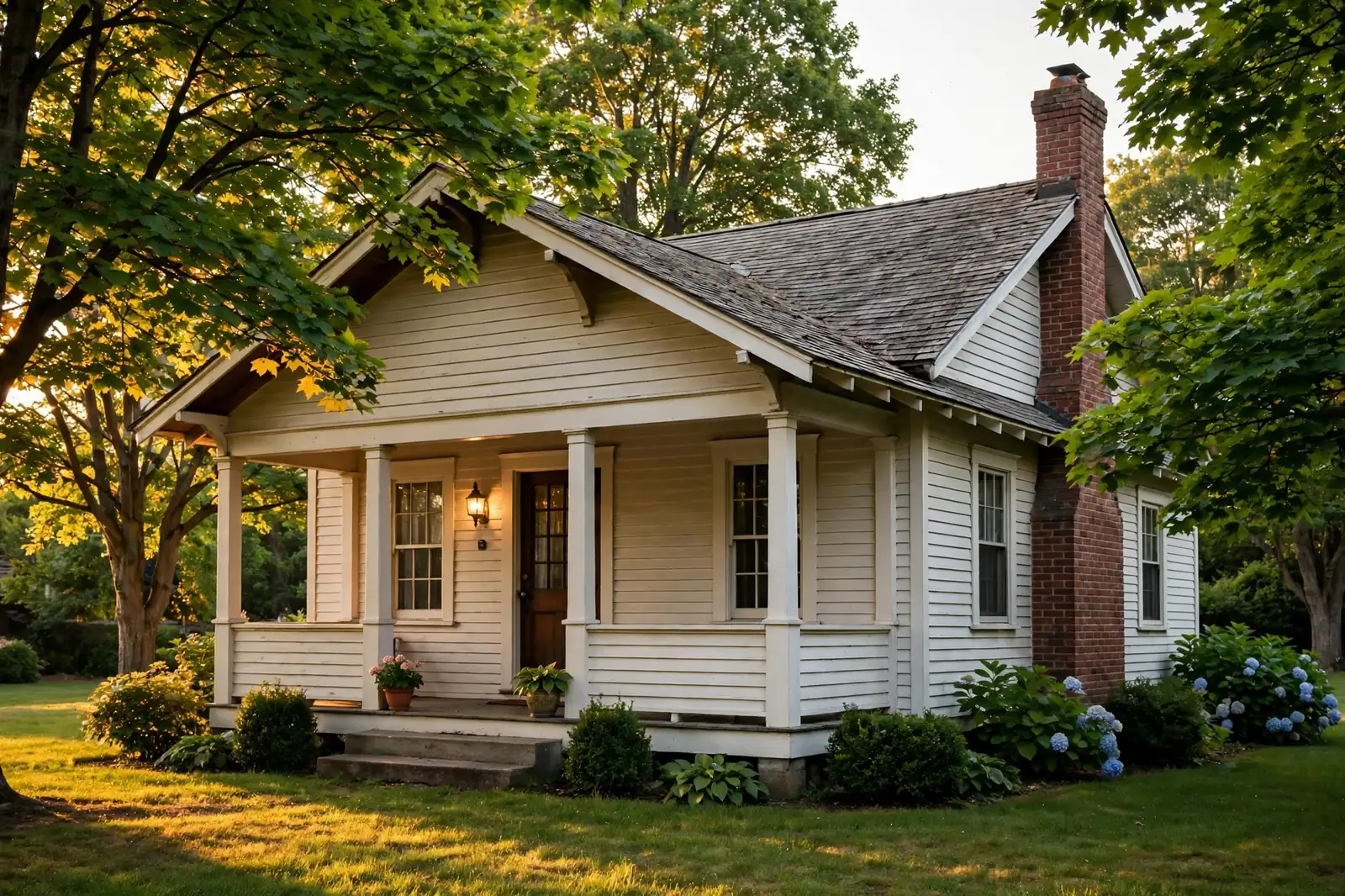
Siding Colours That Last in Michigan Sun
Colour is a climate choice in Michigan, not just a style choice. Dark colours move more, fade faster, and demand more from the installation — and the sunniest wall of your home is where that choice is tested.
Call Now
Describe what your siding is doing and where you are — a local siding professional is connected from there.
Call NowMon–Fri 7:00 AM–10:00 PM ET · Sat 8:00 AM–10:00 PM ET · Sun 7:00 AM–9:00 PM ET
At a glance
Colour is a climate choice in Michigan, not just a style choice. Dark colours move more, fade faster, and demand more from the installation — and the sunniest wall of your home is where that choice is tested.
Colour is a climate choice in Michigan, not just a style choice. Dark colours absorb more sun, move more with temperature, and fade faster on the sunniest elevations. Light colours move less, fade more slowly, and show less of the chalking that ultraviolet light leaves on a wall. The visit talks through the colour against the sunniest elevation of your home before it is ordered, because the colour is tested on that wall, every summer, for the life of the siding.
The fading is uneven, and it is a map of the wall's weather. The south wall fades first, the west wall next, and the wall under the eaves stays dark because it is shaded. A house that has faded unevenly wears two different shades, and the difference is visible from the street. The colour choice is therefore a choice about how the house will age, not just about how it will look on the day it is installed.
Why south and west walls fade first
Ultraviolet light breaks down the surface of siding, and the south and west elevations get far more of it than the north. The south wall faces the sun for most of the day, and the west wall faces the afternoon sun, when the light is strongest and the wall is hottest. The wall under the eaves stays darker because it is shaded, and the wall in full sun goes lighter year by year, until the house wears two different shades.
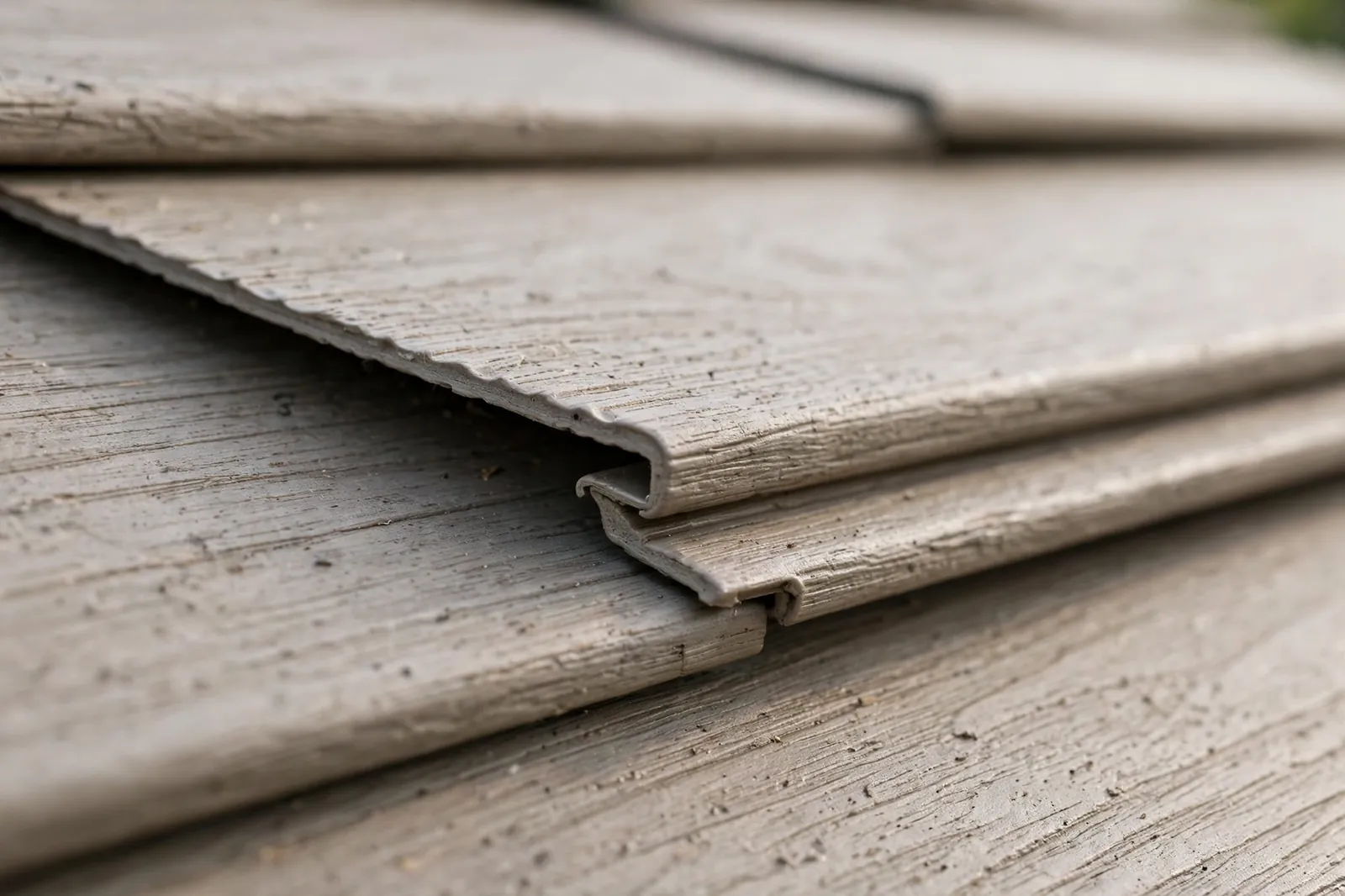
Vinyl chalks as it fades — a white film on the surface that comes off on your hand. Fiber cement holds its factory colour longer, but it fades too, and the fading is most visible where the factory colour was darkest. Wood paint fades and chalks together, and the paint is the first layer to go. In each case, the fading is a sign of age, and it is also a useful record: the wall that has faded most has aged most, and it is the wall that needs attention first.
Dark colours and movement
Dark colours absorb more sun, and a dark wall in summer is hotter than a light wall in the same sun. The heat makes the panels move more — vinyl expands about half an inch over a 12-foot panel across a 100-degree swing, and a dark panel sees more of that swing than a light one. The movement demands the same loose-hung discipline as any vinyl, with extra attention to expansion gaps, because a dark panel nailed tight will buckle sooner and harder than a light panel nailed tight.
Fiber cement moves less with temperature, so a dark fiber cement wall does not buckle the way a dark vinyl wall does — but the factory colour on a dark board still fades, and the fading is most visible where the colour was darkest. The visit talks through the dark colour against the sunniest elevation, because the dark colour is tested on that wall, every summer, and the installation has to respect the movement the colour causes.
Light colours and fading
Light colours move less and fade more slowly, because they absorb less sun and the surface breaks down more slowly under ultraviolet light. A light wall in Warren will look newer for longer than a dark wall on the same street, and the difference is visible after a decade — the light wall is the wall that still reads as the colour it was installed in, and the dark wall is the wall that has gone lighter on the south and west elevations.
Light colours also show dirt more readily, and the shaded north wall will show mildew sooner than a dark wall would. The wash in spring matters more on a light wall, because the dirt is visible, and the homeowner who chooses a light colour should expect to wash the wall every year. The trade is between fading and dirt: the light wall fades slowly and shows dirt, and the dark wall fades faster and hides dirt. The visit talks through the trade against the home and the street.
Choosing a colour for your home
The colour is chosen against the home, the street, and the sun. A ranch with a brick front needs a colour that suits the brick, not a colour that fights it. A colonial with a tall wall needs a colour that reads well from the street, not a colour that disappears at a distance. A bungalow on a street of painted wood homes needs a colour that reads as painted wood, not a colour that reads as vinyl.
The visit walks the sunniest elevation with you and talks through how each colour will behave there over the next decade — how it will move, how it will fade, and how it will look when the south wall has aged and the north wall has not. The colour is the most visible choice in the job, and it is the choice that is lived with longest, so it is made slowly, on the wall, in the sun, not from a chip in the shade.
Choosing colour on a Warren street
Warren's streets are a catalogue of colour choices made in different decades, and the street itself is the clearest guide to what lasts. Walk a 1960s street off Van Dyke and the pattern repeats: the light-coloured homes still read as the colour they were installed in, and the dark-coloured homes have gone lighter on the south and west elevations, until the house wears two shades and the difference is visible from the kerb. The street is the record of every colour decision made on it, and the homeowner who walks the street before choosing will see the future of each colour on the houses that already wear it.
The brick front complicates the choice, and most Warren ranches have one. A brick front in warm reds and browns suits a warm siding colour — a cream, a tan, a soft grey with a warm undertone — and fights a cool colour, a stark white, or a dark colour that makes the brick look muddy. The visit holds the colour samples against the brick, in the sun, not in the shade, because the brick and the siding are seen together from the street, and the colour that suits the brick in the shade may fight it in the sun. The choice is made on the wall, in the light the wall will live in, and the sample that looks right there is the colour that will look right for the next decade.
The trim colour is the decision that follows the siding colour, and it is the one that dates a house fastest. White trim on a light house disappears into the wall; white trim on a dark house frames every window and makes the house read taller. A trim colour one shade darker than the siding — a soft grey against a light grey wall, a warm bronze against a tan wall — ties the house together without shouting, and it hides the chalking that shows first on a bright white trim board. The visit holds the trim sample against the siding sample and the brick, in the sun, because the three are seen together from the street and the combination that works in the shade can fail in the sun.
The last check is the neighbour's house. A colour that suits the street is a colour that sits comfortably beside the houses on either side, and a colour that fights the street makes the house stand out for the wrong reason. That does not mean every house on the street should wear the same colour — the street is a catalogue, not a uniform — but it means the choice is made with the street in mind, not against it. Walk the street, look at the houses that have held their colour for a decade, and choose the one that has already proved itself on a wall like yours, in a winter like yours.
A faded vinyl wall raises the question of paint, and the answer depends on the wall. Paint on vinyl is a coating on a moving panel — the panel expands and contracts with temperature, and a coating that cannot move with it cracks at the laps within a few winters. A wall that is faded but sound, with locks that hold and flashing that works, can be painted by a crew that knows vinyl, with a colour no darker than the original, because a darker colour absorbs more sun and moves more. A wall that is faded and failing — cracks at the corners, locks that will not hold, stains that return — is not a wall to paint. The paint hides the failure for a season, and the failure comes back through the paint in the spring, when the freeze-thaw cycle works on the same gaps the paint covered.
Frequently asked questions
Straight answers to the questions Warren homeowners ask most.
Light colours last longest, because they absorb less sun, move less with temperature, and fade more slowly under ultraviolet light. Dark colours absorb more sun, move more, and fade faster on the south and west elevations. The visit walks the sunniest elevation with you and talks through how each colour will behave there over the next decade.
Ultraviolet light breaks down the surface of siding, and the south and west elevations get far more of it than the north. The wall under the eaves stays darker because it is shaded. Uneven fading is a normal sign of age, and it is also a useful map: the most faded wall is the wall that has taken the most weather.
Yes. Dark colours absorb more sun and move more with temperature, so they demand the same loose-hung discipline with extra attention to expansion gaps. A dark vinyl panel nailed tight will buckle sooner and harder than a light panel nailed tight. Fiber cement moves less, so a dark fiber cement wall does not buckle — but the factory colour still fades faster where it was darkest.
It can be painted, and it is rarely the right call on vinyl, because the surface has broken down under ultraviolet light and a new finish will not hold the way it would on a sound panel. On fiber cement and wood, a repaint is the normal maintenance cycle, and the finish is renewed when it ages. The visit says which one applies to your wall, because the material decides whether a repaint is maintenance or a patch.
Talk about your wall?
One call connects you with a local siding professional for Warren and the towns around it.
Call NowTalk to a local siding professional
One call connects you with a local professional for Warren and nearby towns. Describe what your siding is doing — what cracks, what rattles, what stains — and the visit is arranged from there.
Mon–Fri 7:00 AM–10:00 PM ET · Sat 8:00 AM–10:00 PM ET · Sun 7:00 AM–9:00 PM ET
Service area
Sterling Heights, MI · Troy, MI · Madison Heights, MI · Roseville, MI · Eastpointe, MI · Clinton Township, MI · Shelby Township, MI · Fraser, MI · Center Line, MI · Detroit, MI
Warren Siding Pros is a referral service connecting customers with local siding professionals; it is not itself the service company.