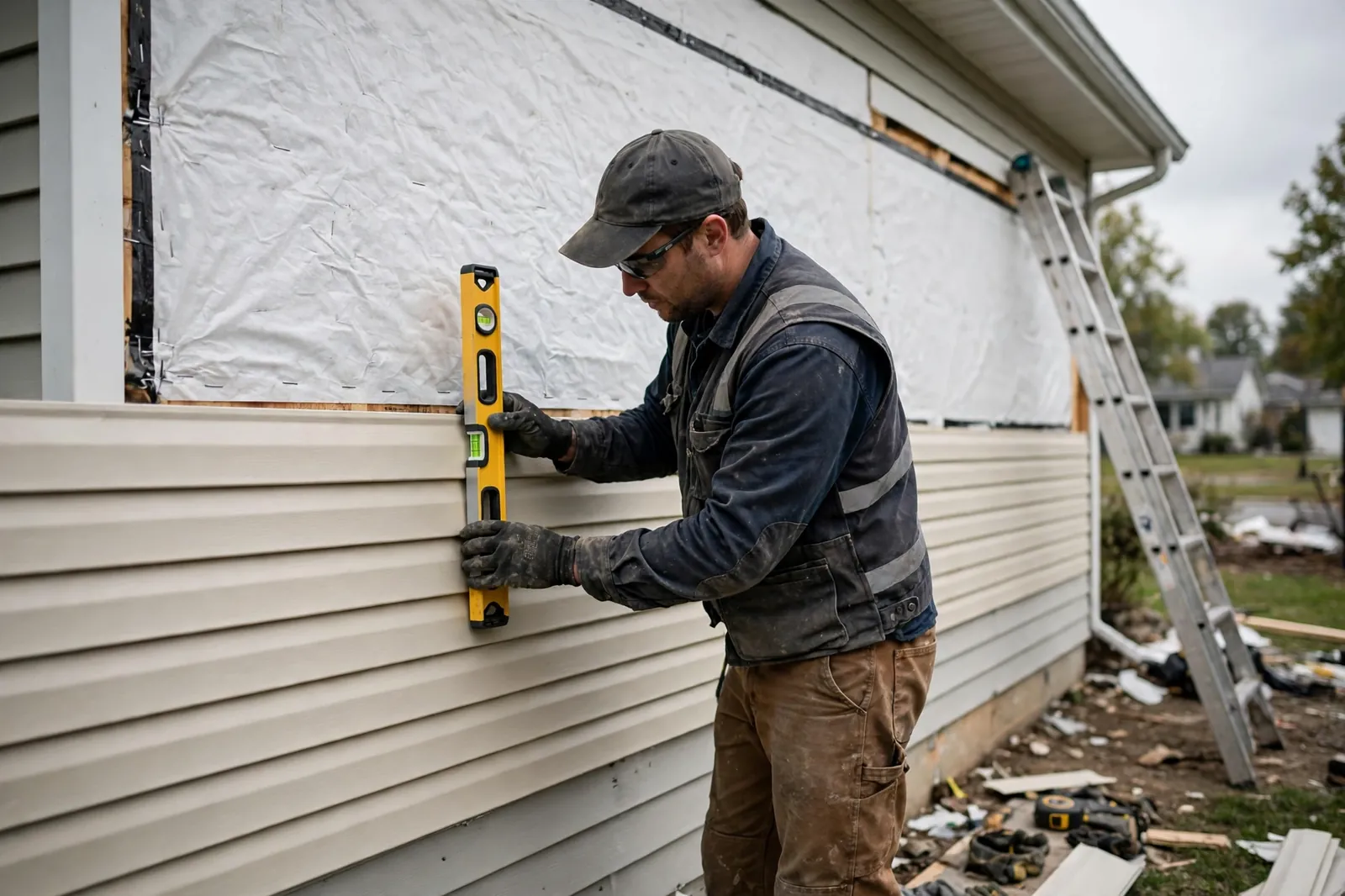
Vinyl Siding Maintenance for Michigan Winters
Vinyl siding asks little of its owner, but it asks for a spring walk-through every year — ten minutes, five signs, and the small fixes that keep a repair from becoming a replacement.
Call Now
Describe what your siding is doing and where you are — a local siding professional is connected from there.
Call NowMon–Fri 7:00 AM–10:00 PM ET · Sat 8:00 AM–10:00 PM ET · Sun 7:00 AM–9:00 PM ET
At a glance
Vinyl siding asks little of its owner, but it asks for a spring walk-through every year — ten minutes, five signs, and the small fixes that keep a repair from becoming a replacement.
Vinyl siding asks little of its owner. It never needs paint, it sheds rain, and it handles the wet side of a Michigan winter without absorbing water. But it asks for one thing every year: a spring walk-through, ten minutes, five signs, and the small fixes that keep a repair from becoming a replacement. A wall that is looked at every year is a wall whose problems are found as repairs. A wall that is not looked at is a wall whose problems are found as a replacement.
The walk-through happens in spring, after the winter, because winter is when the damage happens and spring is when it shows. The cold cracks the panels, the wind works the locks loose, the freeze-thaw cycle works on the flashing gaps, and the snowpack sits against the bottom course for weeks. Spring is when the chalking is visible, the cracks are open, the locks are rattling, and the stains have had a winter to form. The walk-through reads the winter's work on the wall, in order, before the summer's heat adds its own.
The spring walk-through
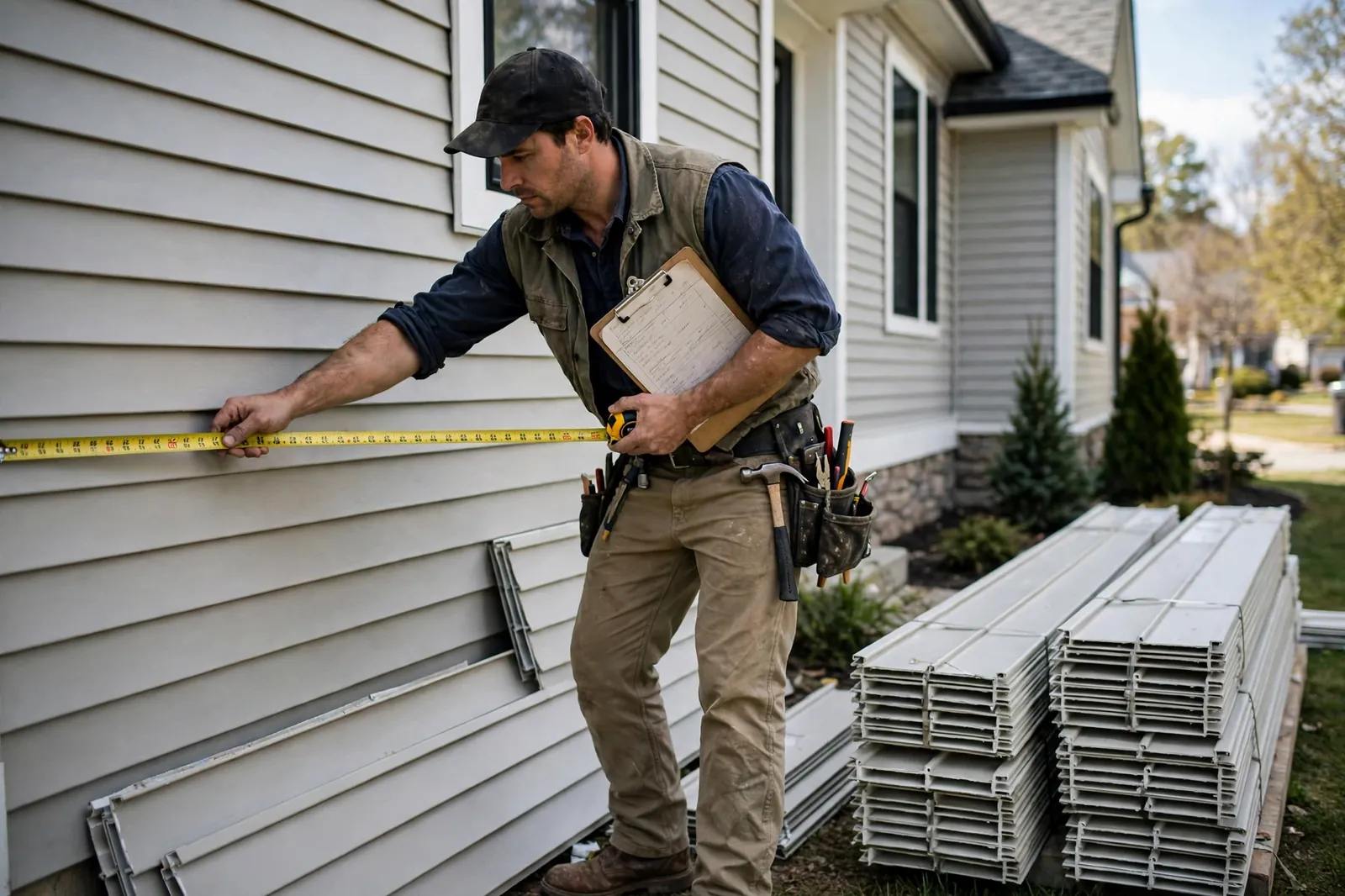
Walk every elevation in spring, after the winter, and look for the signs in order. The chalking on the south wall — run a hand along it, and see if it comes away white. The cracks at the corners and laps — look for the split at the lap or the half-circle at the corner. The locks that rattle — press each panel by hand, and see if the bottom edge stays engaged with the panel below. The stains below the windows — dark streaks that were not there in autumn. The soft spots at the bottom course — press the wall near the foundation, and see if it gives.
Each sign is a clue, and the signs are read together. One cracked panel is a repair. A cracked panel, a chalked south wall, and a lock that will not hold are a wall that has reached the end of its service life. The walk-through is the homeowner's version of the crew's inspection, and it is the step that decides whether the next call is a repair or a replacement.
Washing the wall
Wash the wall in spring, with a garden hose and a soft brush, working from the bottom up so the dirty water does not streak the clean wall above it. A mild detergent is enough for most walls; a pressure washer is not, because it drives water behind the panels and into the wall, and it can crack a panel that is already brittle from winter. The wash removes the dirt and the mildew that grow on the shaded north wall, and it makes the chalking and the stains visible — which is the point, because a wall that looks better after washing and then fades again within weeks is a wall whose surface has aged.
The wash is also the moment to look at the wall closely, because the water makes the cracks and the gaps visible. A crack that was hidden by dirt shows when the wall is wet. A gap at a joint shows when the water runs out of it. The wash is not just cleaning — it is an inspection, and the homeowner who washes the wall in spring is the homeowner who finds the winter's damage while it is still a repair.
Checking the locks and laps
Press each panel by hand, along its length, and check that the bottom edge stays engaged with the panel below it. A lock that is fully engaged holds in wind; a lock that is only partly engaged opens in the first strong gust. A panel that rattles when it is pressed has lost its lock, or it was under-nailed and has worked loose over seasons of expansion and contraction. The fix is the lock and the nailing, not just pushing the panel back into place.
Check the laps too — the overlap where one panel meets the next. The lap should run outward and down, so rain runs off the wall, and the panels should slide in their slots when they are pressed sideways. A panel that cannot slide is a panel that was nailed tight, and it will buckle in summer heat. The lock check and the lap check together take five minutes, and they are the two checks that prevent the most common vinyl failures in this climate.
Small fixes before winter
Fix the small things in autumn, before the freeze-thaw cycle starts. A cracked panel left through a Michigan winter lets wind-driven rain behind the cladding, and the water works on the sheathing all winter. A loose lock left through a summer of thunderstorms works looser with every gust, until a whole run of panels is flapping. A stain left through a year of rain means a flashing gap that has been leaking for a year, and the sheathing behind it is softer than it was when the stain first appeared.
The small fixes are the ones the homeowner can see: a cracked panel replaced, a loose lock re-hung, a corner post reset, a caulk joint renewed where it has opened. The fixes that need a crew are the ones the homeowner cannot see: the flashing gap above the stain, the soft sheathing behind the bottom course, the housewrap torn at a penetration. The walk-through finds both kinds, and the visit fixes both — the visible and the hidden — before winter.
What not to do
Do not pressure-wash the wall. A pressure washer drives water behind the panels and into the wall, and it can crack a panel that is already brittle from winter. Do not caulk the bottom edge of a panel. Vinyl is a drained system, and caulking the bottom edge traps water behind the cladding instead of letting it out. Do not nail a loose panel tight. A panel that came loose in wind came loose for a reason, and nailing it tight stops the rattling and starts the buckling.
Do not paint faded vinyl and expect it to look new. The surface of faded vinyl has broken down under ultraviolet light, and a new finish will not hold the way it would on a sound panel. The wall will look patched rather than renewed, and the paint will peel sooner than it would on a new wall. When the fading is spread across the house, replacement is the honest answer, not a coat of paint.
The maintenance calendar for a Warren vinyl wall
The calendar for a Warren vinyl wall has two dates on it: spring and autumn, and each one has a job. Spring is the inspection — the walk-through after the winter, looking for the chalking on the south wall, the cracks at the corners, the locks that rattle, the stains below the windows, and the soft spots at the bottom course. Spring is also the wash, with a garden hose and a soft brush, working from the bottom up, so the dirty water does not streak the clean wall above it. The wash makes the cracks and the gaps visible, because the water runs out of them — and the homeowner who washes the wall in spring is the homeowner who finds the winter's damage while it is still a repair.
Autumn is the fix, before the freeze-thaw cycle starts. A cracked panel left through a Michigan winter lets wind-driven rain behind the cladding, and the water works on the sheathing all winter. A loose lock left through a summer of thunderstorms works looser with every gust. A stain left through a year of rain means a flashing gap that has been leaking for a year. The small fixes are made in autumn — a panel replaced, a lock re-hung, a corner post reset, a caulk joint renewed — so the wall is closed before the first freeze, and the winter finds a wall that is ready for it, not a wall that is already open.
The wash is the one maintenance job that is worth doing every year, and the way it is done matters more than the fact that it is done. Wash from the bottom up, with a soft brush and a garden hose, and never with a pressure washer — the pressure drives water behind the panels, into the wall the siding is meant to protect. Rinse from the top down, so the dirt runs out of the laps instead of into them, and wash on a mild day, so the panels are not brittle with cold or soft with heat. A wall that is washed once a year is a wall whose chalking, cracks, and stains are seen early, and a problem seen early is a problem fixed small.
Frequently asked questions
Straight answers to the questions Warren homeowners ask most.
Once a year, in spring, after the winter. A garden hose and a soft brush, working from the bottom up, with a mild detergent for the dirt and mildew that grow on the shaded north wall. A pressure washer is not recommended, because it drives water behind the panels and can crack a panel that is already brittle from winter.
Five signs, in order: the chalking on the south wall, the cracks at the corners and laps, the locks that rattle when pressed, the stains below the windows, and the soft spots at the bottom course. Each sign is a clue, and the signs are read together — one sign is a repair, several signs together are a replacement.
A single panel can be replaced by a homeowner with the right tool — a siding removal tool that unlocks the panel above it — but the wall behind the panel should be checked at the same time, because the crack may have let water in. The visit checks the wall behind the panel, and the repair is the panel with the wall inspected, not just the panel.
Before winter, when the damage lets water in. A cracked panel, an open joint, or a failed flashing lets wind-driven rain behind the cladding, and in a freeze-thaw climate that water works on the sheathing all winter. A repair made in autumn closes the wall before the freeze-thaw cycle starts; a repair left until spring opens a wall that has spent a winter wet.
Talk about your wall?
One call connects you with a local siding professional for Warren and the towns around it.
Call NowTalk to a local siding professional
One call connects you with a local professional for Warren and nearby towns. Describe what your siding is doing — what cracks, what rattles, what stains — and the visit is arranged from there.
Mon–Fri 7:00 AM–10:00 PM ET · Sat 8:00 AM–10:00 PM ET · Sun 7:00 AM–9:00 PM ET
Service area
Sterling Heights, MI · Troy, MI · Madison Heights, MI · Roseville, MI · Eastpointe, MI · Clinton Township, MI · Shelby Township, MI · Fraser, MI · Center Line, MI · Detroit, MI
Warren Siding Pros is a referral service connecting customers with local siding professionals; it is not itself the service company.