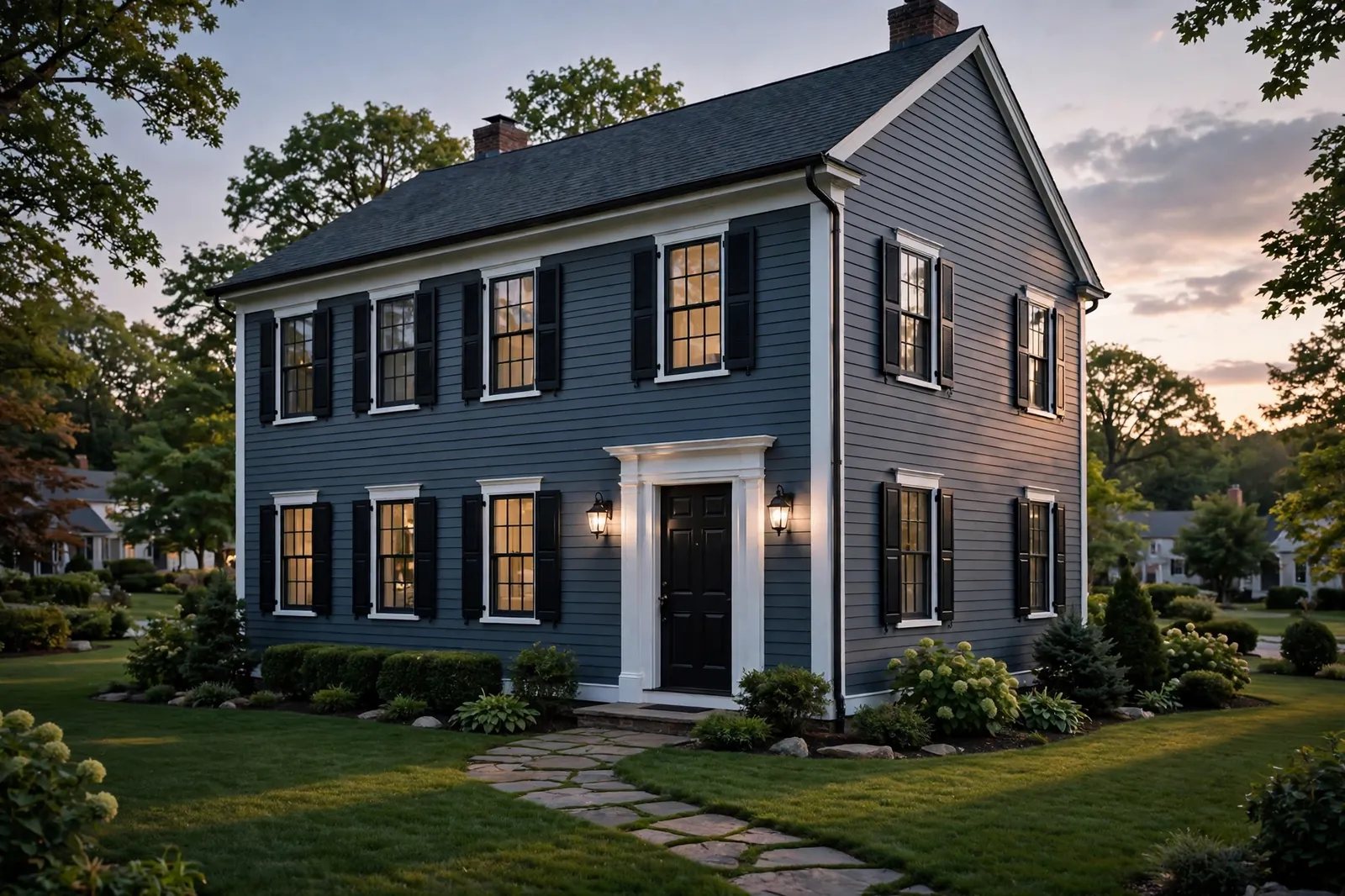
Vinyl vs Fiber Cement Siding in Michigan: The Freeze-Thaw Guide
Michigan does not just get cold — it gets cold, then warm, then cold again, more than 100 times a winter. That cycle is what separates siding that lasts from siding that fails, and it is the real difference between vinyl and fiber cement.
Call Now
Describe what your siding is doing and where you are — a local siding professional is connected from there.
Call NowMon–Fri 7:00 AM–10:00 PM ET · Sat 8:00 AM–10:00 PM ET · Sun 7:00 AM–9:00 PM ET
At a glance
Michigan does not just get cold — it gets cold, then warm, then cold again, more than 100 times a winter. That cycle is what separates siding that lasts from siding that fails, and it is the real difference between vinyl and fiber cement.
Michigan does not just get cold. It gets cold, then warm, then cold again — sometimes in the same day. That constant swing above and below freezing is what separates siding that lasts thirty years from siding that starts failing after five, and it is the real difference between vinyl and fiber cement. The debate is not about which material is better in the abstract. It is about which one survives the specific climate of a Warren wall.
From November through March, Southeast Michigan averages 25 to 35 freeze-thaw events per month. That is more than 100 cycles every winter, with water expanding about 9 percent as it freezes in any gap it finds. A siding material in this climate is not just a wall covering — it is a material that is frozen, thawed, frozen again, and expected to hold its shape, its colour, and its fasteners through all of it. Vinyl and fiber cement answer that test in opposite ways, and the homeowner who understands the difference chooses the material that fits their wall, not the material that fits a brochure.
The freeze-thaw cycle, explained
Southeast Michigan experiences what building scientists call a freeze-thaw cycle: water penetrates behind siding through gaps and seams, and when the temperature drops below freezing, that water expands by about 9 percent, exerting pressure on the material around it. The cycle repeats — freeze, thaw, freeze again — and each cycle weakens the material a little more, until a crack forms, a joint opens, or a finish peels.
The cycle is not the cold itself. A wall that stays cold all winter is a wall that stays frozen, and a frozen wall does not move. The damage comes from the swing — the cold night, the sunny afternoon in the forties, the cold night again — and from the water that gets into the wall during the thaw and freezes during the night. Siding that would last fifty years in a dry climate can fail in ten here, if it is not designed for the cycle and installed for the drainage the cycle demands.
How vinyl handles the cycle
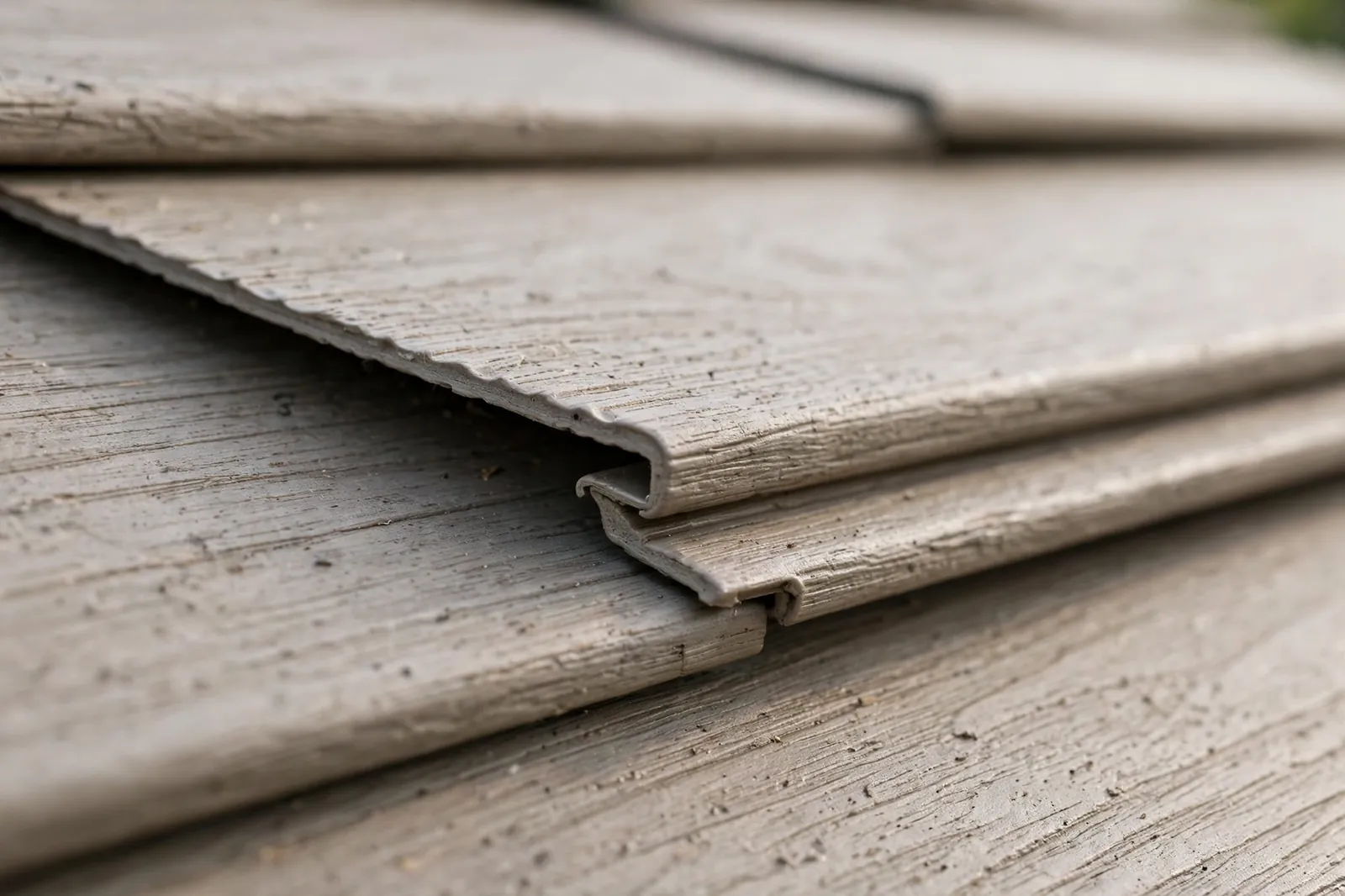
Vinyl is a plastic panel that hangs loose on the wall, and it handles the cycle by moving. A 12-foot panel expands and contracts about half an inch across a 100-degree swing, and in Michigan that swing happens regularly between a winter night and a sunny afternoon. The panels are nailed in the centre of their slots, deliberately loose, so they can slide sideways as they expand and contract — and the system is not sealed tight to the wall, so rain that gets behind a panel runs down the housewrap and out at the bottom.
Vinyl's weakness in the cycle is the cold itself. Below freezing, the material turns brittle, and an impact that would have flexed a panel in July cracks it in January — a ladder foot, a thrown chunk of ice, a branch in a wind. Low-grade vinyl becomes brittle after ten to fifteen Michigan winters, and the panels chalk and fade on the sunniest elevations. Quality vinyl, hung loose and locked fully, handles the cycle well — but it is still a plastic that moves a lot, and the movement is what the installation has to respect.
How fiber cement handles the cycle
Fiber cement is a composite of cement, sand, and cellulose fiber, and it handles the cycle by barely moving. Its thermal expansion is about one-eighth that of vinyl, so a fiber cement board does not grow and shrink with every temperature swing — it holds its line, holds a fastener, and takes an impact that would crack cold vinyl. The material is made in climate-specific formulas, and Michigan sits in the northern zone the product is engineered for, with a formula that accounts for the freeze-thaw cycles.
Fiber cement's weakness in the cycle is trapped water. It is a cement product, and where it absorbs water and cannot dry, freeze-thaw works on it — the board swells, the paint peels at the joints, the bottom edge softens. The failures are almost never the board itself; they are ground clearance ignored, a butt joint left unflashed, a cut edge left unsealed, or a bottom edge sitting too close to a roof surface. Get those details right and the material is built for this climate. Get them wrong and an expensive siding job becomes a moisture problem.
The wall behind the material
Both materials fail the same way when the wall behind them is wrong — through the drainage path, not through the panel. Vinyl is a drained system by design: the panels are not sealed tight, rain runs down the housewrap, and air moving behind the panels helps the wall dry. Fiber cement needs the same drainage path built deliberately — a rainscreen gap or, at minimum, well-managed flashing and breathable housewrap — especially on shaded elevations where drying is slow.
The wall inspection is therefore the same for both materials, and it is the step that decides whether the job lasts. The sheathing is checked for soft spots, the housewrap is checked for tears, and the flashing at windows, doors, and the roofline is checked for gaps. A wall that drains and dries will carry either material through a Michigan winter. A wall that traps water will fail either material, and the failure will show up in the same places every spring — the joints, the bottom edge, and the stain below the window.
Choosing between them in Warren
The choice in Warren is usually made by the homeowner's history, not by the brochure. A homeowner who has replaced vinyl once and does not want to do it again chooses fiber cement, for the line it holds and the finish it carries. A homeowner who wants a sound, low-maintenance wall at the lowest material cost chooses vinyl, and the visit says so honestly — vinyl is the right answer when the goal is a sound wall, and fiber cement is the right answer when the goal is a wall that holds its finish and its line for decades.
The housing stock sets the choice too. A 1960s Warren ranch with thin wall insulation benefits from insulated vinyl, whose foam backing covers the studs and takes the edge off winter cold spots. A colonial with a tall wall benefits from fiber cement, whose boards hold their line where vinyl waves. A bungalow with original wood underneath benefits from a material that reads as painted wood, because the street expects wood and the house looks wrong in anything else. The visit talks through the choice against the home, the street, and the homeowner's history — because the right material is the one that fits the wall, not the one that fits a claim.
The wall underneath decides
The comparison between vinyl and fiber cement is usually argued as a comparison of panels, and the argument misses the point. The wall underneath decides more than the panel does: a wall with sound sheathing, a working housewrap, and flashing at every opening will carry either material through a Michigan winter, and a wall with soft sheathing and failed flashing will fail either material in the same places. The visit inspects the wall before it recommends a panel, because the panel is the finish and the wall is the job.
The second thing the wall decides is the sequence. A fiber-cement job takes longer, because the panels are heavier, the cuts are slower, and the clearances are tighter — and the wall is open longer while the work happens. A vinyl job moves faster, and the wall is closed sooner. On a wall that needs extensive repair, the faster close matters; on a wall that is sound, the slower job is a fair trade for the stiffer panel. The decision is made on the wall, with the inspection in hand, not in a showroom with the samples on a table.
Frequently asked questions
Straight answers to the questions Warren homeowners ask most.
Both materials can perform well in Michigan when they are installed correctly, and both can fail when they are not. Vinyl handles the freeze-thaw cycle by moving — the panels hang loose and slide with temperature — but it becomes brittle in deep cold. Fiber cement handles the cycle by barely moving, but it needs correct clearances, sealed cut edges, and a wall that drains, because trapped water is its weakness. The choice depends on the wall, the home, and what the homeowner wants the wall to do.
Vinyl turns brittle in deep cold, and an impact that would have flexed a panel in July cracks it in January — a ladder foot, a thrown chunk of ice, a branch in a wind. The crack lets wind-driven rain behind the cladding, and the repair is the panel, with a check of the panels around it, because the same cold made them brittle too.
Boards arrive either factory-finished in colour or primed for field paint. The factory colour is applied in controlled conditions and holds up well in this climate. Primed boards are painted after installation, once the joints are sealed. Either way, the repaint cycle is far longer than wood, but it is not zero — the finish is a layer over a board that does not itself rot.
Southeast Michigan averages 25 to 35 freeze-thaw events per month from November through March — more than 100 cycles every winter. Each cycle is water expanding about 9 percent as it freezes in any gap it finds, and the cycle is what separates siding that lasts from siding that fails in this climate.
It can, with cold-weather handling. The boards are cut and sealed as they are installed, the crew works one elevation at a time so no wall stands open to snow, and the wall inspection matters even more in winter, because frozen sheathing hides soft spots that a summer inspection would find by touch.
HZ5 is the northern climate zone in the James Hardie product line, formulated for climates with seasonal temperature swings, freezing temperatures, and snow loads — the conditions Michigan sits in. The formula accounts for the freeze-thaw cycles, and the factory colour is matched to the zone. The engineering only works when the installation respects it: clearance, flashing, sealed cut edges, and a wall that can drain.
Talk about your wall?
One call connects you with a local siding professional for Warren and the towns around it.
Call NowTalk to a local siding professional
One call connects you with a local professional for Warren and nearby towns. Describe what your siding is doing — what cracks, what rattles, what stains — and the visit is arranged from there.
Mon–Fri 7:00 AM–10:00 PM ET · Sat 8:00 AM–10:00 PM ET · Sun 7:00 AM–9:00 PM ET
Service area
Sterling Heights, MI · Troy, MI · Madison Heights, MI · Roseville, MI · Eastpointe, MI · Clinton Township, MI · Shelby Township, MI · Fraser, MI · Center Line, MI · Detroit, MI
Warren Siding Pros is a referral service connecting customers with local siding professionals; it is not itself the service company.